
A fragile voice confronting a fading spotlight: dignity, memory, and the cost of glam rock fame.
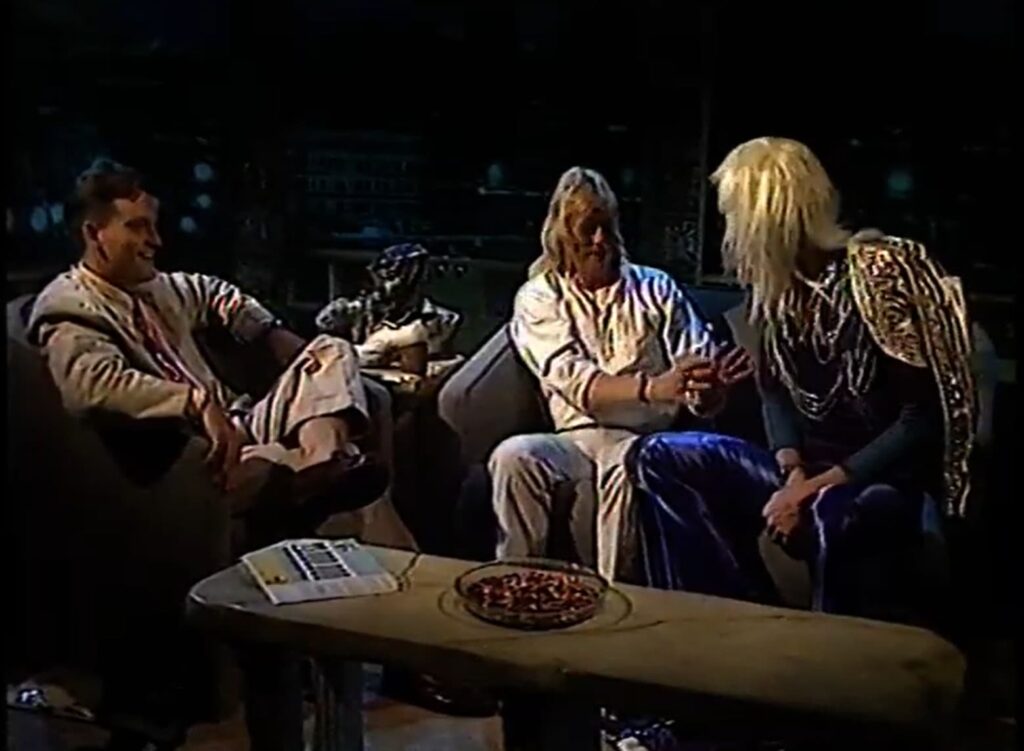
In the mid-1980s, when the glitter had long settled and the roar of arena crowds had softened into memory, Brian Connolly—the once-magnetic frontman of The Sweet—sat beneath the clinical studio lights of Channel 4 for an interview that would become quietly emblematic of his later years. Across from him were presenters including local radio figure Mike Brown, associated with Radio Holderness Seaside FM. What unfolded was less a celebration of a glittering past and more an uncomfortable reminder of how quickly the music industry can turn from adoration to indifference.
To understand the poignancy of that moment, one must return to the early 1970s, when The Sweet were not merely successful—they were unstoppable. In 1973, “Block Buster!” reached No. 1 on the UK Singles Chart, a thunderous glam-rock anthem that defined an era of platform boots and electric bravado. “Ballroom Blitz” stormed to No. 2 in the UK the same year, later becoming an enduring transatlantic classic. By 1975, “Fox on the Run” climbed to No. 2 in Britain and cracked the US Top 10, proving the band’s songwriting independence after they moved away from the Chinn–Chapman production formula. Even in 1978, as musical tastes shifted, “Love Is Like Oxygen” gave them a final major flourish, reaching No. 9 in the UK and No. 8 on the US Billboard Hot 100.
Through it all, it was Connolly’s voice—high, urgent, and edged with vulnerability—that carried the spectacle. Beneath the glitter makeup and choreographed swagger was a singer capable of genuine emotional force. Yet fame, especially the blinding kind that defined glam rock, is rarely kind to the human spirit. A violent altercation in 1974 severely damaged Connolly’s throat, altering his vocal power. Coupled with personal struggles and battles with alcohol, the injury marked the beginning of a slow professional decline. By the early 1980s, internal fractures had splintered the classic lineup of The Sweet, and Connolly was fronting his own version of the band amid legal and artistic disputes.
The Channel 4 interview in the mid-1980s captured this transitional, fragile period. Rather than focusing on the band’s groundbreaking influence on glam and early hard rock, the tone veered toward skepticism—at times bordering on dismissiveness. The questions seemed less interested in the artistry behind the hits and more preoccupied with the narrative of excess and downfall. For viewers who remembered packed dance halls echoing with “Are you ready, Steve?” it was difficult not to feel a pang of discomfort.
And yet, there was something profoundly human in Connolly’s presence. The bravado was tempered, the voice softer, but flashes of the old charisma remained. He spoke of the early days—the camaraderie, the sleepless tours, the improbable ascent from London clubs to international stardom—with a mixture of pride and quiet disbelief. One sensed a man fully aware of the distance between past triumph and present reality, yet still protective of the music that had once united millions.
In retrospect, that interview serves as a cultural document. It reminds us that the artists who soundtrack our youth are not immune to time’s erosion. The glam era, often dismissed by critics in its day, has since been recognized as a vital bridge between 1960s pop theatrics and the bombast of 1980s hair metal. Bands from Def Leppard to Mötley Crüe would later echo the flamboyance and melodic punch that The Sweet pioneered.
Brian Connolly passed away in 1997 at the age of 51, but his recordings remain defiant against silence. Listen again to the opening cry of “Ballroom Blitz” or the shimmering hook of “Fox on the Run,” and it becomes clear that beyond the glitter was a craftsman of unforgettable pop-rock drama. The mid-1980s interview, uncomfortable though it may feel, underscores a deeper truth: fame is fleeting, but a great chorus—once lodged in the heart—never truly fades.
And perhaps that is the quiet redemption in Connolly’s story. Long after the television cameras stopped rolling, the songs endured, spinning on turntables and crackling through old radios, carrying with them the echo of a voice that once commanded the world.