
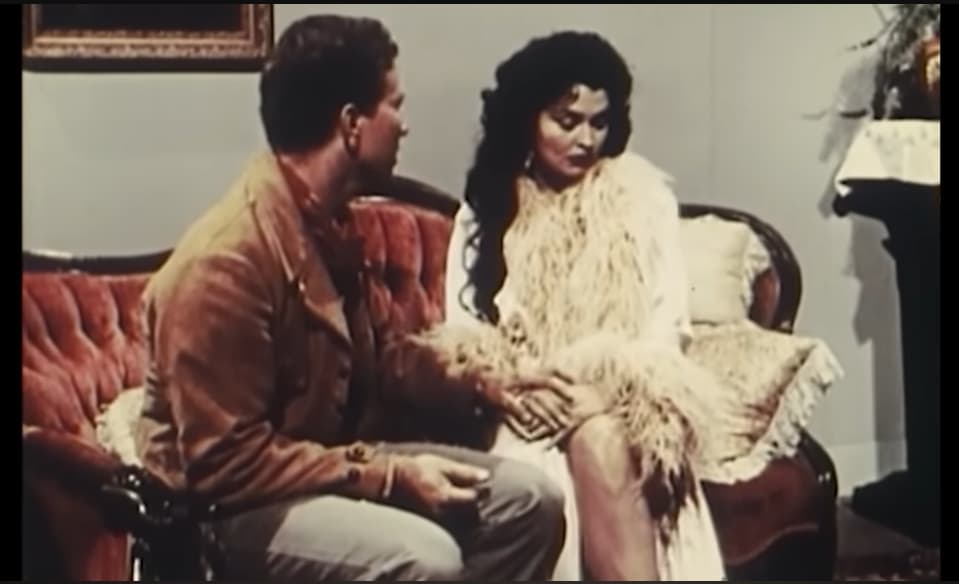
Marty Robbins and “The Ballad of a Gunfighter”: When the Master Storyteller Stepped Off the Record and Into the Silver Screen
In the sweeping, dust-choked annals of Western lore, there are artists who sing about the frontier, and then there is Marty Robbins—a man who seemed to have stepped directly out of a 19th-century tintype. In 1964, at the absolute zenith of his “Gunfighter” persona, Marty took his obsession with the Old West to its natural conclusion by starring in and producing the feature film “The Ballad of a Gunfighter.” For those of us who grew up captivated by the cinematic grit of the 1960s, this wasn’t just a “singer making a movie”; it was the physical manifestation of the stories he had been weaving on Columbia Records since the late fifties. Released during an era when the Western was undergoing a transition toward a more complex, psychological realism, this film allowed the “Gentle Giant” of the narrative song to trade his guitar for a pair of six-shooters and prove that his “velvet” charisma translated perfectly to the flicker of the cinema.
The “story” behind “The Ballad of a Gunfighter” is a classic, rhythmic tragedy of honor, greed, and the complicated geometry of the human heart. Marty plays a misunderstood outlaw—a man of a high-level moral code who finds himself at odds with his own partner over the affections of the same woman. It is a narrative of “quiet desperation” set against the sprawling landscapes of the American Southwest. What makes the film so compelling for the sophisticated viewer is how closely it mirrors the structure of his legendary hits like “El Paso” or “Big Iron.” Marty brought a unique, understated intensity to the role; he didn’t need to shout to command the screen, much like he didn’t need to shout to command a lyric. The film served as a “mini-movie” expanded to feature length, offering fans a rare opportunity to see the man who sang of the “outlaw’s call” actually live it out in the high-noon sun.
For the listener and viewer who has spent a lifetime appreciating the “Golden Age” of the Western, watching this film today is a visceral trip back to a more principled time. It evokes memories of Saturday afternoon matinees, the smell of popcorn in a darkened theater, and the realization that Marty Robbins was perhaps the last true “Singing Cowboy” who could also carry a dramatic lead with genuine grit. The lyrics of his life—of duty, sacrifice, and the “sundown” of the frontier—are all present in his performance. For a “qualified” reader who has navigated their own “standoffs” and seen the seasons of life turn, this film is a profound mirror. It reminds us that our legends are often built on the choices we make when the chips are down and the partner we trusted turns away.
The meaning of “The Ballad of a Gunfighter” lies in its authenticity. Marty Robbins possessed the unique, almost magical gift of being a “Time Capsule” unto himself. He didn’t just play a gunfighter; he understood the weight of the iron and the cost of the life. As we reflect on this cinematic artifact today, through the lens of our own silver years, we see it as more than just a “Free Western Movie” on a digital channel; it is a testament to the boundless creativity of a man who refused to be contained by a single medium. The Master Storyteller may have eventually hung up his holsters, but in the flickering shadows of this film, he remains the eternal guardian of the Western myth—a man who lived, sang, and acted with a “velvet” soul and a heart as big as the Texas sky.
 Music Legend