
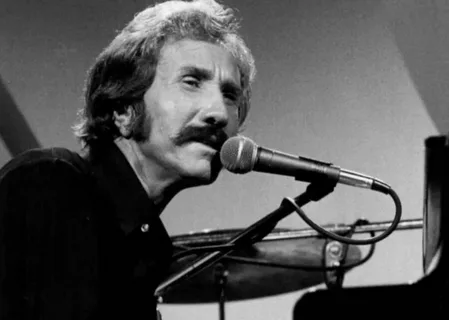
Marty Robbins -“Eighteen Yellow Roses”: A “Velvet” Masterclass in Secret Devotion and the Poetics of the Unspoken
In the vibrant, transistor-radio spring of 1963, Marty Robbins released a track that would become one of the most enduring “high-fidelity” snapshots of his early crossover era. When he recorded “Eighteen Yellow Roses,” Marty wasn’t just covering a contemporary hit; he was claiming it. Originally penned and performed by Bobby Darin earlier that same year, the song reached Number 18 on the Billboard Hot Country Songs chart for Marty, proving that the “Master Storyteller” could take a sophisticated pop narrative and infuse it with the soulful, masculine sincerity of the Nashville Sound. For those of us who remember the early sixties—the era of sleek automobiles and the gentle crackle of a Columbia Records 45rpm—this song was a rhythmic mystery, a “mini-movie” built on the delicate tension of a secret admirer.
The “story” behind “Eighteen Yellow Roses” is a masterclass in the “Gentle Giant” style of vocal restraint. The song follows a narrator who discovers a bouquet of eighteen yellow roses delivered to his lady, accompanied by a card that simply reads, “To the lady in the house from a friend.” Marty’s delivery is a study in crystalline, “velvet” tenor; he navigates the narrator’s curiosity and underlying heartache with a melodic grace that feels entirely authentic. It was an era where the “Nashville Sound” was becoming increasingly polished, and Marty was the definitive architect of this sophisticated transition. He moved effortlessly from the rugged grit of the Gunfighter Ballads to this urban, orchestrated elegance, proving that his voice was a “high-level” instrument capable of painting any emotional landscape.
For the sophisticated listener who has spent a lifetime navigating the “twists and turns” of their own personal journey, hearing “Eighteen Yellow Roses” today is a deeply evocative experience. It brings back memories of wood-paneled dens, the soft glow of a record player’s light, and the realization that some of life’s most profound stories are told through the things we don’t say. The lyrics speak to a universal human experience of wonder and the “quiet desperation” of a love that might be slipping away—or a devotion that is being quietly acknowledged from afar. For a “qualified” reader who has seen the seasons of life turn and perhaps held their own “secret” bouquet of memories, this song is a profound mirror of our own resilience and the beauty of a well-kept mystery.
The meaning of “Eighteen Yellow Roses” lies in its unapologetic tenderness. Marty Robbins possessed the unique, almost magical gift of being a “vocal chameleon” who could inhabit any character with total sincerity. As we reflect on this 1963 masterpiece today, through the lens of our own silver years, we see it as more than just a chart-topper; it is a testament to the enduring power of grace and the subtle art of the narrative song. The Master Storyteller may have eventually returned to the “El Paso” desert, but in the shimmering, rhythmic notes of this song, he remains the eternal observer of the heart’s most delicate secrets. To listen to it now is to sit once more in that vintage living room, acknowledging that while the roses may fade, the voice of the man who sang them into history remains eternally in bloom.
 Music Legend