
A spirited return to roots, where pride, place, and perseverance come together in a joyful declaration of identity.
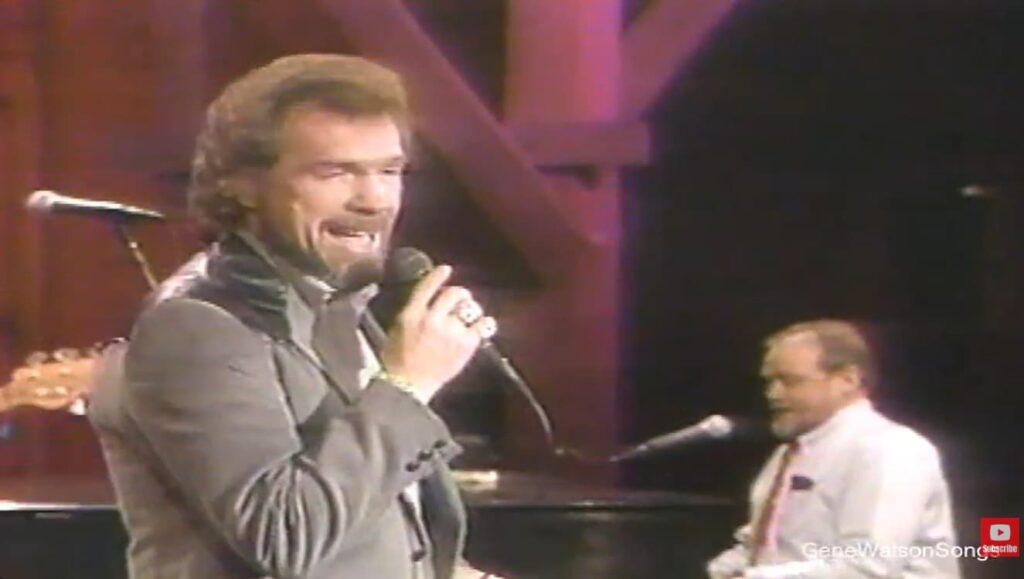
When Gene Watson released “Raisin’ Cane in Texas” in 1980, it arrived as more than just another country single—it was a reaffirmation of where he came from and what he stood for. The song climbed to No. 4 on the Billboard Hot Country Singles chart, further solidifying Watson’s reputation as one of the most consistent and emotionally grounded voices in traditional country music. Featured on the album No One Will Ever Know, the track stood out not because it was somber or reflective, as many of his songs were, but because it carried a sense of joy, movement, and unmistakable pride.
At a time when country music was gradually shifting toward a more polished and crossover-friendly sound, Gene Watson remained firmly rooted in tradition. His voice, clear and unembellished, carried the weight of authenticity—something that could not be manufactured or imitated. And in “Raisin’ Cane in Texas,” that authenticity takes on a different shade. Instead of heartbreak or quiet longing, the song celebrates life itself: the simple pleasures, the restless energy, and the deep connection to place that defines so much of country music’s soul.
The phrase “raisin’ cane” itself evokes a kind of spirited rebellion—not destructive, but joyful. It suggests laughter echoing through open spaces, nights filled with music and companionship, and a life lived without unnecessary restraint. The Texas setting is not merely geographic; it becomes symbolic. It represents freedom, resilience, and a certain rugged independence that has long been associated with the state. Watson does not overstate it. He simply lets the imagery unfold naturally, allowing listeners to step into that world as if it were their own memory.
What makes the song particularly compelling is its balance between energy and sincerity. The instrumentation carries a lively rhythm—fiddles dancing alongside steel guitar, the beat steady and inviting—but it never overwhelms the vocal. Watson’s delivery remains measured, grounded, as though he is recounting something personal rather than performing for effect. That restraint gives the song its lasting charm. It feels lived-in, not staged.
Behind the song lies a broader narrative about identity in country music. For artists like Gene Watson, success was never about reinvention or spectacle. It was about consistency, about honoring the traditions that shaped both the music and the people who listened to it. “Raisin’ Cane in Texas” fits perfectly within that framework. It does not attempt to redefine the genre; instead, it reinforces its core values—honesty, storytelling, and a deep respect for everyday life.
For listeners, the song often carries a sense of familiarity that is difficult to articulate. It recalls gatherings where music was not just background noise but a central part of the experience. It brings to mind open roads, long conversations, and the kind of laughter that lingers long after the moment has passed. There is a warmth to it, a sense that life, despite its challenges, still holds room for joy and celebration.
In the larger arc of Gene Watson’s career, the song stands as a reminder that not every meaningful statement needs to be solemn. Sometimes, the most enduring messages are the ones that arrive with a smile, carried by a melody that invites rather than demands attention. It shows another side of an artist often associated with ballads of heartbreak—a side that embraces life’s lighter moments without losing depth or authenticity.
Over time, “Raisin’ Cane in Texas” has remained a beloved part of Watson’s catalog, not because it was his most dramatic or emotionally heavy work, but because it captures something essential and timeless. It reminds us that identity is not only shaped by struggle, but also by joy—by the places we come from, the people we share moments with, and the music that ties it all together.
And as the final notes fade, there is a lingering sense not of ending, but of continuation. The road stretches on, the music plays, and somewhere, in the wide openness of memory, the spirit of “Raisin’ Cane in Texas” keeps moving—steady, warm, and unmistakably alive.