
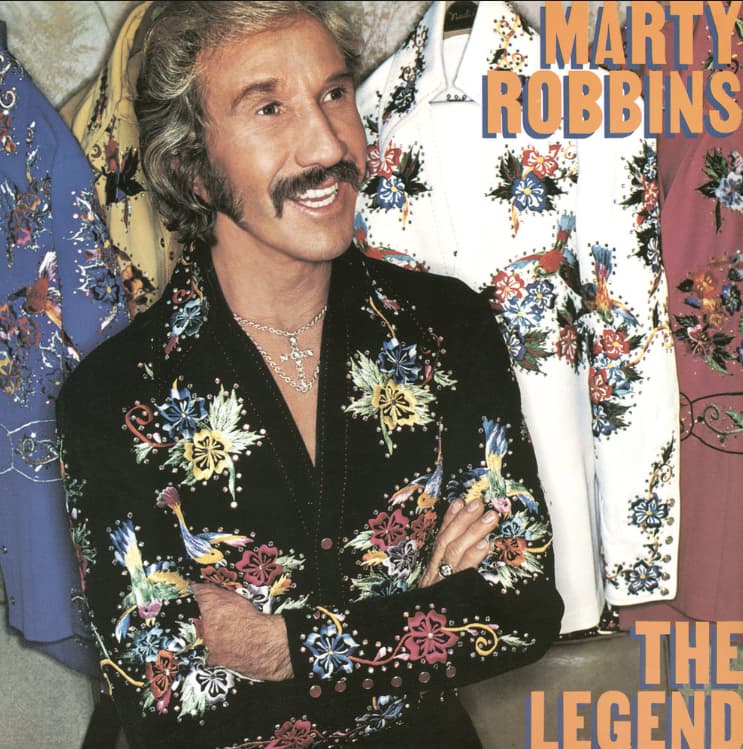
Marty Robbins – “May You Never Be Alone” (1957): The Velvet Voice Softens the Bleeding Heart of Country Music
While Hank Williams Sr.’s catalog is filled with devastating accounts of isolating grief, “May You Never Be Alone” captures a uniquely complex emotion. It is not just a song about being left behind; it is a bittersweet, lingering prayer from a broken heart, wishing the best for the one who caused the damage. When Marty Robbins stepped into the Columbia Records studios in 1957 to record this classic for his landmark album The Song of Robbins, he took Hank’s raw, traditional hillbilly lament and reshaped it into a smooth, velvet-draped masterpiece of mid-century vocal elegance.
The “backstory” of this composition traces back to 1948, when Hank Williams recorded the track as a B-side under MGM Records. Hank’s original version was anchored in the driving, unpolished energy of post-war honky-tonk, characterized by a sharp fiddle and his unmistakable, piercing Alabama wail. It was the sound of a man completely unraveled. When Marty Robbins took up the mantle nearly a decade later, he chose a completely different structural framework. Backed by the emerging architects of the classic Nashville Sound, Marty utilized his flawless “Velvet Voice” to strip away the harsh, jagged edges of the original, transforming the song into a lush, comforting sanctuary for the lonely soul.
The Architecture of the Production: A Masterclass in Restraint and Waltz-Time Grace
For the sophisticated listener who appreciates technical nuance, Marty’s 1957 studio interpretation is an exquisite exercise in acoustic intimacy. Rather than overwhelming the delicate, conversational nature of the lyric with heavy orchestration, the arrangement relies on a beautifully minimalist foundation.
- The Swaying Waltz Rhythm: The track unfolds over a gentle, hypnotic 3/4 time signature, moving with the slow, deliberate pace of a midnight pendulum.
- The Weeping Steel Guitar: A pristine, crying steel guitar glides flawlessly beneath Marty’s verses, acting as a lonesome, echoing counterpoint to his vocal lines and keeping the track rooted firmly in the soil of traditional country music.
“Like a bird that’s lost its mate in flight… May you never be alone like me tonight.”
With his signature, crystal-clear diction, Marty delivers these poetic lines not with an angry sob, but with a warm, empathetic reverence. He sings with the weary authority of a man who understands the “passion and danger” of love, yet chooses grace over bitterness. His deep, resonant baritone transforms Hank’s frantic plea into a beautiful, lasting “souvenir” of human vulnerability.
A Pillars of Cross-Generational Homage
As we evaluate this recording from the perspective of 2026, Marty’s performance of “May You Never Be Alone” stands as a towering pillar of The Song of Robbins—a project that proved he could honor the structural blueprints laid down by the genre’s pioneers while completely modernizing them for a wider audience. By treating Hank’s tragedy with such smooth, vocal dignity, Marty bridges the gap between the rough honky-tonks of the 1940s and the sophisticated country-pop crossover era.
It remains a hidden gem in the Robbins archive, an eternal echo from a golden era that reminds us that even when we are left entirely alone in the dark, a great melody can still wrap around us like a warm embrace.
You can experience the rare, velvet-smooth brilliance of this early masterclass and drift into the comforting, skeletal beauty of his 1957 studio performance here: “May You Never Be Alone” by Marty Robbins (1957 Studio Recording). It stands as a timeless monument to the voice that taught us how to heal through heartbreak.
 Music Legend