
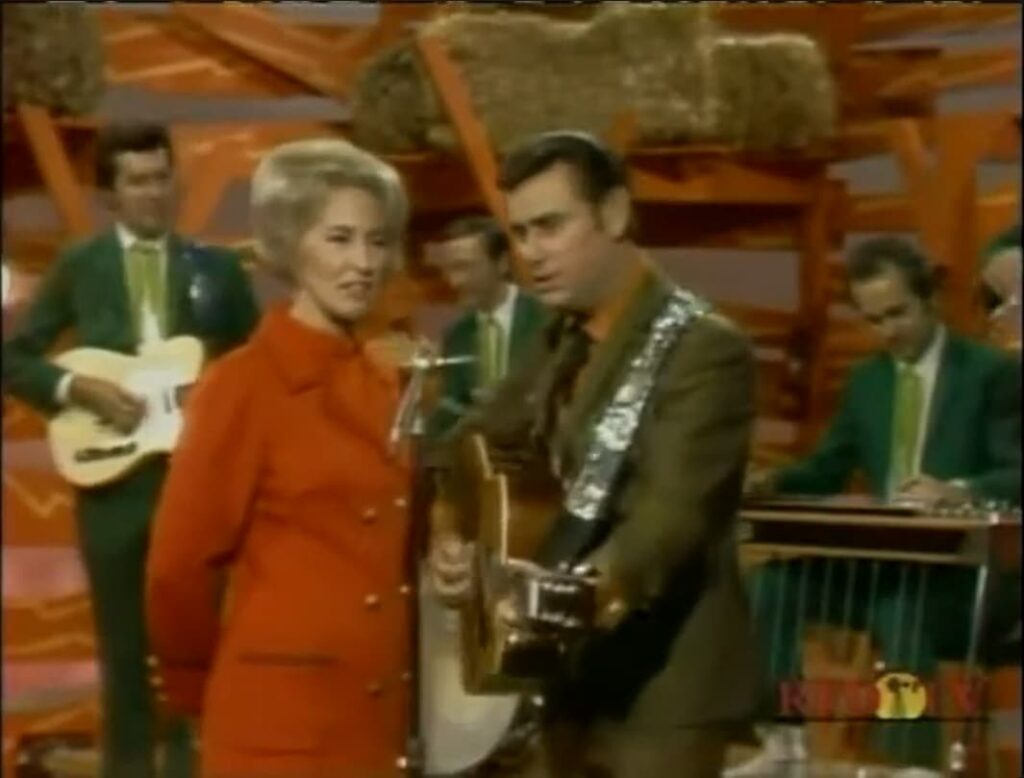
A bittersweet farewell wrapped in melody, where love breaks not in silence, but in shared resignation and quiet dignity
Released in 1969, “Milwaukee Here I Come” stands as one of the earliest and most telling duets between George Jones and Tammy Wynette, capturing a moment in country music where storytelling felt deeply personal, almost uncomfortably real. The song was included on their collaborative album We Go Together and quickly resonated with audiences, climbing to No. 3 on the Billboard Hot Country Singles chart—a remarkable achievement that signaled the powerful chemistry between these two legendary voices.
Written by Red Lane, the song unfolds like a short, intimate play—two perspectives intertwined, yet emotionally drifting apart. It tells the story of a couple at the end of their relationship, where the man announces his departure with a mix of relief and lingering affection, while the woman responds with restrained heartbreak. The destination—Milwaukee—becomes less important than what it represents: escape, closure, and perhaps the illusion of a fresh start.
From the very first lines, George Jones delivers his part with a weary calmness, as though the decision has already been made long before the words are spoken. His voice carries that unmistakable tremble, a fragile edge that suggests he is not entirely free from regret. Then enters Tammy Wynette, her reply measured, composed, yet quietly devastating. There is no dramatic outburst, no desperate plea—only the sound of someone accepting what cannot be undone.
What makes “Milwaukee Here I Come” so enduring is this emotional balance. It is not a song about explosive heartbreak, but about the slow, inevitable unraveling of something once cherished. The duet format allows both sides of the story to breathe, creating a dialogue that feels painfully authentic. In many ways, it reflects the real-life dynamic of George Jones and Tammy Wynette, whose relationship would later become one of the most talked-about in country music history—marked by passion, conflict, and a shared musical brilliance that could not be denied.
Musically, the arrangement is simple, almost understated. A gentle country shuffle, soft steel guitar accents, and a steady rhythm section provide just enough support without overshadowing the narrative. This minimalism is intentional—it leaves space for the voices to carry the weight of the story. And carry it they do, with a sincerity that feels less like performance and more like lived experience.
There is also something quietly profound in the song’s structure. Unlike many duets that aim for harmony and unity, “Milwaukee Here I Come” thrives on contrast. Each line exchanged between George Jones and Tammy Wynette reveals a subtle difference in emotional perspective—he moves forward, she lingers in reflection. Yet neither is portrayed as right or wrong. Instead, the song acknowledges a truth that is often left unspoken: sometimes love simply reaches its end, not with anger, but with acceptance.
For listeners, the song carries a certain weight of memory. It evokes late-night conversations, unspoken tensions, and the quiet realization that something meaningful is slipping away. There is no resolution offered, no promise of reconciliation—only the echo of what once was, and the uncertain road ahead.
Within the broader landscape of late 1960s country music, “Milwaukee Here I Come” helped redefine what a duet could achieve. It was not just about blending voices beautifully, but about telling a story with emotional depth and nuance. In that sense, the song remains a masterclass in restraint and honesty.
Years may pass, trends may change, but songs like this endure because they speak to something timeless. Not every goodbye is loud. Not every ending demands explanation. Sometimes, it is simply a matter of one voice saying goodbye… and another quietly letting go.
Video:
