
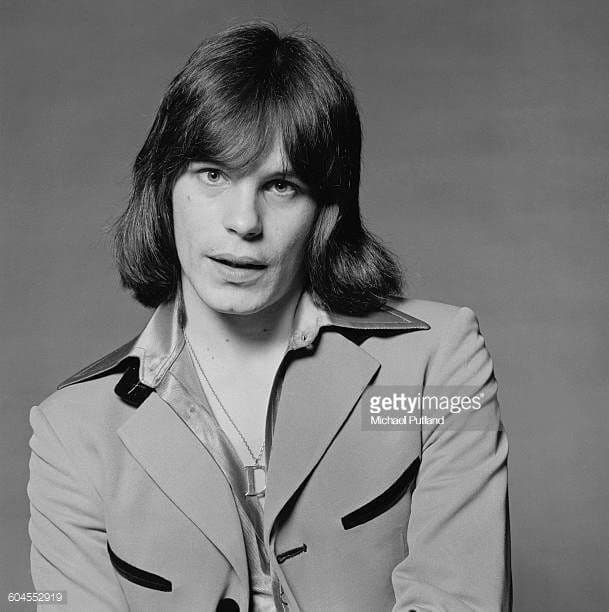
“The Best of Top of the Pops” preserves the unforgettable television era of Showaddywaddy, when rock and roll nostalgia, colourful stage clothes and irresistible energy turned Saturday night television into a shared musical memory.
When Showaddywaddy appeared on Top of the Pops, they seemed almost perfectly made for television. In the middle of the 1970s, when British popular music was filled with glam rock, progressive sounds, disco and increasingly elaborate studio productions, the Leicester group chose a different path. They looked backwards, but never seemed old fashioned. Their music celebrated the excitement of 1950s rock and roll, while their colourful clothes, coordinated movements and larger than life performances gave that sound a distinctly 1970s personality. At the centre of that image was Dave Bartram, the band’s charismatic lead vocalist and one of its principal songwriters. Although “The Best of Top of the Pops” is not a conventional Showaddywaddy studio album or a Dave Bartram solo release with its own chart history, the title evokes something important about the group’s legacy: their memorable appearances on the BBC programme and the extraordinary period when their records became familiar sights as well as sounds. There is therefore no accurate single chart position that should be attached to “The Best of Top of the Pops” itself. Instead, its significance comes from the remarkable collection of Showaddywaddy hits that brought them repeatedly into British living rooms during their peak years.
The breakthrough came in 1974, when “Hey Rock And Roll” became the record that announced Showaddywaddy as a serious force in British pop. Released in March that year, the single climbed to No. 2 on the UK Singles Chart, remaining in the Top 10 for several weeks and establishing the group’s distinctive formula almost immediately. The follow up “Rock ’n’ Roll Lady” reached No. 15, while “Hey Mister Christmas” reached No. 13 later that year. In 1975, “Sweet Music” climbed to No. 14, and their version of “Three Steps to Heaven” returned them to No. 2. Then came the moment that completed their transformation from successful newcomers into one of Britain’s most recognizable pop groups. In 1976, “Under the Moon of Love” reached No. 1 on the UK Singles Chart, giving Showaddywaddy their only British chart topping single. Looking back at those numbers today, it becomes clear that their television appearances were not simply nostalgic curiosities. They were part of a sustained period of commercial success, and Top of the Pops provided the visual stage through which millions of viewers came to know the band.
For Dave Bartram, that television exposure was particularly important because he possessed the kind of stage presence that could immediately communicate through a television screen. He was not simply standing at a microphone and singing the melody. He became part of the visual story of the group, surrounded by musicians who shared the same carefully constructed rock and roll image. Showaddywaddy had developed from the Leicester club scene after members of two local groups, Choise and The Golden Hammers, came together. Their eight member line up was unusual, and it gave the band an almost theatrical quality. There were multiple singers, musicians and personalities on stage, creating something closer to a rock and roll revue than a conventional pop group. That became one of their great advantages on Top of the Pops. Television rewarded artists who could create an immediate visual impression, and Showaddywaddy understood that instinctively. The clothes were bright, the hair was carefully styled, the movements were energetic and the songs were built around melodies that could be remembered after a single listen. Their performances had an atmosphere of celebration rather than seriousness, and that made them especially distinctive during a decade in which popular music was often becoming more ambitious and self consciously artistic.
The band’s fascination with earlier music was never hidden. Showaddywaddy openly embraced the rock and roll, rockabilly and doo wop traditions of the 1950s and early 1960s, but they did something clever with that nostalgia. They did not present the music as a museum piece. Instead, they made it feel alive again. Their performances suggested that the excitement of a great rock and roll song had not disappeared simply because a new decade had arrived. This was an important part of their appeal. For listeners who had grown up with the original generation of rock and roll, there was the pleasure of recognition, while younger audiences could discover those sounds in a fresh and colourful form. Top of the Pops amplified that effect because the programme itself was becoming a visual record of British popular culture. A song heard on the radio could suddenly appear in the living room, performed by familiar faces, surrounded by the fashions and atmosphere of the moment. For Showaddywaddy, this was almost ideal. Their music already depended on performance, personality and movement, so the television camera gave their records another life.
There is a particularly warm quality to watching Dave Bartram and Showaddywaddy perform today. The clothing may immediately place the footage in the 1970s, but the enthusiasm does not feel dated. There is something wonderfully direct about the band’s approach. They were not trying to make rock and roll intellectually complicated. They understood that a great rhythm, a memorable chorus and a room full of people willing to dance could be enough. Songs such as “Hey Rock And Roll,” “Sweet Music,” “Three Steps to Heaven,” “Under the Moon of Love” and “You Got What It Takes” were built around that simple pleasure. Their success came partly from knowing exactly what their audience wanted and then giving it to them without apology. At a time when nostalgia could easily have sounded like retreat, Showaddywaddy turned it into celebration. They demonstrated that looking back did not necessarily mean standing still.
That is why the connection between Showaddywaddy and Top of the Pops remains so important when remembering the group. Their legacy is not contained only in their singles, their chart statistics or their album sales. It also lives in the visual memories attached to those songs. A television performance could become part of an ordinary evening at home, and decades later, the first few seconds of a familiar song can bring back the entire atmosphere of that period. The sound of the drums, the harmonies, the clothes, the movement on stage and Dave Bartram’s voice all become part of one memory. This is one of the reasons old television performances can feel surprisingly emotional. They preserve not only music but the way music once entered everyday life.
Perhaps the greatest achievement of Showaddywaddy was that they made nostalgia feel young again. They took music associated with an earlier generation and presented it with the confidence, colour and energy of the 1970s. Dave Bartram became one of the faces most closely associated with that transformation, helping give the group a personality that audiences could recognize instantly. Their eventual chart success proved that this was more than a novelty. When “Under the Moon of Love” reached No. 1, it confirmed that Showaddywaddy had successfully carried their rock and roll revival into the very heart of British mainstream pop.
And that is what makes the idea of “The Best of Top of the Pops” so evocative in connection with Showaddywaddy. It brings together more than a collection of performances. It recalls an era when a television programme could become part of the national rhythm of life, when millions of people heard and saw the same artists in the same week, and when a band could turn a few minutes of television into a memory that survived for decades. Showaddywaddy may have been looking back to the rock and roll of the 1950s, but their greatest television moments belonged unmistakably to the 1970s. Their songs still carry that curious mixture of youth and nostalgia, energy and innocence, and perhaps that is why they continue to feel so warm today. The records tell the story of their success, but those old Top of the Pops performances tell something more personal: they remind us of a time when music was not merely something to hear. It was something to see, to dance to, to share, and eventually to remember.