
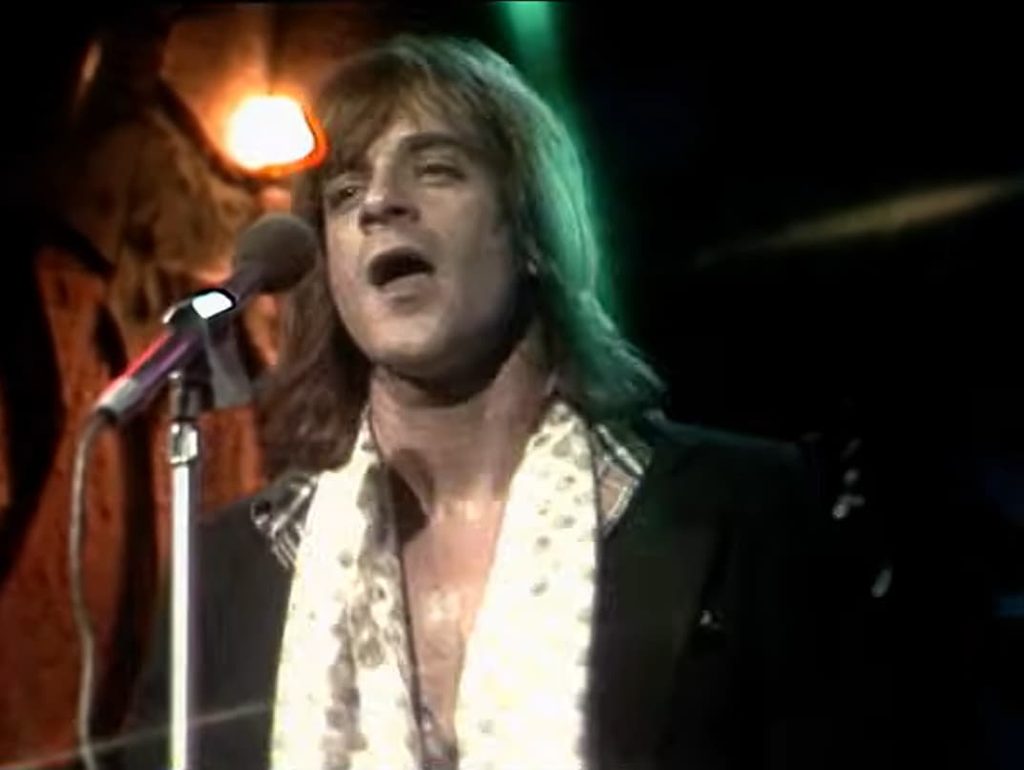
How Eddie Money Turned A Song About Love, Uncertainty And Holding On Into A Breakthrough Rock Hit That Helped Define The Sound Of The Late Seventies
In 1977, a former New York City police cadet named Eddie Money was preparing to introduce himself to the world as a rock singer. He had left behind his earlier ambition of becoming a police officer and moved to California to pursue music, building a following through live performances in the San Francisco Bay Area. His big opportunity arrived with “Baby Hold On,” the first single from his self titled debut album, released in December 1977. Written by Money and guitarist Jimmy Lyon, the song announced the arrival of a performer whose music combined the energy of classic rock with the melodic accessibility of pop. It did not become an overnight No. 1 sensation, but its steady rise through the charts established him as a new voice worth hearing. By June 1978, “Baby Hold On” had reached No. 11 on the Billboard Hot 100, spending 20 weeks on the chart and becoming one of the most recognizable songs of his career.
What makes the recording so immediately appealing is the way it balances urgency with warmth. The rhythm moves forward with a confident, driving pulse, while Money’s slightly rough edged voice gives the song a sense of personal conviction. He does not sound like a singer delivering a perfectly polished declaration of love. Instead, there is a human quality in his performance, as though he is trying to reassure someone while also convincing himself that everything will work out. The title becomes both a romantic plea and a statement of determination. Beneath the catchy melody lies a feeling familiar to anyone who has faced an uncertain relationship or stood at the beginning of a difficult journey, hoping that patience and faith will be enough to see it through.
The song was produced by Bruce Botnick, an experienced engineer and producer whose credits included work with The Doors. His production gave Money’s debut recording a clear, muscular sound without burying the melody beneath layers of studio polish. The track featured Money’s vocals and keyboards alongside a band built around guitarist Jimmy Lyon, drummer Gary Mallaber and bassist Lonnie Turner, with additional musicians contributing to the album. Money’s own background helped shape the record’s personality. Born Edward Joseph Mahoney in Brooklyn in 1949, he had grown up around music before moving west and developing his career. His stage name was memorable, but his real strength was the combination of a distinctive voice, strong melodies and the energy of a seasoned live performer.
There was another reason “Baby Hold On” mattered: it introduced the sound of an artist who would go on to build a catalogue of enduring rock radio favourites. The self titled album also included “Two Tickets to Paradise,” which became another major hit in 1978, reaching No. 22 on the Billboard Hot 100. Together, the two songs established the musical identity that would follow Money through the next decade. He was not trying to imitate the hard rock bands of the era, nor was he simply chasing the polished disco sound dominating dance floors. His music occupied a lively middle ground, with enough guitar driven force for rock audiences and enough melodic clarity for mainstream radio. The debut album eventually achieved double platinum certification in the United States, a remarkable result for a record that began as the introduction of a relatively unknown singer.
“Baby Hold On” also proved that a song did not need a complicated story to leave a lasting impression. Its appeal rests on a simple emotional idea: when life feels uncertain, sometimes the most important thing is to stay together long enough to see what happens next. Money delivered that message with an openhearted energy that kept the song from becoming sentimental. The arrangement keeps moving, the melody stays with the listener, and his voice carries just enough grit to make the promise believable. It is easy to understand why the record continued to receive classic rock radio airplay long after its original chart run.
Looking back, “Baby Hold On” captures Eddie Money at the beginning of a career that would bring him further hits, devoted audiences and a permanent place in late seventies and eighties rock. The song remains closely associated with that first breakthrough, when a singer who had once considered a very different profession found his place behind a microphone. Its enduring charm comes from the combination of a memorable hook and an honest sounding performance, qualities that helped make Eddie Money’s music feel less like a passing trend and more like the soundtrack to real lives, relationships and second chances.