
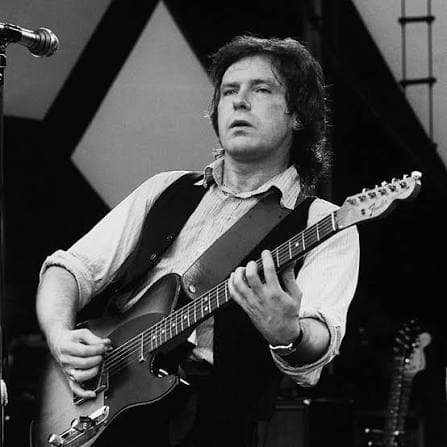
“Blackland Farmer” is a proud song about finding wealth not in money or fame, but in the soil beneath your feet, the work of your hands, and the peace that comes from knowing where you belong.
Long before country music became a polished world of stadium tours, television spectacles, and carefully manufactured images, there were singers whose music seemed to rise directly from the places they came from. Frankie Miller was one of them. His voice carried the dust of Texas roads, the sound of small dance halls, and the straightforward honesty of a man who understood that country music did not need to be complicated to tell the truth. In 1959, Miller recorded the song that would become the defining record of his career, “Blackland Farmer.” Released on Starday Records, the single became one of the label’s biggest successes and climbed to No. 5 on the U.S. country chart, making it one of the most important country records of Miller’s career. Two years later, the song returned to the charts in a reissue, reaching No. 16 on the country chart and No. 82 on the Billboard Hot 100, an unusual achievement for such a deeply traditional country recording.
What makes “Blackland Farmer” so memorable is its remarkable simplicity. Written by Frankie Miller himself, the song does not tell a story about wealth, heartbreak, revenge, or the restless search for fame. Instead, it introduces us to a man who is completely at peace with his place in the world. He has little money and not much land, but he does not consider himself poor. His hands are rough, his face has been shaped by hard work, yet his heart is warm. The song’s narrator measures his fortune by entirely different standards: health, honest work, fresh air, the changing seasons, and the land he is fortunate enough to call his own. It is a philosophy that sounds almost revolutionary today because the song refuses to believe that a person’s value can be measured by what he owns.
The word “Blackland” refers to the rich, dark agricultural soil found in parts of Texas, particularly the famous Blackland Prairie region. For a farmer, that soil was more than dirt beneath a pair of boots. It represented possibility. Cotton, corn, hay, and other crops could grow from it, but the song gives the land a deeper meaning than agriculture alone. In “Blackland Farmer,” the earth becomes part of a spiritual relationship between the man and the world around him. The narrator finds himself growing closer to God while plowing the ground and breaking the sod. Work is not presented as a punishment. It is a form of connection. There is something profoundly peaceful about the image because the farmer does not need to escape his daily life in order to find meaning. Meaning is already there, waiting in the fields.
This was an especially fitting song for Frankie Miller, a Texas born singer whose career belonged to the classic honky tonk and traditional country world of the 1950s and early 1960s. Born in Victoria, Texas, Miller began singing and performing while still young, eventually making his way through local radio, regional shows, recording sessions, and the demanding circuit of Texas country music. His early recordings did not immediately make him a star. He recorded for the Gilt Edge and Columbia labels during the 1950s, but commercial success remained elusive. Like many artists of his generation, he experienced the long and often discouraging period between having talent and finally finding the song that allowed listeners to hear exactly who he was. That moment arrived when he signed with Starday Records in 1959.
“Blackland Farmer” was the right song at the right moment because it sounded authentic to the man singing it. Frankie Miller did not have to invent the character. His musical identity was already rooted in the Texas country tradition that surrounded him. Starday Records itself was known for releasing music that often felt closer to rural communities and regional audiences than to the increasingly commercial world of mainstream Nashville. Miller’s recording had an uncomplicated, traditional sound, but its emotional honesty gave it lasting power. The song became a Top Five country hit, and Miller quickly followed it with another major success, “Family Man,” which reached No. 7 on the country chart later in 1959. His subsequent hits included “Baby Rocked Her Dolly,” which reached the Top 15 in 1960, and “A Little South of Memphis,” which reached the country chart in 1964.
Yet “Blackland Farmer” remained the song most closely connected with his name. It was not a song built around dramatic vocal acrobatics or elaborate production. The melody moves with an easy country rhythm, and Miller delivers the lyrics with the natural confidence of someone describing a life he understands. That is the secret of the performance. The singer never sounds as though he is trying to convince us that the farmer is happy. He simply sounds as though happiness is the most obvious thing in the world. When he sings about planting cotton and hay, about the breeze moving through the corn, or about breaking new ground early in the day, the details feel observed rather than invented.
There is also a quiet spirituality running through the song. The farmer sees his life as a gift. He does not claim that everything has been easy. His hands are rough, and his face carries the marks of physical work. But he believes himself fortunate because he has health and land. That sense of gratitude becomes even stronger when the narrator describes feeling closer to God while working the soil. It is an old idea, but “Blackland Farmer” expresses it without sounding like a sermon. The spirituality comes from the experience itself. The farmer looks at the world around him and sees something larger than himself.
Perhaps this is why the song still has such emotional power decades later. “Blackland Farmer” belongs to an era when country music often found poetry in ordinary lives. A farmer, a truck driver, a working man, a lonely widow, or someone sitting alone beside a jukebox could become the center of a great song. Country music understood that the most important stories were not always happening under bright lights. Sometimes they were taking place before sunrise in a field, at a kitchen table, or on a quiet road leading home.
Frankie Miller’s own career followed an equally interesting path. After the success of “Blackland Farmer” and his other chart records, he became a familiar figure in the country music world, appearing on the Louisiana Hayride and making appearances at the Grand Ole Opry. He performed alongside and crossed paths with many of the artists who would define the golden age of country music. Yet Miller never became one of the towering commercial stars of his generation. His final chart appearance came in the 1960s, and after recording for United Artists, he eventually stepped away from the music business.
There is something almost fitting about that choice when viewed through the lens of “Blackland Farmer.” The song celebrates a life that does not require endless ambition to feel complete. Frankie Miller had tasted success, appeared on major country music programs, recorded hit songs, and shared the stage with important artists. But he eventually chose a life away from the constant pursuit of fame. In later years, his music was rediscovered by devoted fans and collectors of traditional country music, while Bear Family Records helped preserve and reissue parts of his recorded legacy.
The song itself also travelled far beyond its original release. “Blackland Farmer” was recorded by other artists, including Sleepy LaBeef and later interpreted by performers such as Elizabeth Cook, demonstrating that its message remained meaningful to musicians from different generations. The survival of the song says something important about great country writing. A song does not have to become a No. 1 pop phenomenon to live for decades. Sometimes it survives because musicians recognize something true inside it and want to carry that truth forward in their own voices.
Listening to “Blackland Farmer” today is like opening a window onto a different America. The world inside the song moves at the rhythm of the seasons rather than the clock. The day begins with work, the land determines much of life’s rhythm, and happiness is found in things that cannot easily be bought. The song does not pretend that farming is glamorous. The narrator’s rough hands and weathered face tell us otherwise. But he has discovered something that many people spend their entire lives searching for: the ability to recognize when enough is enough.
That may be the deepest meaning of “Blackland Farmer.” The man in the song does not dream of becoming a banker, a lawyer, or someone admired by strangers. He knows who he is. He knows what his hands are for. He knows the smell of the earth after it has been turned and the sound of the wind moving through the crops. In a world constantly telling people to want more, he looks around at his life and quietly decides that he is already rich.
For Frankie Miller, that idea became the foundation of his most enduring song. “Blackland Farmer” gave him a Top Five country hit in 1959, established him as one of Starday Records’ important artists, and earned him a permanent place in the history of traditional Texas country music. But the song’s real legacy lies beyond its chart position. It remains a small, beautifully observed portrait of contentment, faith, and honest work.
The years have changed the landscape of country music, and the world described in “Blackland Farmer” has become increasingly distant. But when Frankie Miller begins to sing, the fields seem to return for a few minutes. The soil is dark beneath the morning light, the crops are waiting to be planted, and somewhere in the distance, a simple man is still looking across his land and realizing that everything he truly needs may already be there.