
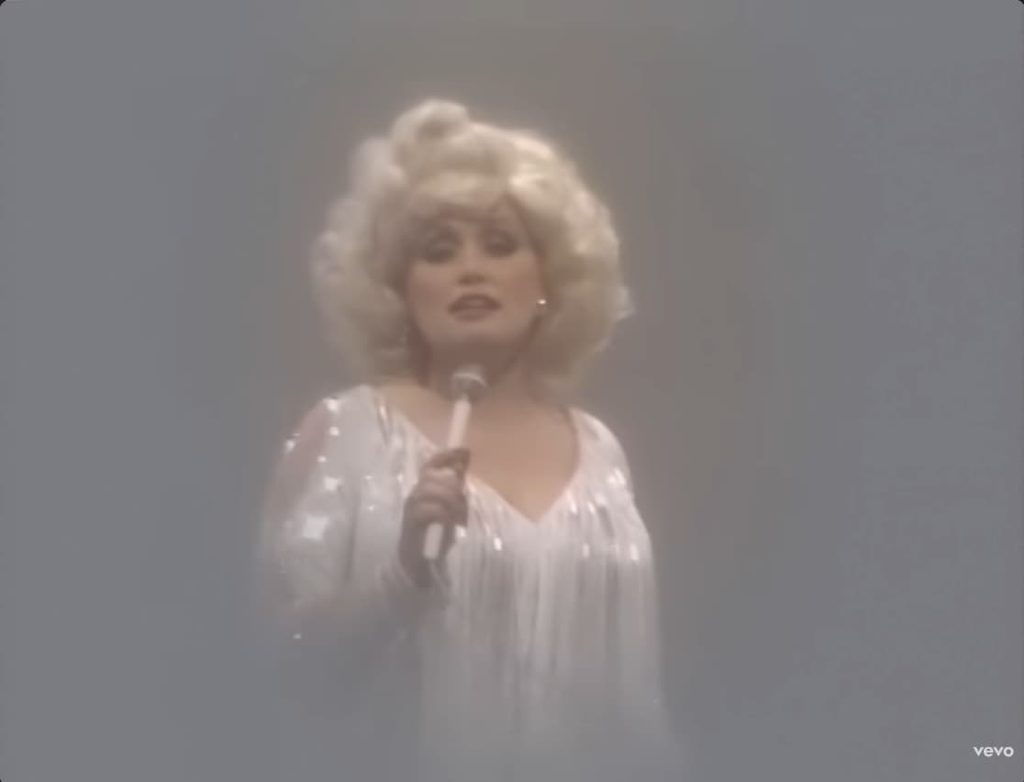
“You’re the Only One” captured Dolly Parton at the height of her late 1970s crossover momentum
Released on May 14, 1979, “You’re the Only One” became one of the defining hits of Dolly Parton’s extraordinary run at the end of the decade. Written by Carole Bayer Sager and Bruce Roberts, the song was the first single from Dolly’s album Great Balls of Fire, and it quickly demonstrated just how comfortably she could move between traditional country feeling and the smoother, more contemporary sound that was opening doors for her beyond Nashville. The single debuted at No. 25 on Billboard’s Hot Country Songs chart and reached No. 1 on July 28, 1979, where it remained for two weeks. It also reached No. 14 on Billboard’s Adult Contemporary chart and No. 59 on the Billboard Hot 100. In Canada, it topped both the country and Adult Contemporary charts.
The timing was remarkable. Dolly had already spent years establishing herself as one of country music’s finest songwriters and performers, but the late 1970s brought an entirely new level of national attention. Her 1977 album Here You Come Again had opened an important crossover chapter, and the success of “Heartbreaker” and “Baby I’m Burning” showed that she was becoming increasingly comfortable with sophisticated studio arrangements and pop oriented production. “You’re the Only One” continued that journey. The song was not written by Dolly herself, which makes its place in her catalog especially interesting. She took material written by two highly accomplished pop songwriters and made it unmistakably hers through phrasing, warmth, and that instantly recognizable voice. Her performance never sounds as though she is abandoning country music. Instead, she brings her country identity into a more polished setting. The result is romantic without becoming overly sentimental, and polished without losing the personality that made Dolly so distinctive.
The song itself is a straightforward declaration of devotion. Its central idea is simple: among all the people who might enter someone’s life, there is one person who remains irreplaceable. Dolly sings it with an intimacy that keeps the sentiment from feeling oversized. There is a softness in her delivery, but she never loses the slight edge and rhythmic confidence that had become increasingly noticeable in her recordings of this period. That balance was important to Dolly’s evolution. She could sing about love with genuine tenderness while still sounding like the woman who had grown up in the Tennessee mountains and learned her musical instincts from family, church, and country radio. The Los Angeles recording sessions for Great Balls of Fire, held in December 1978, placed her within a sophisticated studio environment, yet the voice remained the center of everything.
Great Balls of Fire, released on May 28, 1979, became another major success. The album reached No. 4 on Billboard’s Top Country Albums chart and No. 40 on the Billboard 200, eventually earning Gold certification. “You’re the Only One” was its first single and was followed by “Sweet Summer Lovin’,” which reached No. 7 on the country chart. The album itself was an intriguing snapshot of Dolly’s artistic range. Alongside her own compositions were a bluegrass flavored interpretation of the Beatles’ “Help!” and a Dolly version of Jerry Lee Lewis’s “Great Balls of Fire.” That mixture tells us something important about where she stood in 1979. She was not simply trying to make country music sound more commercial. She was showing that a country singer could absorb pop, rock, bluegrass, and contemporary studio sounds without losing her identity.
There is also something wonderfully revealing about hearing “You’re the Only One” today. It belongs to a period when Dolly was becoming increasingly visible to audiences who might never have considered themselves country music listeners. Yet the performance does not feel like an artist desperately reaching for crossover success. She sounds completely at ease. That confidence came from years of work, and by 1979 she had already learned how to make a carefully produced recording feel personal. The song ultimately reached No. 8 on Billboard’s 1979 year end country chart, while its success earned Dolly a nomination for Song of the Year at the 15th Academy of Country Music Awards.
For Dolly, the importance of “You’re the Only One” was not simply that it became another No. 1. It arrived during a remarkable stretch in which she was proving, record after record, that her voice could inhabit almost any musical setting without becoming anonymous. The rhinestones and increasingly glamorous television appearances were part of the picture, but the real constant was still the singer herself. Whether she was singing a mountain ballad, a bluegrass number, a pop crossover, or a tender love song like this one, Dolly had a way of making the material feel as though it had passed through her own life before reaching the listener. That is what gives this 1979 recording its enduring charm. It sounds like a woman stepping confidently into a larger musical world while carrying the voice that brought her there.