
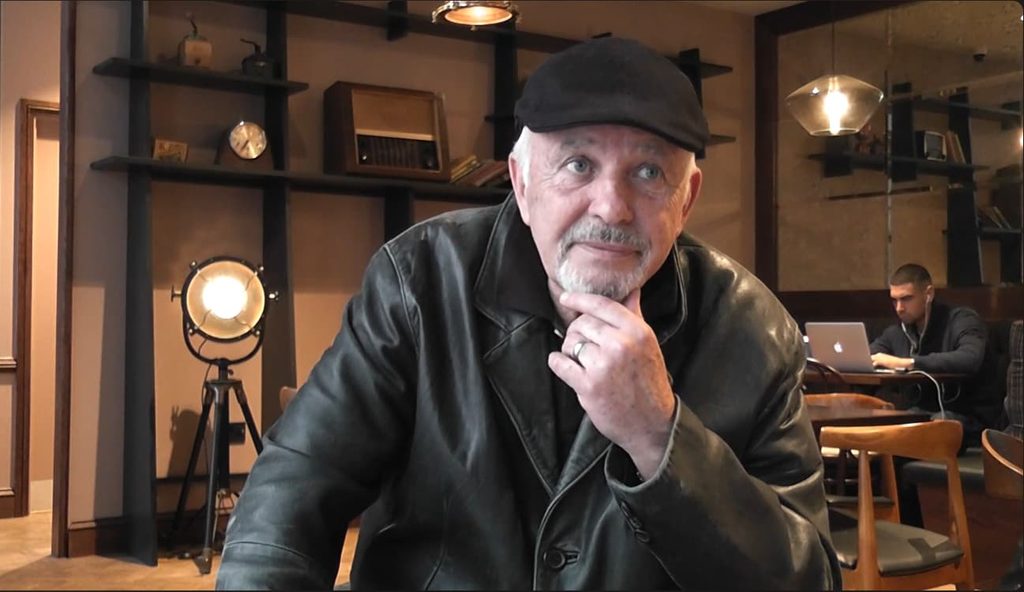
In 2013, David Essex looked back without becoming trapped by the past, revealing the remarkable career of a man who had never belonged to just one world
By 2013, David Essex had reached a point in his career where the word “longevity” seemed almost inadequate. Fifty years had passed since his first record, and four decades had gone by since “Rock On” transformed him from a hardworking young performer into one of Britain’s most recognizable stars. Yet in interviews that year, Essex spoke about his career with surprisingly little self-congratulation. He remained interested in what was happening next. The occasion was connected with his film Traveller, released in cinemas and on video-on-demand in December 2013, and the conversation moved naturally between acting, music, his family background and the extraordinary journey that had begun long before most people knew his face.
The story he told about his career was remarkably simple. 1973 was the year everything came together. Essex had already been working hard for years, but suddenly three different parts of his life collided. He was starring in the stage musical Godspell, appearing in the film That’ll Be the Day alongside Ringo Starr, and releasing “Rock On,” the strange, atmospheric song that became his breakthrough record. Essex later described those three mediums converging as the blueprint for his longevity. It was an extraordinary beginning because the three successes did not simply make him famous. They established the pattern that would define him for decades: music, theatre and film constantly crossing paths.
And “Rock On” itself remains one of the most fascinating pieces of that story. Written by Essex and produced by Jeff Wayne, the record sounded unlike the conventional pop singles surrounding it. The song reached No. 3 in the UK in 1973, while its American success helped introduce Essex to a much wider audience. Its strange echoing atmosphere, sparse arrangement and almost spoken vocal gave him an identity that was very different from the conventional romantic pop star image being attached to him. Essex had already discovered that he could attract attention with his appearance, but “Rock On” proved that there was considerably more beneath the famous face. Decades later, Jeff Wayne recalled that Essex had originally demonstrated the song by banging on an upturned waste bin rather than playing an instrument, an unlikely beginning for one of the most distinctive British singles of the decade.
That refusal to remain in one category became increasingly important. Essex went from That’ll Be the Day to Stardust, from pop records to major stage productions, including Evita and later Childe Byron. He continued recording while acting, and acting while performing live. By 2013, audiences could also know him through television, including his role as Eddie Moon in EastEnders. Asked about that experience, Essex described the programme as “fast and furious,” explaining that there was no rehearsal and that actors simply had to know what they were doing. He admired the quality of the cast, writers and directors, and his comments revealed the same curiosity that had pushed him from music into acting decades earlier.
Perhaps the most revealing part of his 2013 reflections was his attitude toward his own past. Essex did not present himself as someone constantly trying to recreate the glory days of the 1970s. Instead, he spoke about the freedom that came from moving between different forms of work. He said that the convergence of Godspell, That’ll Be the Day and “Rock On” had allowed him to keep moving from one medium to another and keep things fresh and exciting. That idea explains much about his unusually durable career. He was never required to become only the singer, only the actor, or only the former heart-throb. His identity remained fluid enough to accommodate all of them.
There is also something quietly touching about the way Essex spoke about being remembered. After such a long career, he remained almost surprised that people were still paying attention. He said he simply kept his head down, continued doing his thing and hoped he would not “outstay” his welcome. It is a remarkably modest sentiment from someone who had accumulated 19 UK Top 40 singles and 16 Top 40 albums and had remained visible across music, stage, film and television for decades. By 2013, the famous eyes and smile that had once appeared on countless magazine covers were part of British cultural memory, but David Essex himself was still moving. That may be the most interesting thing about looking at him in this period: he was already a piece of nostalgia to many people, yet he did not seem particularly interested in living there. He was still making films, still performing, still talking about new projects, and still carrying that unmistakable curiosity that had taken him from a young drummer in east London to David Essex, one of Britain’s most enduring performers.