
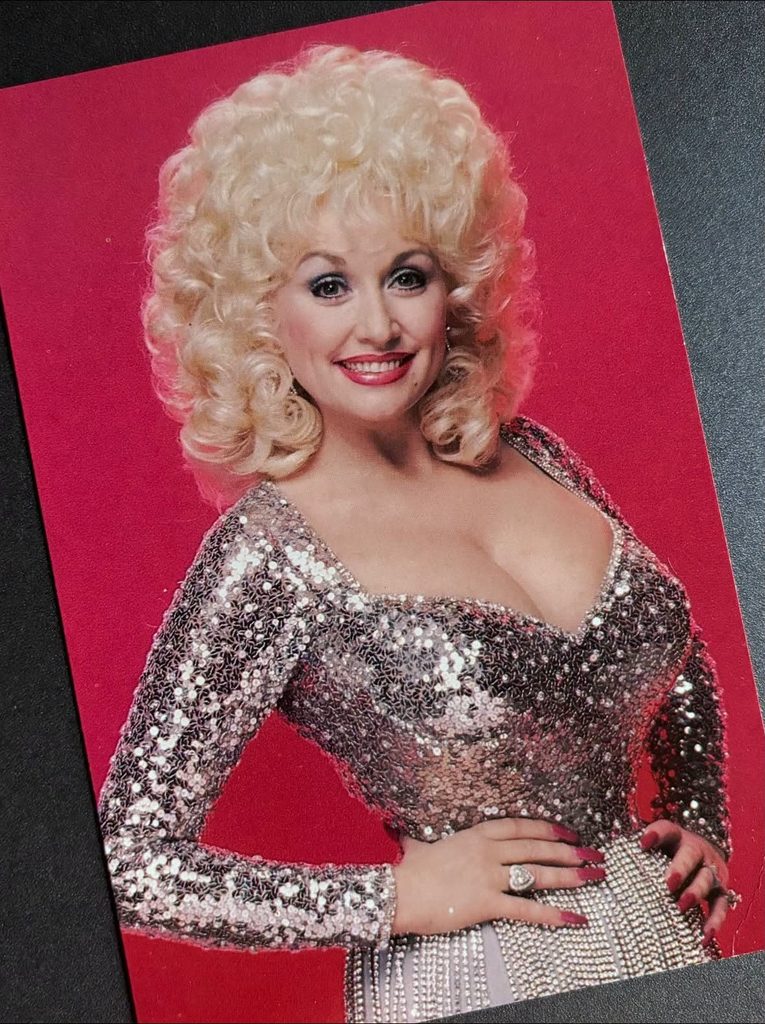
“Tennessee Homesick Blues” was Dolly Parton turning homesickness into a song, bringing the mountains of East Tennessee into the middle of Hollywood
Released in 1984, “Tennessee Homesick Blues” arrived at a fascinating point in Dolly Parton’s career. She was no longer simply one of Nashville’s most successful country singers. After the enormous success of 9 to 5, Dolly had become a genuine film star, and Rhinestone was her next major movie project. The song was released as the lead single from the Rhinestone soundtrack, entering the Billboard country chart on May 14, 1984, and eventually climbing all the way to No. 1. Dolly’s official career timeline records it as another country chart-topper during an extraordinary period when she was successfully balancing music and Hollywood.
What makes the song especially meaningful is that “Tennessee Homesick Blues” sounds like Dolly trying to find her way home while standing thousands of miles from the mountains that shaped her. The song was written for Rhinestone, but its emotional center reaches much deeper than the film’s comedy. Dolly had grown up in Sevier County, Tennessee, in a large family in the foothills of the Great Smoky Mountains, and the landscape of East Tennessee had remained one of the strongest sources of inspiration throughout her songwriting. Her official biography describes how deeply she drew upon the people, stories, music and traditions of that region. By the early 1980s, however, her life had become increasingly connected with Los Angeles, movie sets, recording studios and the enormous machinery of entertainment. “Tennessee Homesick Blues” captures that strange emotional distance. Success can take you almost anywhere, but it does not necessarily make you stop longing for where you came from.
The song also carries a wonderfully playful side of Dolly. Homesickness is treated with humor rather than solemnity, which was one of her great gifts as a songwriter and performer. Even when she was writing about loneliness, Dolly rarely forgot the character, wit and everyday detail that made her songs feel lived-in. That quality was particularly useful in Rhinestone, where she starred opposite Sylvester Stallone as Jake Farris, a New York City taxi driver being transformed into a country singer. Dolly wrote all but one of the songs for the film’s soundtrack, and “Tennessee Homesick Blues” became its musical centerpiece. The movie was released theatrically on June 14, 1984, just weeks after the single began its chart climb. It is easy to hear the song simply as a piece of movie soundtrack material, but Dolly’s connection to Tennessee gives it another layer. She was writing from a place she knew intimately, even while playing a fictional character inside a Hollywood comedy.
There is an interesting contrast between “Tennessee Homesick Blues” and the glamorous image of Dolly Parton that Hollywood was beginning to embrace. By 1984, audiences knew the towering blonde hair, sparkling clothes, unmistakable voice and larger-than-life personality. Yet underneath all of that remained the girl from the Smokies who had written songs about her family, her childhood home and the people who had raised her. Her 1973 album My Tennessee Mountain Home had already been built around that emotional geography, with songs recalling rural East Tennessee and her family’s life there. Dolly’s official site describes the album as a project deeply rooted in her childhood and notes that the title song became one of her most recognizable reflections on youth and family. More than a decade later, “Tennessee Homesick Blues” revisited the same feeling from the opposite direction. The young Dolly had left Tennessee to chase a dream. The successful Dolly was now looking back from the other side of that dream.
And the timing makes the song even more revealing. 1984 was one of the biggest years of Dolly’s transformation into a multimedia superstar. She had already conquered country radio, crossed successfully into pop, starred in 9 to 5, and was now making another major Hollywood film. Her partnership with Kenny Rogers had also produced the worldwide phenomenon “Islands in the Stream” the previous year. Dolly’s official timeline records “Tennessee Homesick Blues” reaching No. 1 while Rhinestone was opening in theaters, placing the song directly inside this extraordinary period of expansion. Yet instead of writing a song about Hollywood glamour or celebrity, Dolly returned to Tennessee. That choice says something important about her songwriting. The bigger her world became, the more firmly she kept returning to the small world that had first given her something to sing about.
Today, “Tennessee Homesick Blues” sits beautifully within Dolly’s larger musical story because it connects two versions of her at once: the country girl who never forgot the Smoky Mountains and the international star who had begun making Hollywood her second home. The song reached No. 1, appeared in one of her most unusual films and became part of a period when almost every door seemed to be opening for her. But its heart remains remarkably simple. Dolly could travel as far as the world would carry her, stand beneath Hollywood lights, make records with enormous stars and become one of America’s most recognizable entertainers, yet Tennessee remained the place her songs instinctively returned to. “Tennessee Homesick Blues” is therefore more than a soundtrack song. It is Dolly Parton hearing the mountains calling from somewhere beyond the noise of Hollywood.