
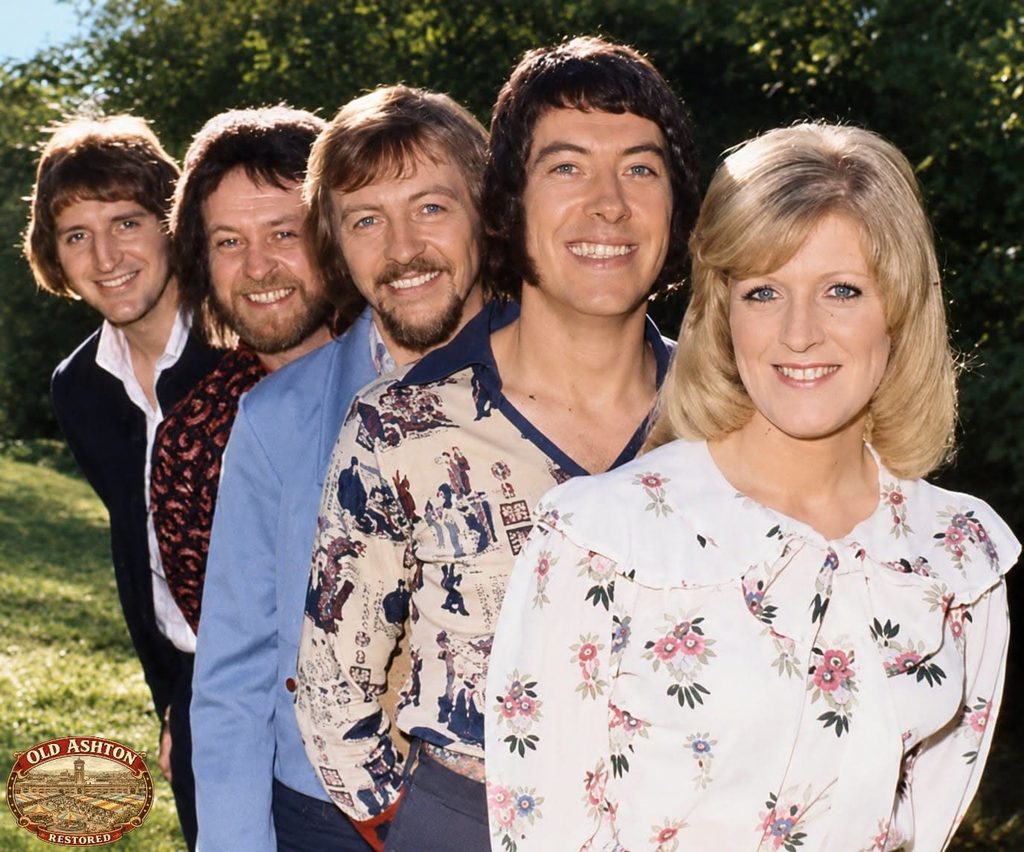
THE FIVEPENNY PIECE – “KEEP YOUR HAND ON YOUR HA’PENNY”: A CHEEKY PIECE OF OLD LANCASHIRE HUMOUR
There was a time when a song did not need a spectacular chorus or a place on the pop charts to become part of people’s memories. Sometimes all it needed was a good story, a familiar accent, and a line that everyone remembered. “Keep Your Hand on Your Ha’Penny” was exactly that kind of song for The Fivepenny Piece, the Lancashire group whose mixture of folk music, comedy, local dialect and everyday storytelling became one of the most recognizable sounds of British entertainment during the 1970s. The song was built around an old expression of advice traditionally given to an unmarried young woman, essentially warning her to be careful while courting. Fivepenny Piece turned that old saying into a playful musical story about Molly, her mother’s warnings, and the very different advice she eventually receives from the young man who is courting her. The humor is unmistakably cheeky, but it is delivered with the warmth and innocence of an earlier British variety tradition.
By the early 1970s, Fivepenny Piece had developed a musical identity that was almost impossible to confuse with anyone else. Formed in the North West of England, the group drew heavily on the language, characters and landscapes around them. Their songs could move from beautifully crafted folk ballads to comic observations about ordinary working life, often performed in Lancashire dialect. Their official history describes the group’s first album, The Fivepenny Piece, released in 1972, as a mixture of two personalities: wistful ballads on one side and humorous Lancashire songs on the other. Eddie Crotty was particularly important to the group’s storytelling tradition, becoming known as a raconteur as much as a musician. Songs such as “Ee By Gum,” “They Tell Us Owt,” and later “Where There’s Muck There’s Brass” showed how effectively the group could turn local speech and everyday situations into entertainment.
“Keep Your Hand on Your Ha’Penny” is a perfect example of that approach because the joke comes from the story rather than from forcing the comedy. Molly’s mother gives her the old-fashioned warning to protect herself while courting, while the young man eventually turns the advice completely upside down. The song therefore plays with the difference between parental caution and youthful romance. The expression itself was much older than the recording. Historical references describe “keep your hand on your ha’penny” as an old piece of advice to an unmarried girl, with versions of the saying dating back well before the twentieth century. Fivepenny Piece took that traditional phrase and placed it inside a character-driven story, allowing listeners to recognize the language even if they had never heard the song before.
What made Fivepenny Piece especially popular was the feeling that their songs came from real communities rather than from an abstract idea of British folk culture. There were people, streets, pubs, families, grandparents, local sayings and recognizable characters in their music. Their first live album, The Fivepenny Piece…On Stage, was recorded at the Broadoak Hotel and released in 1974, demonstrating how important their live performances had become. The group’s official history recalls the album as a showcase for both their comic material and their more reflective songs. By then, Fivepenny Piece had developed a substantial following, and television would become an increasingly important part of their appeal. Their appearances brought their Lancashire humor into living rooms across Britain, where songs such as “Keep Your Hand on Your Ha’Penny” could work almost like miniature comedy sketches set to music.
The group were also remarkably successful during this period. Their 1973 album Making Tracks reached No. 37 on the UK Albums Chart, while King Cotton, released in 1976, went considerably further, reaching No. 9. Television appearances helped turn the group’s songs into familiar national entertainment, including a special Fivepenny Piece at the Wheeltappers Club programme broadcast in 1977. Contemporary TV listings specifically described “Keep Your Hand on Your Ha’Penny” and “Where There’s Muck There’s Brass” as songs that had helped establish Fivepenny Piece as one of Britain’s successful humorous folk groups.
Listening to the song now, what stands out is not simply the joke but the world contained inside it. The language belongs to another Britain, where a grandmother’s expression could survive for generations, where courtship could become the subject of a three minute comic song, and where a group’s regional identity was something to celebrate rather than smooth away. Fivepenny Piece understood that ordinary people could be fascinating characters, and that a local phrase could carry an entire piece of social history. “Keep Your Hand on Your Ha’Penny” remains one of those wonderfully mischievous little pieces of musical storytelling that feels less like a conventional pop song and more like somebody’s old family tale suddenly coming alive in the middle of a pub, with everyone already knowing the punchline.