
How A Playful Song From 1928 Became Part Of The Osmond Family Story And Preserved Their Early Show Business Charm
Long before The Osmonds became international pop stars, before “One Bad Apple,” “Yo-Yo” and “Down by the Lazy River” filled radio stations, the Osmond family was already building its reputation through television, harmony and an extraordinary ability to entertain. One of the wonderfully unexpected songs associated with those early years was “I’m a Ding Dong Daddy from Dumas,” a playful number that the Osmond Brothers performed during their formative years. Written by Phil Baxter in 1928, the song had already traveled through several generations of American entertainment before it found its way into the Osmond family repertoire.
The song itself came from Dumas, Texas, a small town in the Texas Panhandle. Baxter visited Dumas in the late 1920s, and the experience inspired him to write the novelty song that would eventually become associated so strongly with the town. The song gained national recognition after being recorded by Phil Harris, the bandleader associated with the Jack Benny radio program. Its catchy title became so closely connected with Dumas that the local radio station KDDD took its call letters from the three D’s in “Ding Dong Daddy.” Even today, the town preserves the story and imagery surrounding the song, making it an unusual piece of American popular music history.
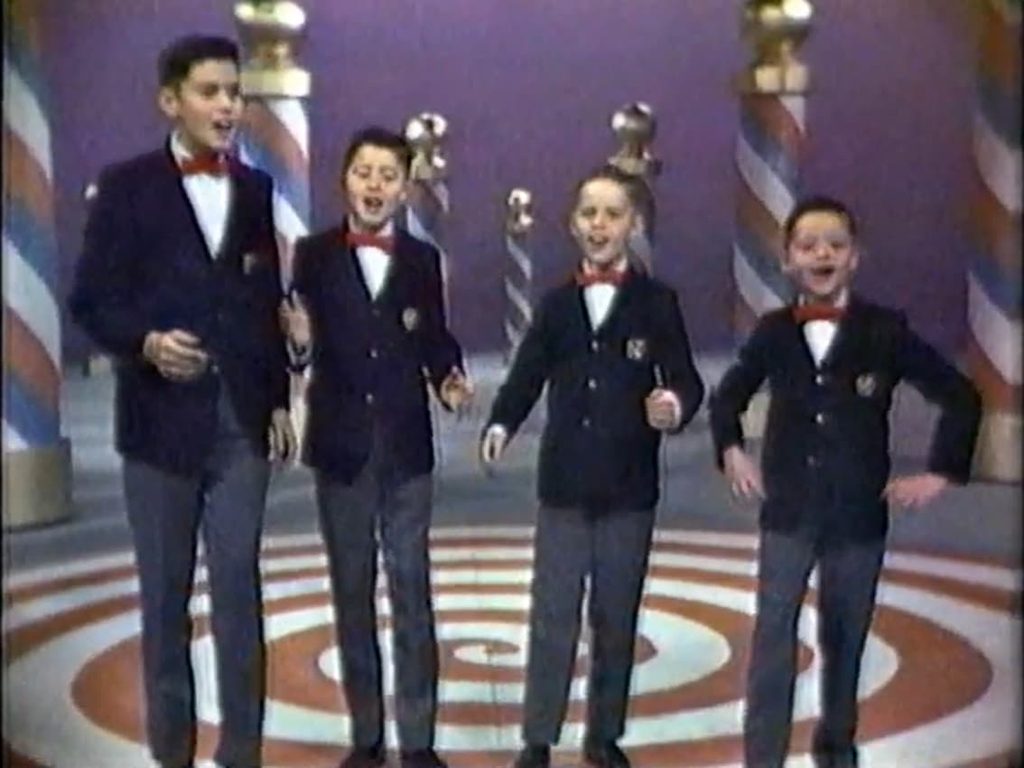
What makes the Osmond connection particularly charming is that “I’m a Ding Dong Daddy from Dumas” belonged to a period when the brothers were still performing as a family act rather than as the polished pop group the world would later know. Their early television appearances gave them the opportunity to explore old American standards, novelty songs, close harmony and comedy alongside more contemporary material. The Osmonds had been appearing on The Andy Williams Show from the early 1960s, and their ability to sing and perform as a family became the foundation for everything that followed. Their childhood was unusual in another respect too. Rather than being separated from the entertainment business, the brothers grew up inside it, learning stagecraft while still very young.
The song was later heard in Side by Side, the 1982 NBC television film about the early history of the Osmond family. The film dramatized the family’s journey from their beginnings through their rise to fame, and the Osmonds’ voices could be heard performing several songs associated with their early years, including “I’m a Ding Dong Daddy from Dumas,” “I Wouldn’t Trade the Silver in My Mother’s Hair,” “Be My Little Baby Bumble Bee” and “Side by Side.” That makes the recording particularly valuable today because it preserves a glimpse of the family before the enormous success of the 1970s.
There is an appealing contrast between the song’s history and the image most people have of The Osmonds. Their later records became closely associated with carefully arranged pop, youthful energy and spectacular television performances, but “Ding Dong Daddy” reaches back to an older America of vaudeville, radio variety and novelty songs. The Osmonds were effectively inheriting a piece of entertainment history that had already been around for more than three decades by the time the young brothers were performing it. The song had also been recorded by artists as different as Bob Wills, Louis Armstrong, Benny Goodman and Arthur Godfrey, illustrating just how widely the tune had traveled through American musical culture.
And that is perhaps why this little piece of the Osmond story deserves to be remembered. Before the matching outfits, screaming fans, million selling records and international tours, there were simply brothers learning how to entertain an audience together. “I’m a Ding Dong Daddy from Dumas” captures that earlier spirit beautifully. It was playful, old fashioned and deliberately theatrical, exactly the kind of number that allowed young performers to show personality rather than simply sing a hit record. Hearing the Osmonds with a song first written in 1928 is therefore like opening an old family photograph and discovering an unexpected piece of American musical history tucked inside. The song may have begun with Phil Baxter and a Texas town, but for the Osmond family it became another small thread in the remarkable story that began long before the world knew their name.