
How Elvis Turned A Quiet Song Of Separation Into One Of The Most Reflective Recordings Of His 1970 Nashville Sessions
By the summer of 1970, Elvis Presley was no longer trying to prove that he could still command an audience. The comeback had already happened. What mattered now was what kind of music he wanted to make with the freedom that had finally returned to him. On 4 June 1970, Elvis entered RCA’s Studio B in Nashville and recorded “Twenty Days and Twenty Nights,” a song written by Ben Weisman and Clive Westlake. It became part of the extraordinary body of work created during Elvis’s celebrated June 1970 Nashville sessions and was released on 1 November 1970 as the second track on the album That’s the Way It Is.
The song itself has a deceptively simple premise. Its narrator is separated from the woman he loves and counts the days until he can be with her again. There is no dramatic confrontation and no grand declaration. Instead, the emotional force comes from the repetition of absence. Twenty days and twenty nights becomes a measurement of loneliness, turning time itself into the subject of the song. Elvis understood that kind of material instinctively. His strongest recordings were often not the ones requiring vocal fireworks, but those in which he could make a simple lyric sound as though it had become personal.
The musicians surrounding him at Studio B were equally important. James Burton, Chip Young and Elvis played guitar, with Norbert Putnam on bass, Jerry Carrigan on drums, David Briggs on piano and Charlie McCoy on organ and harmonica. The recording was later enhanced with additional guitar, organ, percussion, steel guitar, banjo, fiddle, brass, reeds and backing vocals, including members of The Jordanaires and The Imperials. The resulting sound sits beautifully between country, pop and the sophisticated Nashville production of the early 1970s. It is Elvis working with musicians who understood how to give his voice room rather than burying it beneath the arrangement.
What makes the recording especially interesting is the place it occupies within the remarkable 1970 Studio B marathon sessions. Elvis spent five days and nights in June working with Nashville musicians, recording a wide variety of material that eventually supplied three major albums: That’s the Way It Is, Elvis Country (I’m 10,000 Years Old) and Love Letters from Elvis. The official Elvis Presley site describes these sessions as a major turning point, with Elvis able to choose contemporary material and explore country, gospel, pop, rock and other American musical traditions with an exceptionally strong studio band.
That context matters because “Twenty Days and Twenty Nights” sounds like an artist who had rediscovered the pleasure of simply making records. The previous decade had forced Elvis through a long succession of movie soundtracks and material chosen largely for commercial obligations. His 1969 American Sound Studio sessions in Memphis had already begun to change that direction, producing “In the Ghetto,” “Suspicious Minds,” “Kentucky Rain” and other recordings that restored some of the urgency of his earlier work. The Nashville sessions continued that renewal, but with a broader musical palette. Elvis was no longer trying to recreate the sound of 1956. He was becoming a mature American singer capable of absorbing country, soul, pop and gospel into his own style.
There is also an intriguing contrast between the studio recording and Elvis’s live career at the time. That’s the Way It Is was connected to the MGM documentary film documenting his August 1970 Las Vegas engagement, yet much of the album itself consisted of songs recorded in Nashville rather than live performances. Elvis was therefore entering a period where the intimate studio artist and the spectacular Las Vegas performer existed side by side. The same album could contain reflective studio songs such as “Twenty Days and Twenty Nights,” “I’ve Lost You” and “Just Pretend,” alongside the larger scale material associated with his stage show.
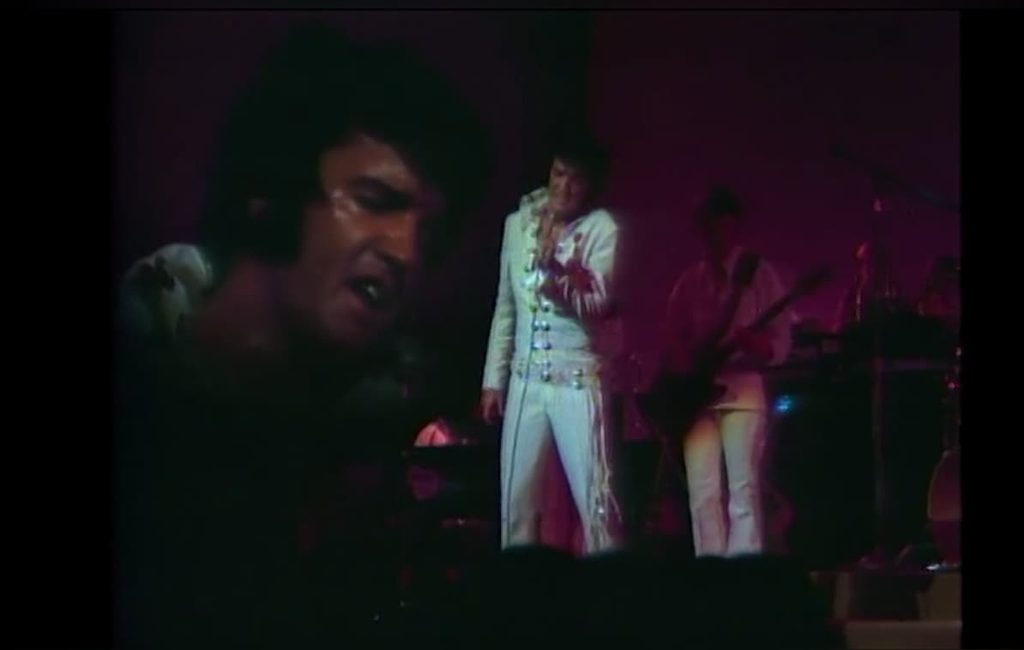
The song later became part of Elvis’s live repertoire as well. The official That’s the Way It Is: Legacy Edition includes a performance of “Twenty Days and Twenty Nights” from the 12 August 1970 dinner show at the International Hotel in Las Vegas. That version is fascinating because it demonstrates how Elvis could take a relatively intimate studio song and place it inside the atmosphere of his live performances. The song was no longer simply about someone waiting twenty days for a loved one. In the hands of the live Elvis, it became another emotional color in a set that could move from tenderness to explosive rock and roll within minutes.
The later From Elvis in Nashville collection, released in 2020, offered an even clearer look at how the song was created. The project presented the 1970 Studio B recordings in newly mixed form without the added overdubs and orchestration that had appeared on the original releases. It also included several alternate takes of “Twenty Days and Twenty Nights,” allowing listeners to hear the song’s development inside the studio rather than only the finished master. That makes the recording particularly valuable for anyone interested in Elvis as a musician rather than simply as a cultural icon.
And perhaps that is why “Twenty Days and Twenty Nights” deserves more attention than it sometimes receives. It does not have the historical shock of “That’s All Right,” the drama of “Suspicious Minds” or the cultural weight of “In the Ghetto.” Its power is quieter. Elvis takes a song about waiting, distance and loneliness and gives it the weight of lived experience. In 1970, after years of extraordinary highs and frustrating detours, he was finding his way into a new decade. The voice was older, the music was richer, and the young rock and roll rebel had become a remarkably versatile American singer. “Twenty Days and Twenty Nights” captured that transformation in a few quiet minutes, with Elvis sounding less like a legend performing a song and more like a man simply trying to make sense of being alone.