
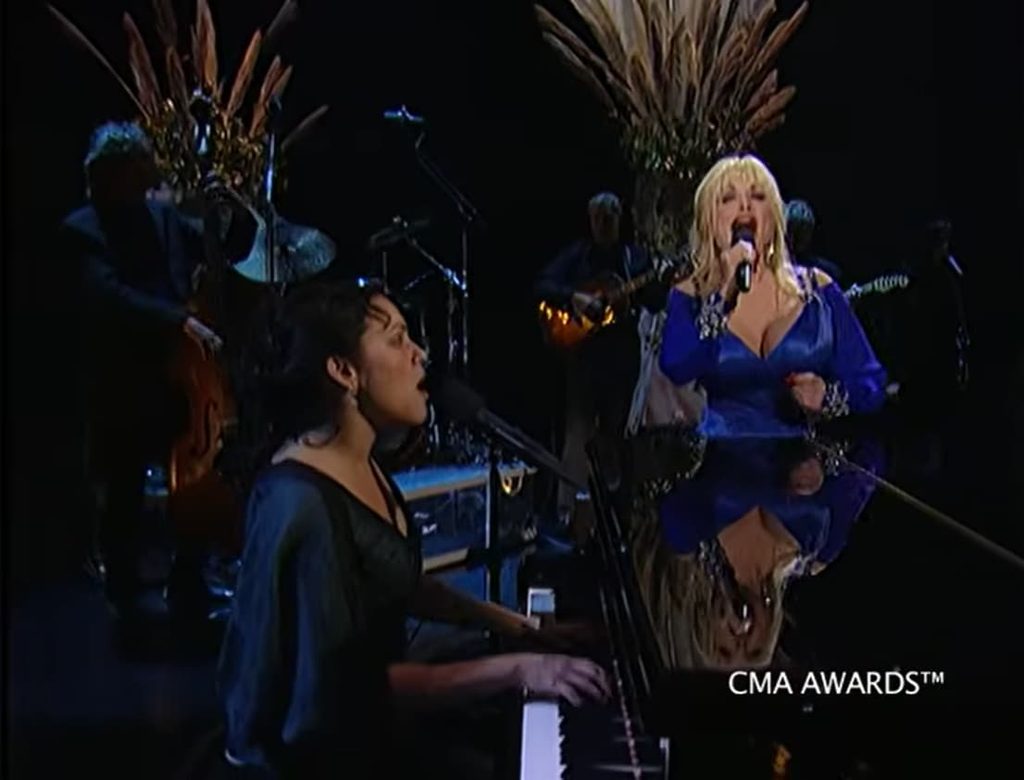
Two Generations Of Songwriters Meet In A Remarkable Performance Where Heartbreak Hides Behind A Smile And The Grass Turns Blue
Sometimes the most painful heartbreak is the one we try hardest to pretend does not exist. That is the clever idea at the heart of “The Grass Is Blue,” a song written by Dolly Parton that brought her together with Norah Jones for a memorable performance at the 37th Annual Country Music Association Awards on November 5, 2003. Watching these two distinctive artists share the song is a reminder that great songwriting can cross generations, musical styles and expectations without losing its emotional truth.
Dolly originally recorded the song for her album The Grass Is Blue, released on October 26, 1999. The album marked an important return to her Appalachian musical roots, embracing bluegrass at a time when many listeners still associated her most strongly with polished country pop. It was her 37th solo studio album and eventually won the Grammy Award for Best Bluegrass Album. The record reached No. 24 on Billboard’s Top Country Albums chart, reaffirming that Dolly could follow her own musical instincts while earning recognition from critics and fellow musicians.
The song itself is built around a wonderfully ironic idea. Its narrator has been devastated by a breakup, but instead of admitting how deeply she misses the person who left, she insists that everything is perfectly fine. To make the denial convincing, she describes a world in which ordinary truths have been turned upside down. Grass is blue, rivers flow backwards, and the natural order no longer makes sense. The humour is unmistakable, but beneath it lies a very recognisable form of emotional self protection. Sometimes pretending to be all right is the only way to get through the day.
Norah Jones brought a different musical personality to the song. By 2003, she had become an international sensation following the success of her debut album, Come Away with Me, which won five Grammy Awards earlier that year. Her intimate vocal style and understated phrasing contrasted beautifully with Dolly’s brighter, unmistakably country sound. Jones had selected the song for Just Because I’m a Woman: Songs of Dolly Parton, a 2003 tribute album celebrating Dolly’s songwriting. At the CMA Awards, Dolly joined Norah onstage, adding her own harmonies to Jones’s interpretation. Dolly herself praised Norah’s singing and expressed excitement about performing together.
What makes this collaboration so appealing is that neither singer needs to overpower the other. Norah brings a quiet, almost conversational intimacy, while Dolly adds the warmth and expressive country phrasing that have defined her career. Their voices meet in the song’s central contradiction: the narrator claims she has moved on, yet every line reveals how much she is still hurting.
For longtime Dolly Parton fans, the performance offered a fresh perspective on a song she had written from her own creative imagination. For Norah Jones’s audience, it revealed the depth of Dolly’s songwriting beyond her biggest hits. Together, they made “The Grass Is Blue” sound both playful and painfully human, a country song whose clever humour cannot quite conceal a broken heart.