
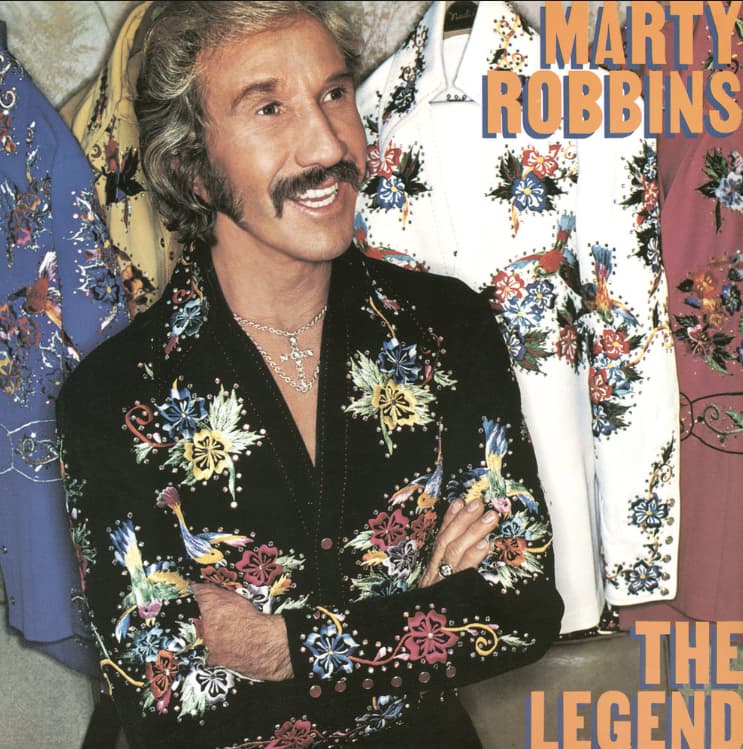
Marty Robbins – Quiet Shadows: A Midnight Meditation on the Echoes of a Lonely Room
In the stillness of 1962, while the world was distracted by the glitz of the burgeoning “Jet Age,” Marty Robbins slipped into the shadows to record one of the most atmospheric tracks of his career. “Quiet Shadows” served as a haunting cornerstone of his album Marty After Midnight, a record that remains a cult favorite for those who appreciate the “Velvet Voice” at its most intimate. Released on Columbia Records, the album showcased Marty in a “cocktail-lounge” setting, trading his cowboy hat for a tuxedo and his horse for a piano bench. It was a sophisticated gamble that paid off, proving that Marty was the undisputed master of the nocturnal ballad.
The Hour of the Restless Heart
To listen to “Quiet Shadows” today is to pull up a chair in a dimly lit corner of the mind, long after the rest of the world has gone to sleep. For those of us who have lived through the long, reflective nights that come with the passing decades, this song is an old friend. It captures that specific mid-century “noir” aesthetic—where the smoke from a cigarette curls into the light of a streetlamp and the silence of the house is loud with memory.
Marty, who was usually the narrator of grand adventures, here becomes the narrator of the internal. This track arrived at a time when we looked to music not just for entertainment, but for a reflection of our own quietest moments.
The Architecture of a Ghostly Room
The narrative of “Quiet Shadows” is a poetic study of the “presence of an absence.” It tells the story of a man sitting alone, watching the light change on the walls and seeing the “shadows” of a love that is no longer there. It is a song about the things we see when our eyes are open but our hearts are looking backward.
“Quiet shadows on the wall… memories I can’t recall without a tear.”
For the mature reader, these lyrics are a gentle mirror. We have all reached that age where our homes are filled with “quiet shadows”—the echoes of children grown and gone, the lingering scent of a partner’s perfume, or the memory of a conversation that happened forty years ago. Marty’s vocal delivery is a marvel of restraint. He sings in a near-whisper, his breathy tenor perfectly mimicking the fragility of the shadows he describes. There is an intense, sophisticated nostalgia in his phrasing, a reminder of a time when we weren’t afraid to sit with our sorrows and let them speak.
The Velvet Sound of a Nashville Midnight
The production of this track is a triumph of “Minimalist Nashville.” Under the guidance of the legendary Don Law, the arrangement eschews the “clop-clop” of the trail and the swell of the orchestra. Instead, it features a sparse, melodic piano, a brush-on-snare drum rhythm that sounds like a heartbeat, and a bassline that walks as softly as a ghost. The “slip-note” piano flourishes provide a cool, jazzy counterpoint to Marty’s warmth. It is a recording that values “space”—the silence between the notes is where the real story of the song is told.
As we look back at the vast discography of Marty Robbins, “Quiet Shadows” stands as a testament to his sheer versatility. It is a nostalgic masterpiece because it validates the beauty of our lonely hours. It serves as a reminder that even in the dark, there is music to be found. When Marty hits that final, whispered note, he leaves us in the quiet, reminding us that while the shadows may be long, the memories that cast them are what make a life worth living.
 Music Legend