
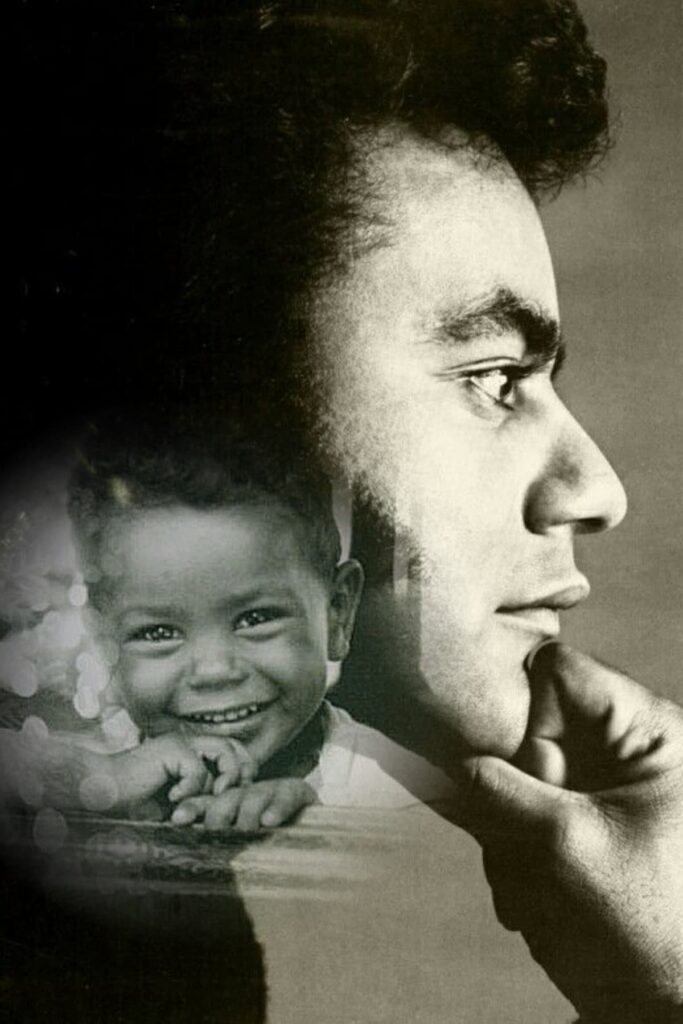
A single decision between two dreams, where a young man chose music—and quietly reshaped his destiny
In 1956, Johnny Mathis found himself standing at a crossroads that few could fully understand at the time. On one side was the path of an athlete, already proven, already disciplined, already within reach of something as tangible as the Olympic Games. On the other was something far less certain—a journey into music, into recording, into a world where success could not be measured in seconds or height cleared, but only in feeling.
That year, Mathis had qualified for the U.S. Olympic trials in the high jump, a remarkable achievement that reflected years of dedication and natural ability. His performance had placed him among the country’s most promising athletes. The Olympics were not a distant dream. They were a real possibility, waiting just beyond one final step.
At the same time, another opportunity emerged—one that seemed quieter, yet no less significant. Columbia Records, under the guidance of George Avakian, had taken notice of Mathis’s voice. There was something in it that did not conform to trends, something smooth yet deeply expressive, capable of carrying both intimacy and restraint. The offer was simple in form but immense in implication: travel to New York and record his first album.
The timing made the choice unavoidable. The Olympic trials and the recording session could not coexist. One had to be left behind.
There is a certain stillness in imagining that moment. No audience, no applause, no certainty of outcome—only a decision that would quietly define everything that followed. Mathis chose music. He stepped away from the track, from the measurable clarity of sport, and into the uncertain, often intangible world of recording.
His debut album, “Johnny Mathis: A New Sound in Popular Song”, released in 1956, did not immediately dominate the charts. It was not an instant transformation into stardom. Yet within it lay the foundation of something enduring. The voice was already there—controlled, warm, unmistakable. What would follow came swiftly. By 1957, with hits like “Wonderful! Wonderful!” (No. 14 on the Billboard chart) and “It’s Not for Me to Say” (No. 5), and later “Chances Are” reaching No. 1 on the Billboard Most Played by Jockeys chart, Johnny Mathis had firmly established himself as one of the defining vocalists of his time.
Looking back, the decision appears almost inevitable, as though it could only have led to this outcome. But in 1956, nothing was guaranteed. The path of music was uncertain, shaped by taste, timing, and the unpredictable response of listeners. The Olympic path, by contrast, was clear, structured, and measurable.
What makes this moment so compelling is not simply the success that followed, but the nature of the choice itself. It was a decision between two disciplines that demanded entirely different forms of commitment. One required physical precision, the other emotional clarity. One offered visible milestones, the other something far less defined.
In choosing music, Johnny Mathis did not abandon one identity for another. He carried the discipline of sport into his artistry—the control, the focus, the understanding of timing. These qualities became part of his voice, shaping the way he approached each note, each phrase.
There is also something deeply reflective in how this story endures. It is not told as a tale of sacrifice, but as one of alignment. A recognition, perhaps, of where one’s true expression lies. The high jump measured how far he could rise physically. Music allowed him to reach something less visible, yet more lasting.
Listening to those early recordings now, there is a sense of quiet certainty within them. Not confidence in the outcome, but confidence in the act itself. The voice does not rush, does not demand attention. It unfolds naturally, as though already aware of its place.
In the end, the story of Johnny Mathis in 1956 is not about choosing between success and failure. It is about choosing between two forms of possibility.
And in that choice, made without the assurance of what would follow, lies the beginning of a legacy that would outlast the moment itself—carried not in records or rankings, but in a voice that continues to resonate, long after the decision has passed into memory.