
A carefree rhythm that carries the past forward, where simple joy becomes a bridge between generations
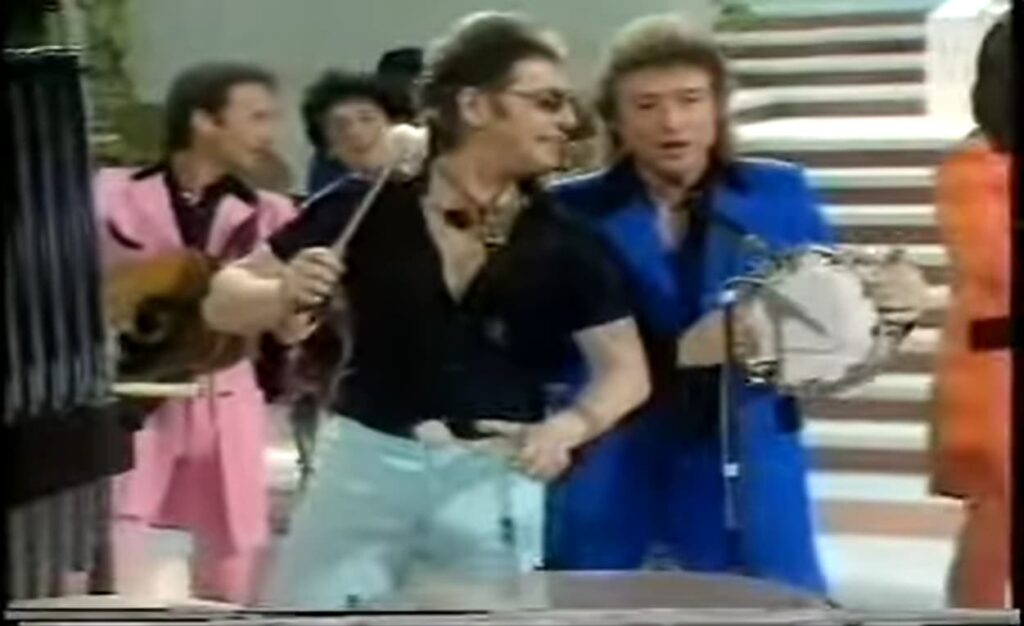
When Showaddywaddy performed “Doo Wah Diddy” on the The Marti Caine Show on April 6, 1981, the moment felt less like a revival and more like a reaffirmation. By then, the song itself had already traveled a long road through popular music history, shaped by different voices and eras before arriving once again in front of a television audience that understood its charm without needing explanation.
Originally written by Jeff Barry and Ellie Greenwich, “Doo Wah Diddy” was first recorded by The Exciters in 1963. However, it was the 1964 version by Manfred Mann that transformed the song into an international success, reaching No. 1 on both the UK Singles Chart and the Billboard Hot 100. That version carried a youthful immediacy, a sense of spontaneity that perfectly captured the spirit of mid 1960s pop.
By the time Showaddywaddy approached “Doo Wah Diddy”, they were not attempting to compete with that legacy. Instead, they embraced it. Their rendition, released in 1981, reached No. 32 on the UK Singles Chart—a respectable position during a time when musical tastes were shifting rapidly toward new wave and synth driven sounds. Yet chart positions alone do not fully explain why the song mattered.
The essence of “Doo Wah Diddy” lies in its simplicity. The lyrics follow a straightforward narrative—a chance encounter, an immediate connection, a sense of effortless attraction. There is no complexity in the storytelling, no hidden meaning waiting to be uncovered. And perhaps that is precisely why it endures. It captures a feeling that does not need to be analyzed to be understood.
In the hands of Showaddywaddy, that feeling becomes slightly different. Their version carries a layer of reflection that was not present in the earlier recordings. The rhythm remains lively, the harmonies intact, but there is a subtle awareness beneath the surface. It is as though the song is no longer just about the moment it describes, but about remembering that moment from a distance.
The performance on The Marti Caine Show reflects this balance. There is energy, certainly, but it is measured rather than urgent. The band moves through the song with confidence, not trying to recreate the past exactly, but to honor it. The arrangement is clean, the vocals carefully aligned, allowing the melody to remain at the center.
This approach aligns with the broader identity of Showaddywaddy. Throughout their career, they positioned themselves not as innovators, but as custodians of a particular sound. Their music did not seek to redefine the present. It sought to preserve a feeling that might otherwise have been lost amid changing trends.
Listening to “Doo Wah Diddy” in this context, one becomes aware of how songs evolve over time. What begins as a spontaneous expression of youth can later become something more reflective, shaped by memory and experience. The words remain the same, but their meaning shifts, deepened by the passage of years.
There is also a quiet comfort in that transformation. The song does not demand attention. It invites it. It does not challenge the listener. It welcomes them into a space that feels familiar, even if it has been years since they last heard it.
For Showaddywaddy, this recording stands as another example of their ability to navigate between past and present without losing their sense of purpose. They understood that music does not need to change its essence to remain meaningful. Sometimes, it simply needs to be heard again, in a slightly different light.
In the end, “Doo Wah Diddy” is not just a song about a fleeting moment of attraction. It is about the way such moments stay with us, quietly shaping how we remember ourselves and the world around us.
And in that 1981 performance, Showaddywaddy offers something that goes beyond nostalgia. They offer continuity—a reminder that even as time moves forward, certain melodies remain, unchanged in their ability to bring a sense of warmth, familiarity, and quiet joy.