
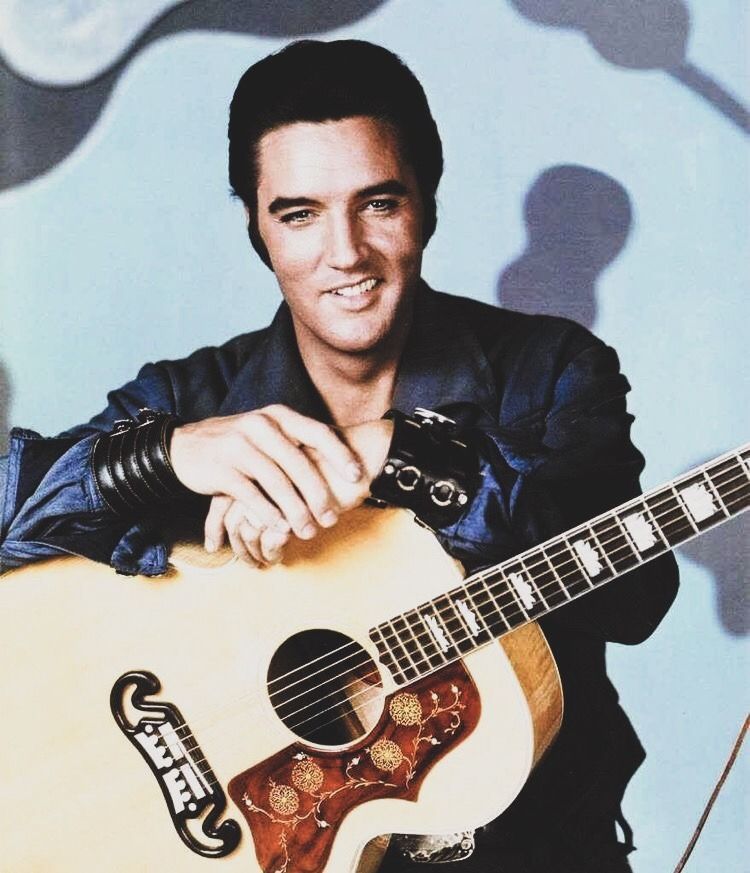
The final footage of Elvis Presley, captured during his June 1977 television special Elvis in Concert, remains one of the most polarizing and emotionally charged documents in music history. For the millions who watched it—and the generations who have seen it since—those frames represent a “Titan” in the midst of a harrowing life-or-death battle, stripped of the cinematic gloss that defined his youth and left with only the raw, undeniable power of his soul.
The “backstory” of this footage is a narrative of profound physical struggle. Just six weeks before his passing in August 1977, Elvis was visibly suffering from the “scars” of years of grueling tour schedules and escalating health issues. On stage in Rapid City and Cincinnati, the “King of Rock and Roll” appeared exhausted, his movements restricted. Yet, when he sat at the piano for his performance of “Unchained Melody,” the “ranking” of his talent became clear. He wasn’t just a singer anymore; he was a man staring down his own mortality, delivering a vocal performance that many consider the most “passion and danger” filled moment of his entire career.
The Architecture of a Final Farewell
For the sophisticated listener who has seen the seasons of life turn, this footage brings tears because it destroys the myth and reveals the man. It is a “souvenir” of the vulnerability we all share. In that final recorded performance, as he struggled to catch his breath between lines, Elvis reached for notes that should have been impossible given his condition.
“Lonely rivers flow to the sea, to the sea… to the open arms of the sea.”
In that moment, the “Velvet Voice” was replaced by a roar of pure defiance. Fans were brought to tears not just out of pity, but out of a deep respect for his “working-class” work ethic—the refusal to let the audience down even when his “foundation” was crumbling. It was a cinematic journey into the heart of an artist who knew the end was near and chose to go out with a song rather than a whisper.
A Legacy of Grit Beneath the Rhinestones
As we look back from the perspective of 2026, this footage serves as a vital reminder of the cost of greatness. Much like the “scars beneath the velvet coat” of Marty Robbins, Elvis’s final performances showed us that a legend is not someone who never fails, but someone who never stops trying. He remained a titan because, in that final winter of his life, he didn’t hide his fragility; he offered it up to his fans as a final act of love.
He taught us that “Passion” is the fuel that keeps us going when the “Danger” of life becomes overwhelming. The tears of millions are a tribute to that spirit—the recognition that behind the jumpsuits and the fame was a man who, until his very last breath, was searching for the “Happy Home” of a perfect melody.