
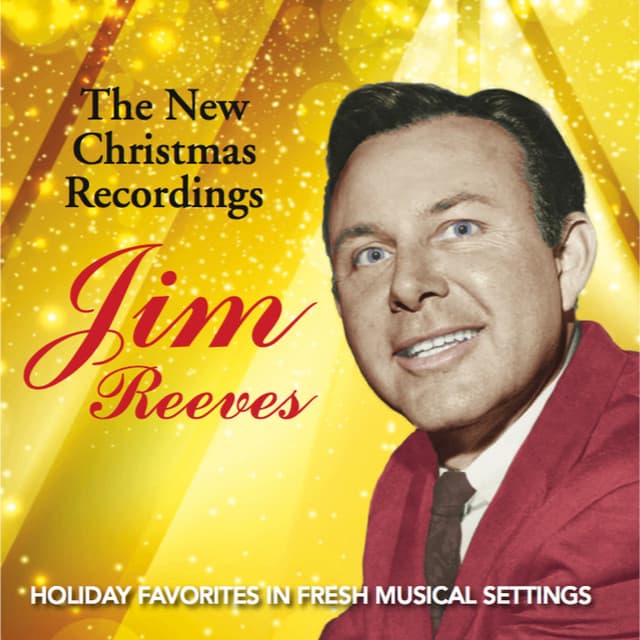
A gentle hymn of memory and solace — “Precious Memories” carries the warmth of faith, loss, and the comfort of recollection.
When Precious Memories by Jim Reeves was first committed to record, it appeared on his 1959 gospel album God Be with You, a collection that marked his earliest deliberate venture into sacred and spiritual songs. Though the album found favor among listeners appreciative of tender faith-inspired music — with critics praising Reeves’s sincerity and the clean, respectful production under Chet Atkins — there is no concrete record that “Precious Memories” as a standalone single charted in the mainstream country or pop charts at its release.
Yet such lack of chart-topping status hardly diminishes the song’s legacy. Originally a traditional gospel hymn credited to J. B. F. Wright, first published in 1925, “Precious Memories” had been carried through decades by various artists before Reeves lent it his smooth, resonant baritone — and in doing so, transformed it into a deeply personal meditation on memory and faith.
From the opening notes, Reeves’s version feels like a quiet invitation: “Precious mem’ries, unseen angels / Sent from somewhere to my soul…” His voice — soft but firm, humble yet rich — carries a sense of lived experience: loss, longing, grief, but also gratitude. In the stillness of midnight, as the lyrics suggest, memories rise — “precious sacred scenes” unfolding like a gentle prayer in the quiet.
The context of the recording is poignant. On September 9, 1958 — during a single three-hour session — Reeves recorded “Precious Memories” along with several other sacred songs for what would become God Be with You. Unusually for that time in Nashville, Reeves was backed by a woman guitarist, Velma Williams Smith — at a time when female session musicians were rare. Smith remembered Reeves’s look when she walked into the studio: an unspoken trust, a sense that something special was about to be made. That quiet session, humble by many measures, produced one of the more enduring spiritual recordings in Reeves’s career.
For many listeners, especially those touched by faith or by the passage of time, Reeves’s “Precious Memories” is more than a song. It is a sanctuary. In reflecting on sadness, separation, hopes, fears, the hymn becomes a companion for lonely nights, for moments when the past floods forward — bringing faces, voices, old prayers, and quiet consolation. The idea that memories are “unseen angels” feels less metaphor than truth: guiding, comforting, carrying comfort when life feels uncertain.
Over the decades, the song has lived on — not in hit-parade countdowns or flashy covers, but in the hearts of those who listen when the world slows down, when evening comes, when roads are quiet. It has been included in later compilations of Reeves’s sacred and inspirational songs, such as the 1998 collection 20 Songs of Inspiration. Its endurance lies not in charts, but in its emotional resonance.
One of the most touching aspects of this rendition is how Reeves’s voice — warm, calm, intimate — seems to lean across generations. It’s not a big band, not a dramatic production, but a simple, honest expression of longing and faith. For anyone who grew up hearing the crackle of vinyl, or who remembers quiet nights in church or living rooms lit only by lamplight — this recording of “Precious Memories” offers a moment of solace, of remembering, of hope.
In the tapestry of Reeves’s career — which spans honky-tonk hits, romantic ballads, and country standards — “Precious Memories” stands out not because it topped lists or drew crowds, but because it reached souls. It reminds us that music’s power is not always measured by sales or charts, but by the gentle turning of a phrase, the hush after the last note, and the quiet light it brings into our memories. And for those willing to listen, it remains, as its title promises, precious indeed.
 Oldies Songs