
A Christmas Plea Wrapped in Loneliness, Faith, and the Quiet Hope of Homecoming
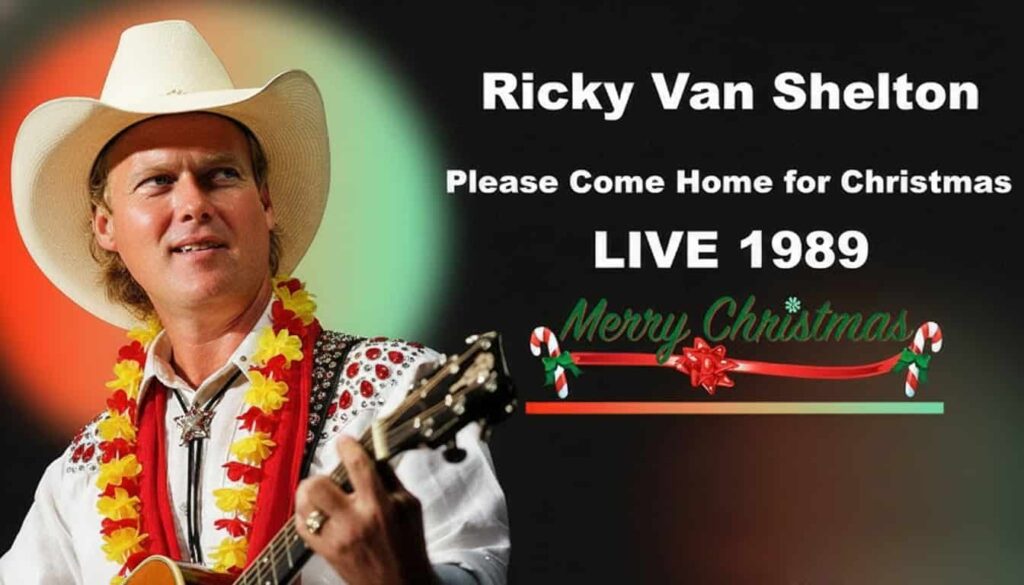
Few Christmas recordings by country artists carry the emotional weight and restraint found in “Please Come Home for Christmas” as performed by Ricky Van Shelton. Released in 1989 as part of the album Ricky Van Shelton Sings Christmas, the song arrived during the height of Shelton’s commercial success, yet it stood apart from the era’s chart-driven ambitions. While the track itself was not released as a major chart-competing single on the Billboard Hot Country Songs chart, it quickly became a seasonal favorite through radio airplay, album sales, and long-term listener attachment. In this case, cultural longevity mattered far more than numerical ranking.
The album Ricky Van Shelton Sings Christmas, released by Columbia Records in late 1989, performed strongly on the Billboard Top Country Albums chart, benefiting from Shelton’s extraordinary momentum at the time. By then, he had already established himself as one of country music’s most dependable traditionalists, known for his smooth baritone, clear diction, and reverence for classic songwriting. This Christmas project was not a novelty release; it was a deliberate return to emotional fundamentals.
“Please Come Home for Christmas” did not originate in the country tradition. The song was first written and recorded in 1960 by blues pianist Charles Brown, whose version reached No. 1 on the Billboard R&B chart and later crossed over to the pop charts. Over the decades, it became a quiet standard, reinterpreted by artists across genres, including The Eagles and Bon Jovi. What makes Ricky Van Shelton’s interpretation distinct is its refusal to dramatize pain. Instead, it leans into stillness.
Shelton approached the song not as a seasonal lament, but as a human confession. His voice is unadorned, steady, and deeply internal. There is no vocal showmanship, no grand crescendo. The arrangement favors traditional country instrumentation, soft piano lines, gentle steel guitar, and restrained background vocals that never intrude on the story. This restraint allows the lyric to breathe, especially lines that speak of ringing church bells, falling snow, and an empty house waiting for footsteps that may never come.
At its core, “Please Come Home for Christmas” is not about the holiday itself. Christmas merely provides the emotional setting, a time when absence feels heavier and silence grows louder. The song speaks to separation, regret, and longing, themes that resonate deeply with listeners who have lived long enough to understand that not every reunion happens on schedule, and not every apology arrives in time.
For older listeners, the song often carries layers of personal memory. It recalls Christmases spent waiting for a phone call, a letter, or the sound of a car pulling into the driveway. It reflects an era when distance was felt more acutely, when absence lingered longer, and when home meant more than a physical place. Shelton’s delivery respects those memories. He never rushes them.
The album Ricky Van Shelton Sings Christmas as a whole was praised for its sincerity and traditional focus. It avoided modern pop gloss and instead embraced hymns, standards, and reverent pacing. In that context, “Please Come Home for Christmas” serves as the emotional center, the song that acknowledges that joy and loneliness often coexist during the holidays.
Ricky Van Shelton’s career has always been defined by quiet confidence rather than spectacle. His Christmas recording reflects the same philosophy. It trusts the listener. It trusts the song. And it understands that sometimes the most powerful Christmas message is not celebration, but hope held softly.
Decades later, the song remains part of seasonal playlists not because it demands attention, but because it earns it. It waits patiently, like the voice at the center of the lyric itself, still hoping, still listening, still believing that someone might yet come home for Christmas.
 Music Legend