
A quiet question of love and distance, spoken softly through strings and memory
At the heart of “Do I Ever Cross Your Mind” lies a simple question that carries the weight of years. When Chet Atkins recorded the song as a duet with Dolly Parton in 1977, it became more than a country hit. It became a meditation on emotional distance, pride, and the unspoken spaces that grow between two people who once shared everything. Released as a single from the album “Do I Ever Cross Your Mind”, the recording reached number one on the Billboard Hot Country Singles chart, and its impact was further sealed when it won the Grammy Award for Best Country Vocal Performance by a Duo or Group in 1978. These achievements placed the song firmly at the center of country music’s emotional canon.
The song itself was written by Dolly Parton in 1975, during a period when her songwriting had reached a new level of emotional clarity. Rather than relying on dramatic heartbreak, she chose restraint. The lyric asks what many are afraid to say out loud. It does not accuse or beg. It simply wonders. That restraint is exactly what made the song so powerful, and why Chet Atkins was the perfect partner to bring it to life.
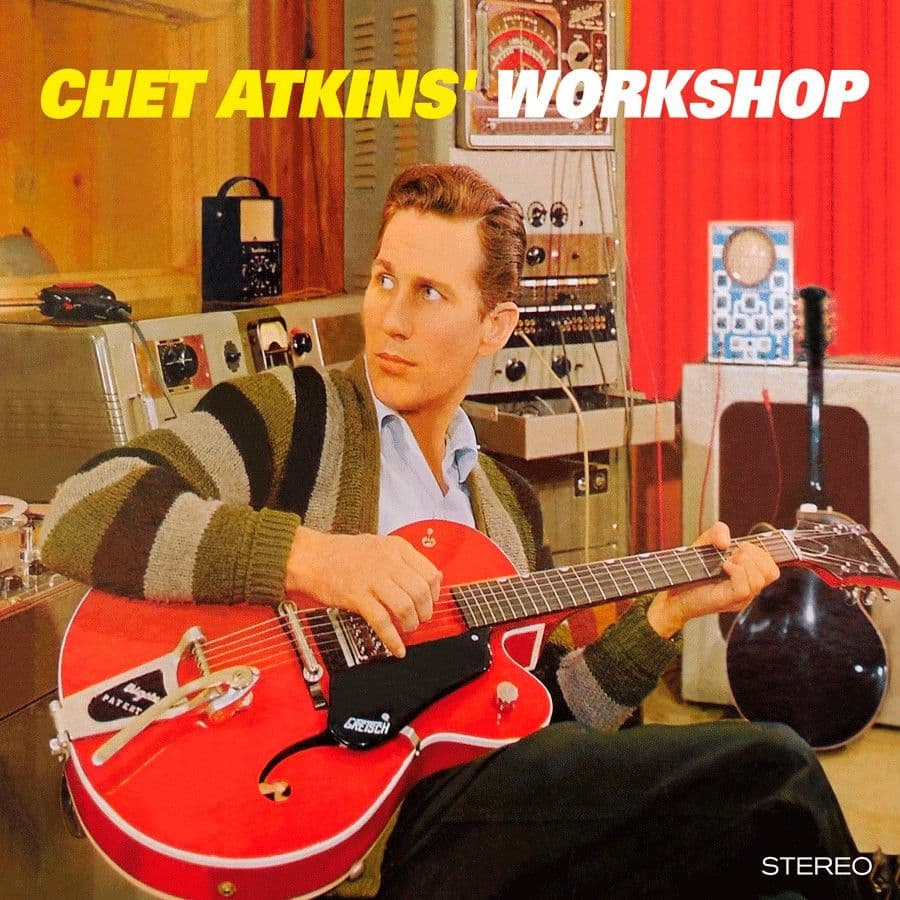
By the time of this recording, Chet Atkins was already a towering figure in American music. Known as “Mr. Guitar,” he had shaped the Nashville Sound and influenced generations of musicians. Yet here, he steps away from virtuosity and toward vulnerability. His guitar work is elegant but understated, serving the song rather than drawing attention to itself. His vocal delivery is calm, almost conversational, giving the impression of someone speaking carefully, choosing each word with thought and regret.
The chemistry between Atkins and Parton is central to the song’s success. Their voices do not clash or compete. Instead, they circle each other, each line feeling like a response to something left unsaid. Parton’s tone carries emotional openness, while Atkins brings a quiet steadiness, as if holding back years of feeling behind a composed exterior. Together, they embody two sides of the same memory.
The arrangement reflects this emotional balance. Acoustic guitar, gentle rhythm, and subtle harmonies create a sense of space rather than urgency. Nothing is rushed. Silence is allowed to linger between phrases, emphasizing the song’s central question. The listener is given room to reflect, to remember conversations that never happened, letters never written, and moments when pride stood in for honesty.
What gives “Do I Ever Cross Your Mind” its lasting resonance is its refusal to resolve. There is no final answer, no dramatic reconciliation. The song ends the same way it begins, suspended in uncertainty. This mirrors real life, where many questions remain unanswered, carried quietly for years. In this way, the song feels less like a performance and more like a shared confession.
The success of the recording also marked a meaningful moment in Chet Atkins’s late career. While he was often celebrated for his technical brilliance and production legacy, this song reminded listeners of his emotional depth. It showed that subtlety, patience, and empathy could be just as powerful as speed or complexity. His partnership with Dolly Parton bridged generations, uniting traditional craftsmanship with contemporary songwriting.
Decades later, “Do I Ever Cross Your Mind” continues to resonate because it speaks to something timeless. It captures the quiet aftermath of love, when passion has faded into reflection and memory becomes the loudest voice in the room. Through Chet Atkins’s gentle guitar and measured voice, the song does not demand attention. It waits, trusting that those who need it will recognize themselves in its question.
In the end, this recording stands as one of Chet Atkins’s most emotionally revealing moments. It proves that sometimes the most powerful songs are not about what is said, but about what is left hanging in the air, waiting for an answer that may never come.