
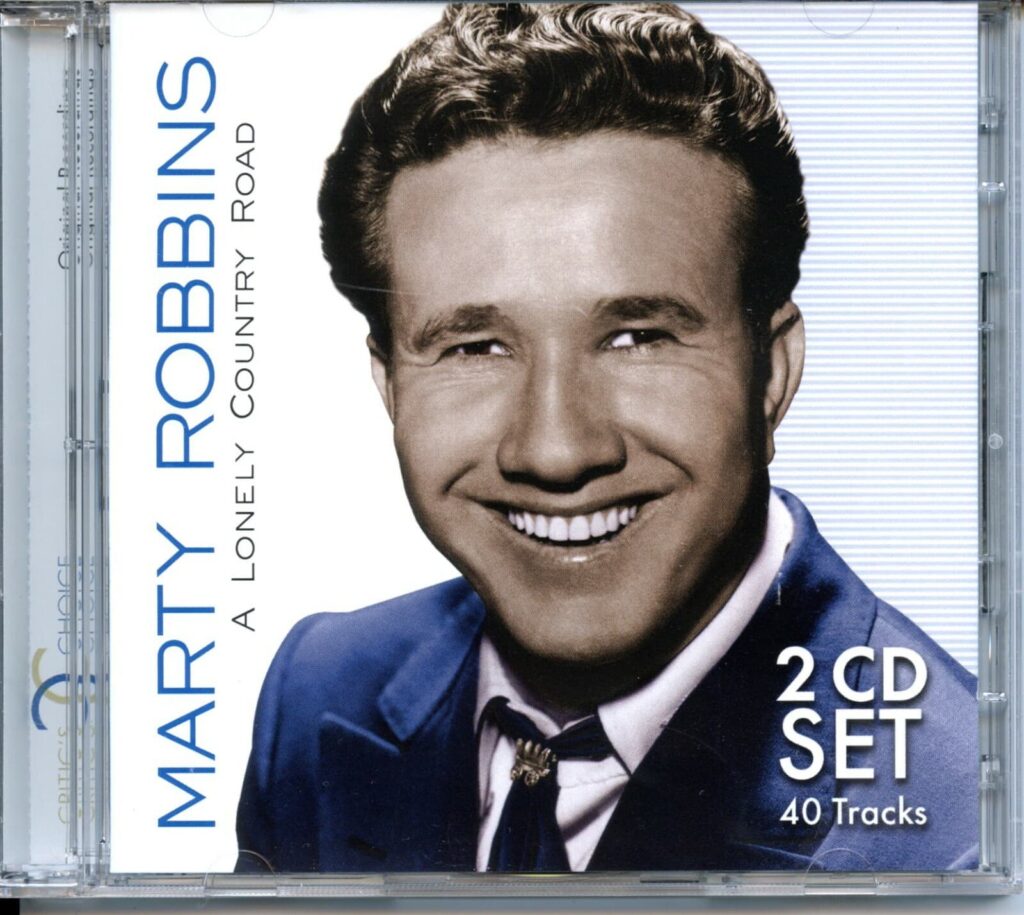
Marty Robbins – San Angelo: A Sweeping Symphony of Love and Tragedy Beneath the Texas Sun
If “El Paso” is the crown jewel of the gunfighter ballad, then “San Angelo” is its equally brilliant, darker twin—a song that reaches for the same heights of operatic storytelling and cinematic grandeur. Released in 1960 on the quintessential album More Gunfighter Ballads and Trail Songs, this masterpiece helped the record climb to No. 21 on the Billboard Top Country Albums chart. For those who spent their youth captivated by the sprawling vistas of Western cinema, this song is not merely a track; it is an epic poem, written and sung by Marty Robbins at the absolute zenith of his creative powers.
The story behind “San Angelo” is a return to the themes of forbidden love and the inevitable shadow of the law. Written by Marty himself, the song introduces us to an outlaw who has spent his life running, only to be drawn back to the “cowtown of San Angelo” by the promise of a woman named Secora. For the mature listener, there is a profound resonance in the way Marty describes their bond. It is a love forged in the border towns, where she was known as “the Rose” and he was “the outlaw above all the rest.” It speaks to a time when loyalty was a sacred pact, and the heart’s yearning could lead a man straight into the mouth of a trap.
The tragedy of the song is Shakespearean in its execution. As the outlaw enters the town at “ten o’clock in the morning,” the air is thick with the “click of a gun” behind every window. In a devastating turn of events, it is Secora who tries to warn him, only to be struck down by a ranger’s bullet. The final moments of the song are some of the most emotionally charged in all of country music. As the outlaw exacts his revenge and then falls himself, he blindly searches for her hand in the dust. When he touches her “soft velvet hand,” the pain eases. For anyone who has navigated the long years of life, the ending—“Life is no more, but we’re together”—is a powerful, tear-stained testament to a love that survives even the finality of death.
Musically, the song is a triumph of the Nashville Sound. The soaring Spanish-style horns, the rhythmic “clip-clop” of the percussion, and Marty’s incredibly agile tenor create an atmosphere so vivid you can almost smell the dust and the heat of the Texas flatlands. It is a song that invites contemplation on the nature of fate and the heavy price of one’s past.
To listen to “San Angelo” today is to revisit a world of stark moral choices and grand romantic gestures. It reminds us of why we fell in love with Marty Robbins in the first place: he didn’t just sing about the West; he gave it a soul. It is a haunting, beautiful journey that lingers in the mind long after the final note fades into the horizon.
 Music Legend