
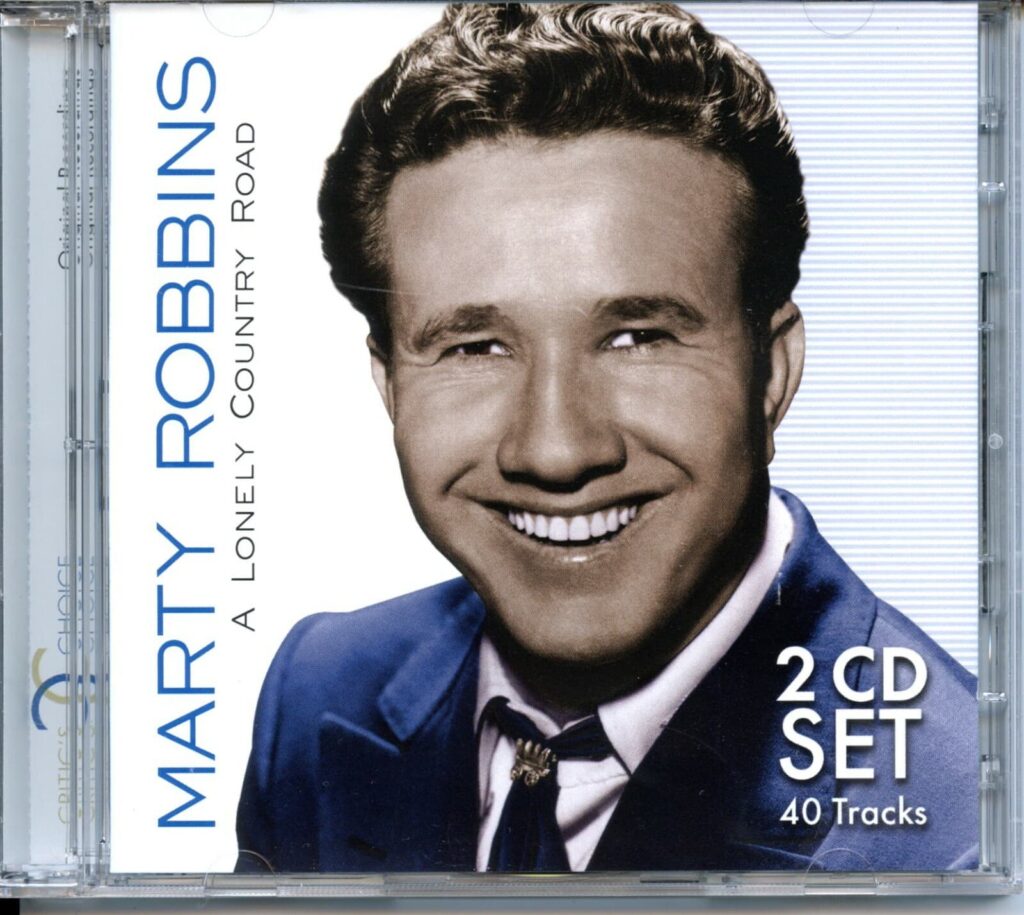
Marty Robbins – South of the Border: A Sweeping Cinematic Journey Into the Heart of Old Mexico
In the rich, sprawling repertoire of Marty Robbins, few songs capture the romantic allure of the Latin frontier as vividly as his rendition of the classic “South of the Border (Down Mexico Way).” While Marty was already the undisputed king of the “Gunfighter Ballad,” he proved with this track that he could just as easily master the grand, orchestral sweeps of a timeless standard. Originally recorded by Marty in 1958 and famously featured on his 1973 compilation album Bound for Old Mexico, the song serves as a bridge between the dusty trails of his Western hits and the sophisticated “Countrypolitan” style that would come to define his legacy.
For the reader who has lived through the changing landscapes of the twentieth century, this song is a masterclass in atmospheric nostalgia. Marty Robbins, with a voice that could transition from a whisper to a clarion call, narrates a tale of a love found and lost under a Mexican moon. For those of us who remember the era of grand melodies and big-screen romances, there is a deep, soul-stirring comfort in his delivery. It is a song for the person who understands that certain memories are anchored to specific places—and that sometimes, the most beautiful chapters of our lives are the ones we can never truly return to.
The history of the song itself is as storied as the man singing it. Written in 1939 by Jimmy Kennedy and Michael Carr, it was inspired by a postcard from Tijuana and became a worldwide sensation during the “Golden Age” of radio. When Marty took it on, he stripped away the frantic energy of earlier versions and replaced it with a rhythmic, Spanish-influenced elegance. In an era where music was becoming increasingly experimental, Marty remained a steadfast guardian of the “Mexican border sound,” blending crystalline acoustic guitars with the soft, mournful swell of background harmonies.
The lyrical depth of “South of the Border” lies in its themes of missed connections and the weight of tradition. The narrator returns to see his love, only to find her “kneeling at the altar” of a mission, having chosen a path of devotion over their earthly romance. For the mature listener, this imagery carries a profound resonance—it speaks to the moments in our own lives where time and circumstance took the lead, leaving us with nothing but a bittersweet “adios.” Marty’s phrasing, particularly on the soaring choruses, captures the exact moment where hope turns into a beautiful, enduring ache.
To listen to this track today is to rediscover the dignity of the romantic ballad. The arrangement is lush and cinematic, evoking the “mission bells” and the “silver moon” mentioned in the lyrics with almost tactile clarity. It is a song that honors the gravity of our choices and the beauty of the lands that hold our secrets. Marty Robbins remains the ultimate guide for these emotional journeys, reminding us that even if we can never go back “south of the border,” the music will always keep the way open.
 Music Legend