
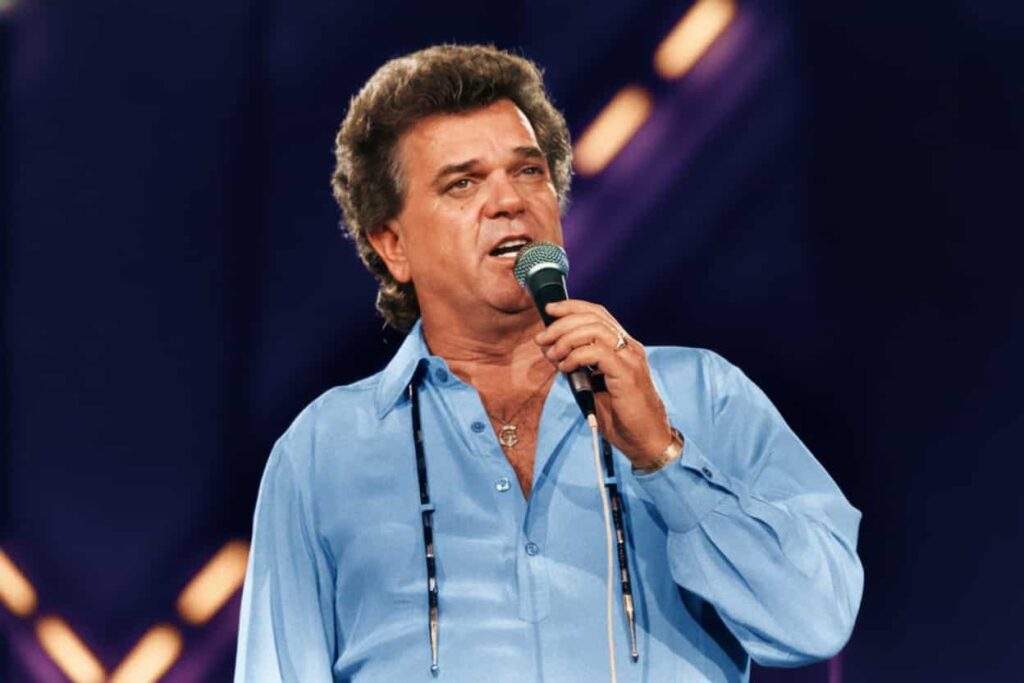
A Quiet Farewell Disguised as Another Night of Music, When Conway Twitty Sang as If Time Were Still on His Side
In the long history of American country music, few voices carried the weight of lived experience as naturally as Conway Twitty. By the early 1990s, he was not simply a performer walking onto a stage. He was an institution. With 55 No. 1 singles on the Billboard Hot Country Songs chart, a record that stood unmatched for years, and a career that bridged rock and roll, classic country, and the mature reflections of middle age, Twitty had already secured his place in musical history long before his final appearances.
By 1993, Conway Twitty was 59 years old, an age when many artists either retreat into nostalgia or lean heavily on farewell tours. He did neither. There was no marketed goodbye, no carefully framed final bow. Instead, he continued to perform as he always had: composed, warm, and deeply attentive to his audience. His voice remained unmistakable, rich with grain and restraint, shaped by decades of storytelling rather than vocal excess. To listeners, everything still sounded familiar, even comforting.
Yet familiarity can sometimes mask truth.
Those who saw him perform that year often recall subtle details rather than dramatic moments. The way he relied more heavily on the microphone stand. The slightly longer pauses between songs. The jokes that came a fraction slower but landed with the same gentle warmth. Nothing alarming. Nothing declared. And that, perhaps, was the most Conway Twitty way to leave a stage. Quietly. Without insisting on significance.
Behind the scenes, his health was failing. On June 5, 1993, Conway Twitty died from complications following surgery for an abdominal aortic aneurysm. The news shocked fans not because he had announced an ending, but because he had not. The absence of a formal farewell left a strange emotional echo, as if the final chapter had been read without anyone realizing they were turning the last page.
Later that year, his final album, Final Touches, was released posthumously. The title alone felt painfully literal. The record did not arrive as a dramatic artistic statement but as a gentle closing bracket to a life spent inside song. By then, chart positions mattered less than meaning. Still, the album reached the upper tier of the Billboard Top Country Albums chart, a testament to the enduring trust listeners placed in his voice. They were not chasing novelty. They were returning to something that had accompanied them for decades.
The deeper meaning of Conway Twitty’s last period is not found in a single lyric or performance, but in the way he treated the end of his career as an extension of everything that came before. His songs had always dealt with quiet heartbreaks, private reckonings, and emotional honesty delivered without theatrics. In that sense, his departure mirrored his art. Life did not stop the music abruptly. It simply let it fade.
For older listeners, those who grew up with Hello Darlin’, Linda on My Mind, or That’s My Job, the realization came slowly. The goodbye had already happened, not with a final note held too long, but while the melody was still steady. While the room felt safe. While nothing seemed to be changing.
That is why Conway Twitty’s legacy endures with such intimacy. He did not demand remembrance. He earned it through consistency, humility, and a profound respect for the emotional lives of his audience. In the end, he did not walk off the stage reflecting on what he was losing. He walked off as he had always lived in song, trusting that the music would speak when words no longer could.
 Music Legend
  Oldies Songs