
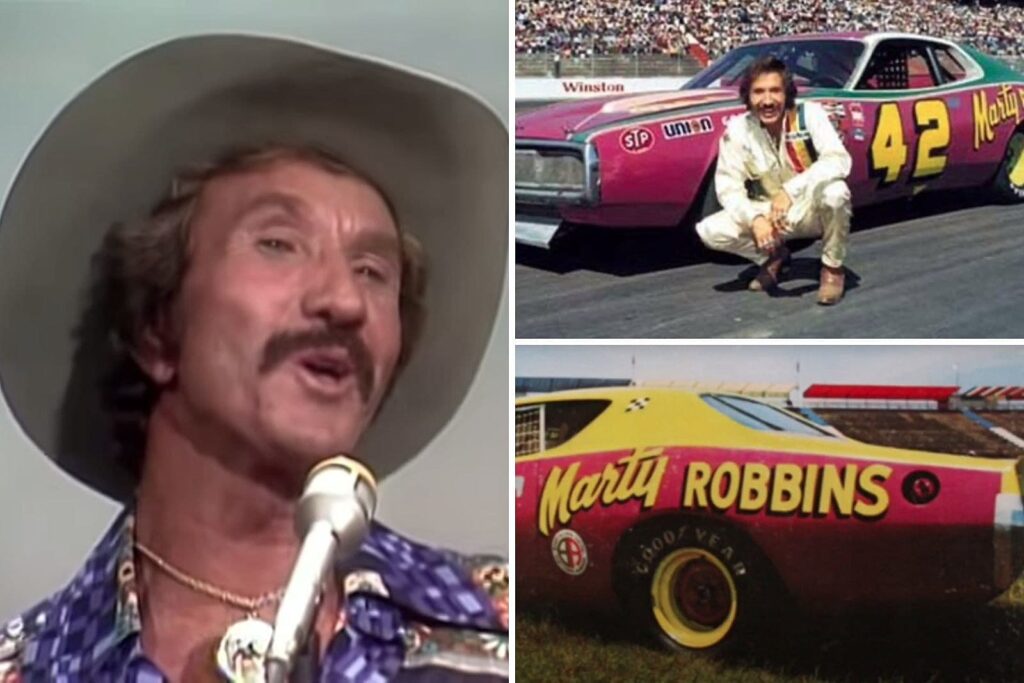
Marty Robbins – El Paso City: A Supernatural Flight Through Time and the Echoes of a Past Life
In the legendary “El Paso” trilogy, Marty Robbins created a world so vivid that he eventually found himself haunted by his own creation. Released in 1976 as the title track of the album El Paso City, this song serves as the sophisticated, metaphysical bookend to his 1959 masterpiece. While the original “El Paso” was a gritty tale of sand and blood, “El Paso City” is a reflective piece of “Countrypolitan” brilliance that reached No. 1 on the Billboard Hot Country Songs chart—his first chart-topper in six years. It is a song for the traveler who has ever looked down from a great height and felt an unexplainable pull toward the earth below.
For the reader who has lived through the era of the great western balladeers, this song carries a unique, layered nostalgia. It bridges the gap between the 19th-century frontier and the modern world of jet travel. Marty Robbins, with a voice that had only grown more resonant and knowing with age, narrates the experience of a passenger on a plane flying high over the West Texas desert. For the mature listener, the song captures that strange, “déjà vu” sensation we often feel as we look back on our lives—the feeling that we are part of a larger, recurring story that began long before we arrived.
The story behind the writing of the song is as mystical as the lyrics themselves. Marty reportedly wrote “El Paso City” while flying over the actual city, composing it in the exact amount of time it takes to sing—four minutes and fourteen seconds. This mirrored the lightning-fast inspiration he felt when writing the original “El Paso” nearly twenty years prior. In 1976, Marty wasn’t just singing a sequel; he was exploring the concept of reincarnation. He admits in the lyrics that he doesn’t recall who sang the “old song” he’s remembering, but he feels a “supernatural connection” to the cowboy who died in Feleena’s arms.
The lyrical depth of “El Paso City” lies in its search for identity across time. When Marty sings, “Could it be that I could be the cowboy in this mystery?” he is touching on a profound, reflective curiosity about the soul’s journey. For those of us who have spent a lifetime pondering our own place in the world, the song is a comforting acknowledgement that our emotions and memories might be older than our years. It frames the tragedy of the original song not as an ending, but as a “memory” that continues to unfold in the singer’s deepest thoughts.
Musically, the track is a masterwork produced by the legendary Billy Sherrill. It cleverly incorporates the iconic Spanish guitar riffs and rhythmic motifs of the 1959 original, but dresses them in the lush, mid-seventies production style. The arrangement feels as expansive as the view from a plane window, blending the old West with the “new” Nashville. To listen to this track today is to appreciate Marty’s ability to evolve while staying true to his heart. Marty Robbins reminds us that while cities change and planes replace horses, the “wild and unexplained emotions” of the human heart remain constant across the centuries.
 Music Legend