
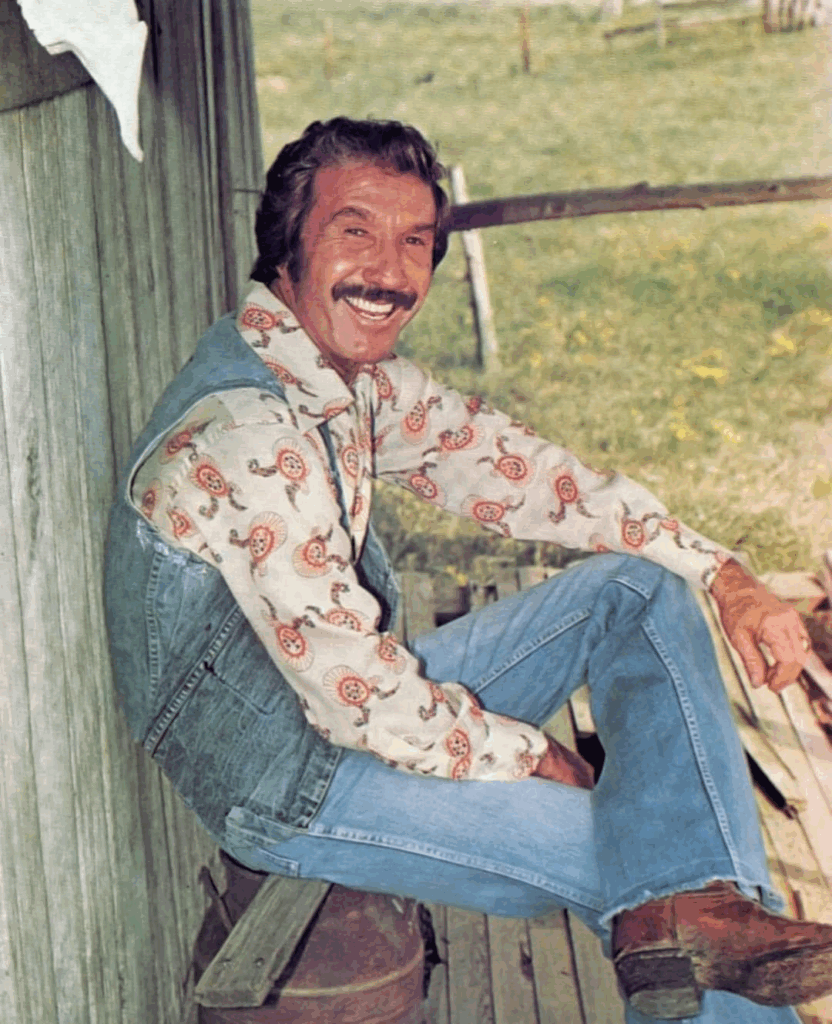
Marty Robbins – The Roving Gambler: A Galloping Folk Heritage and the Seductive Charm of the Itinerant Soul
In the long and distinguished career of Marty Robbins, his ability to serve as a bridge between the ancient folk traditions of the British Isles and the rugged myths of the American West was perhaps his greatest gift. Released in 1962 on the album Devil Woman (and later appearing on various Western and folk compilations), his version of “The Roving Gambler” is a magnificent example of this synthesis. While Marty was already a superstar for his self-penned epics, this track shows him paying homage to a story that has been sung in various forms for over a century.
For the reader who has lived through the folk revival of the sixties, this song carries a bracing, rhythmic nostalgia. Marty Robbins, with a voice that was both crystalline and robust, takes a melody that originated in the 19th century and infuses it with the energy of a Nashville session at its peak. It is a song for the person who understands the allure of the “traveling man”—the figure who arrives with a deck of cards, a silver tongue, and a spirit that refuses to be tied down. For the mature listener, there is a playful, almost rebellious joy in Marty’s delivery as he navigates the story of a man who wins the hearts of daughters and the ire of mothers across the land.
The history of “The Roving Gambler” is a fascinating journey through time. Scholars trace its roots back to an English broadside ballad called “The Roving Journeyman,” which dates as far back as the early 1800s. As the song crossed the Atlantic, the “journeyman” (a traveling craftsman) morphed into the American “gambler.” Marty’s version follows the classic structure popularized by early pioneers like Kelly Harrell and Vernon Dalhart in the 1920s. In 1962, Marty wasn’t just covering a hit; he was acting as a curator of the “American Songbag,” ensuring that these foundational stories wouldn’t be forgotten in the age of television and rock and roll.
The lyrical depth of the song lies in its portrayal of social defiance. The heart of the narrative is the dialogue between a mother and her daughter. The mother pleads with her child not to leave with the “gambling man,” but the daughter’s response is one of total, romantic surrender: “I’ll tell you if I can / If you ever see my face again / I’ll be with the gambling man.” For the mature reader, the song captures that timeless conflict between the security of the home and the dangerous excitement of the unknown. Marty’s phrasing, particularly on the repeated refrains, creates a sense of inevitable motion—the sound of a train “coming ’round the curve,” signifying a life that is always moving toward the next town and the next game.
Musically, the track is a masterclass in folk-country fusion. It features the signature “Grady Martin” guitar wizardry, with a driving, acoustic-led rhythm that feels like the hoofbeats of a fast horse. Marty’s tenor is exceptionally agile here, capturing the “rambling” nature of the protagonist with a sense of lighthearted adventure. To listen to this track today is to appreciate the sheer craftsmanship of an era where a singer could take a three-hundred-year-old story and make it feel as fresh as the morning news. Marty Robbins reminds us that while we may settle down, a part of the human spirit will always be “roving,” looking for the next hand to be dealt.
 Music Legend