
The Guitar Whisperer’s Elegant Nod to a Classic Shadows Theme, Made His Own
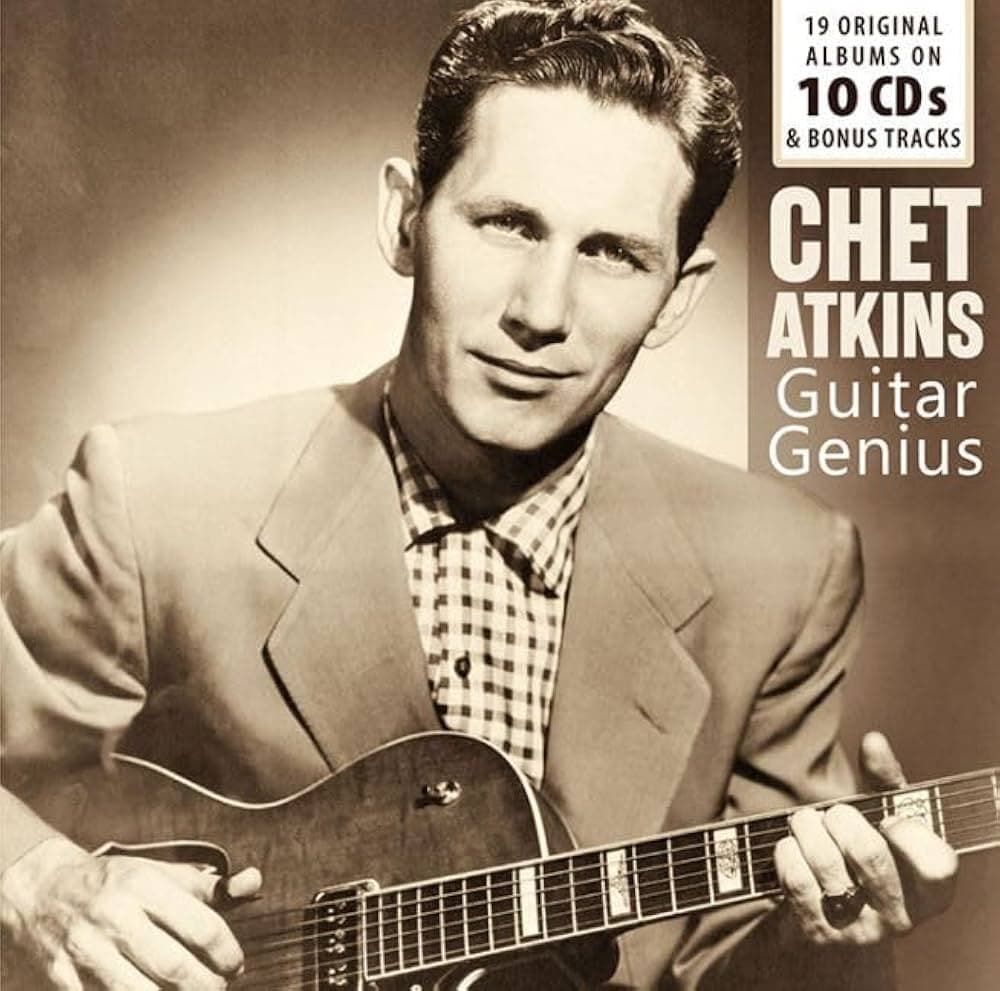
When Chet Atkins recorded “Man of Mystery”, he wasn’t chasing pop charts or trying to reinvent the wheel — he was quietly demonstrating what mastery really sounds like when it meets melody and restraint. Originally an instrumental hit for The Shadows in 1960, “Man of Mystery” was written by Michael Carr for the Edgar Wallace Mysteries film series before The Shadows turned it into an up-tempo electric guitar theme that hit No. 5 on the UK Singles Chart later that year. Atkins’ version, released as a single in 1961, did not make major chart waves in the U.S. like some of his contemporaneous recordings, but it nonetheless became a staple in his expansive catalog and an enduring testament to his interpretive genius.
From the very first note, “Man of Mystery” in Atkins’ hands feels like a quiet conversation between guitar and listener — subtle, deliberate, and deeply intentional. Unlike the original by The Shadows, which thrived on rhythmic propulsion and cinematic intrigue, Atkins treated the melody as a lyric in itself. Without a voice or words, the guitar becomes the storyteller, revealing melancholic contours and graceful turns that only a musician of profound sensitivity could muster. At a brisk but measured tempo, the recording meshes fingerstyle finesse with jazz influenced phrasing, taking what was once a pop instrumental and recasting it as a warm, introspective musical statement.
Atkins was already well established by this point as one of the preeminent figures in American guitar music and a pivotal architect of what became known as the Nashville Sound — a smoother, more polished style of country music that broadened the genre’s appeal far beyond its traditional audience. In transforming “Man of Mystery”, he demonstrated the art of assimilation: taking a well-known theme from outside the American country tradition and making it unmistakably his own through tone, touch, and phrasing.
The deeper meaning of this recording lies less in commercial success and more in artistic translation. “Man of Mystery” wasn’t about reinventing the tune, but about honoring its intrigue while revealing new emotional layers through a differing lens. With Atkins’ seamless blending of country, jazz, and pop sensibilities, the song transcends genre boundaries. It becomes less about suspense and more about quiet reflection — an idea that resonates with listeners who recognize the beauty of subtlety in music.
The recording also intimates something personal about Atkins himself: his preference for understatement over flash, and melody over spectacle. Many of his best-loved performances — whether his deft reworking of “Mister Sandman” or original instrumentals like “Yakety Axe” — share this same refined restraint, where every note is deliberate and nothing is wasted. “Man of Mystery” fits seamlessly into this lineage, serving both as homage and self-portrait.
For guitar devotees, the piece has become something of a nuanced challenge: a reminder that technique without soul is merely technique. Atkins’ approach isn’t about speed or complexity, but about shaping each phrase — making the instrument speak with clarity, tenderness, and purpose. This is perhaps why the track appears on anthologies such as The Essential Chet Atkins, where it sits alongside other instrumental gems as part of a legacy defined by elegance rather than ego.
Though it never dominated American charts the way some of his other singles did, “Man of Mystery” has endured as a beloved piece among connoisseurs of guitar music and fans of Atkins’ work. Its quiet confidence and melodic charm reflect an artist at ease with his craft, letting nuanced emotion and interpretive depth shape the listener’s experience. In that sense, the mystery isn’t a puzzle to be solved; it’s an atmosphere to be felt, and in the hands of Chet Atkins, it feels entirely — and memorably — his own.