
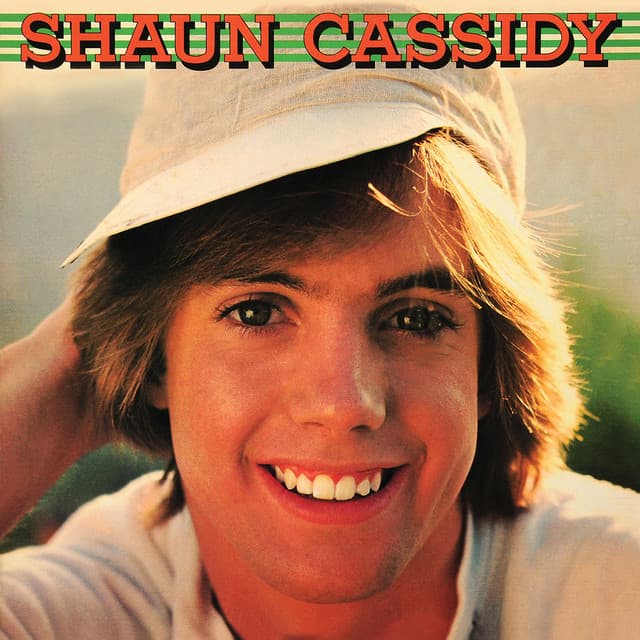
A Tender Promise of Companionship Offered to a Heart That Has Known Too Much Silence
When Shaun Cassidy released “Hey There Lonely Girl” in 1977, it became far more than a remake of a familiar soul classic. It was a moment when youthful pop stardom briefly paused to make room for empathy, reassurance, and emotional connection. At the height of Cassidy’s popularity, this song stood out as a gentle conversation rather than a declaration, a soft voice reaching out to someone who had been alone with their thoughts for too long.
Released as a single from the album “Born Late”, “Hey There Lonely Girl” rose swiftly to the very top of the Billboard Hot 100, reaching number one in December 1977. It also performed strongly on adult contemporary charts, confirming that its appeal extended well beyond teenage fandom. This chart success was particularly notable because the song carried a tone of emotional maturity that contrasted with much of the era’s upbeat pop. Cassidy did not merely benefit from momentum. He earned attention by offering something quieter and more sincere.
The song itself was not new. Originally recorded by Eddie Holman in 1969, the original version reached number two on the Billboard Hot 100 and became a defining soul ballad of its time. That earlier recording carried a pleading vulnerability rooted in classic rhythm and blues. Cassidy’s interpretation, however, approached the song from a different emotional angle. Where Holman’s voice trembled with desperation, Cassidy’s delivery felt reassuring and steady, as if the pain described had already been understood and accepted.
This difference in interpretation is key to understanding why “Hey There Lonely Girl” resonated so deeply in its second life. Cassidy was often framed as a symbol of youthful energy and optimism, yet here he slowed his pace and allowed the lyrics to breathe. The arrangement replaced raw soul intensity with polished pop warmth, guided by soft strings, gentle rhythm, and a carefully restrained tempo. The result was a song that felt like a hand resting calmly on a shoulder rather than a cry for attention.
The story behind the song’s success also reflects a turning point in Cassidy’s career. By late 1977, he was navigating the tension between public image and personal artistic direction. “Born Late” was an album that hinted at a desire for broader expression, and “Hey There Lonely Girl” became its emotional centerpiece. It showed that Cassidy could step into material with history and weight and make it his own without diminishing its original meaning.
Lyrically, the song speaks directly to emotional isolation. It does not ask why loneliness exists. It simply acknowledges it. The narrator does not promise miracles or dramatic rescue. Instead, he offers presence, patience, and understanding. Lines are delivered not as persuasion but as quiet reassurance. This understated approach gives the song its lasting strength. It recognizes that loneliness is not always cured by excitement, but by feeling seen and heard.
Cassidy’s vocal performance deserves particular attention. He sings with clarity and restraint, allowing warmth rather than power to carry the melody. There is a sense of careful listening embedded in his phrasing, as though the song is responding rather than speaking first. This quality helped transform “Hey There Lonely Girl” into a song that listeners trusted, one that felt sincere even amid the gloss of late 1970s pop production.
Within the larger landscape of popular music, “Hey There Lonely Girl” occupies a rare space where generations quietly meet. It bridges the soul tradition of the late 1960s with the polished pop sensibility of the late 1970s. Cassidy’s version did not replace the original. Instead, it reframed it, offering the same message through a different emotional lens. That ability to reinterpret without erasing history is part of what gives the song its enduring value.
Today, “Hey There Lonely Girl” remains one of Shaun Cassidy’s most memorable recordings, not simply because it reached number one, but because it captured a moment of emotional honesty during a time often defined by image and spectacle. It reminds us that even in eras of noise and celebration, the songs that endure are often the ones that speak softly, patiently, and with genuine care.