
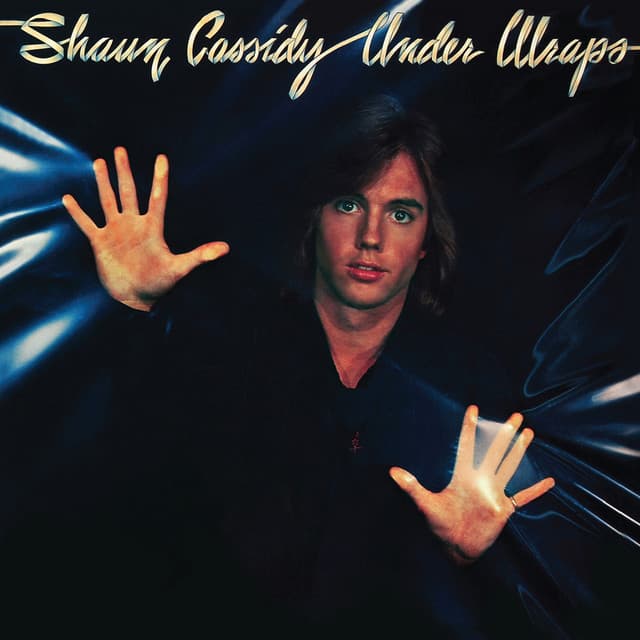
A tender promise passed from one heart to another, where love steps aside but never lets go.
When Shaun Cassidy released Take Good Care Of My Baby in 1977, he was doing far more than revisiting an early-1960s pop classic. He was engaging in a quiet conversation with musical memory, taking a song already rich with emotional restraint and reframing it for a new moment shaped by reflection rather than youthful urgency. Originally written by Carole King and Gerry Goffin and made famous by Bobby Vee, whose 1961 recording reached No. 1 on the Billboard Hot 100, the song carried a legacy that demanded respect rather than reinvention.
Cassidy’s version, released during the peak of his recording career and included on his album Born Late (1977), climbed to No. 12 on the Billboard Hot 100. While it did not match the chart-topping dominance of the original, its success lay elsewhere. The record resonated because it sounded like a young voice already learning the weight of emotional responsibility, a subtle shift that gave the song renewed meaning.
The decision for Shaun Cassidy to record Take Good Care Of My Baby was telling. By the mid-1970s, Cassidy was widely known for his warm tenor and approachable presence, qualities that translated easily to romantic pop. Yet this song required something more restrained. It is not about winning love or reclaiming what was lost. It is about stepping back with dignity, entrusting someone else with what once mattered most. Cassidy approached this emotional space with surprising sensitivity.
Musically, the arrangement stays faithful to the song’s original simplicity. The production avoids excess, favoring clean guitar lines, gentle percussion, and soft harmonies that never overwhelm the vocal. This restraint allows the lyrics to remain front and center. In Cassidy’s hands, the melody feels slightly slower, more deliberate, as though each line has been weighed before being sung.
Vocally, Shaun Cassidy does not dramatize the pain. Instead, he sings with a calm acceptance that deepens the song’s emotional impact. There is no bitterness in his delivery, no trace of accusation. The line “Take good care of my baby, please don’t ever make her blue” becomes less a plea and more a benediction. It is the sound of someone who understands that love does not always end with possession, but sometimes with trust.
The meaning of Take Good Care Of My Baby has always rested in its emotional maturity. Unlike many breakup songs that center on loss or regret, this one focuses on responsibility even after love has shifted direction. Cassidy’s interpretation leans into that maturity. He sounds less like someone freshly wounded and more like someone who has had time to reflect. The song becomes an acknowledgment that caring for someone can continue even when the relationship itself cannot.
This interpretation aligned naturally with the tone of Born Late, an album that reflected Cassidy’s growth as an artist. While the record included upbeat pop material, it also revealed a willingness to explore quieter emotional spaces. Take Good Care Of My Baby stood out as a moment of stillness, a pause amid a catalog often associated with youthful charm.
The legacy of Cassidy’s version lies in its emotional clarity. He did not attempt to modernize the song aggressively or reshape it to fit trends. Instead, he allowed its timeless core to remain intact. In doing so, he demonstrated an understanding that some songs endure because they speak softly, not loudly.
Within the broader history of pop music, Take Good Care Of My Baby represents a rare kind of farewell, one defined by grace rather than finality. Cassidy’s rendition reinforces this idea. It suggests that love can transform without disappearing, that letting go does not erase what came before.
Today, listening to Shaun Cassidy sing Take Good Care Of My Baby feels like opening a carefully preserved letter from another era. The emotions are familiar, yet unhurried. The song does not rush to explain itself. It simply offers its sentiment and trusts the listener to understand.
In the end, Cassidy’s recording stands as a reminder that some of the most enduring performances are not built on power or spectacle, but on sincerity. Take Good Care Of My Baby, as he recorded it, remains a gentle testament to love’s quieter virtues: respect, memory, and the courage to wish someone well, even when walking away.