
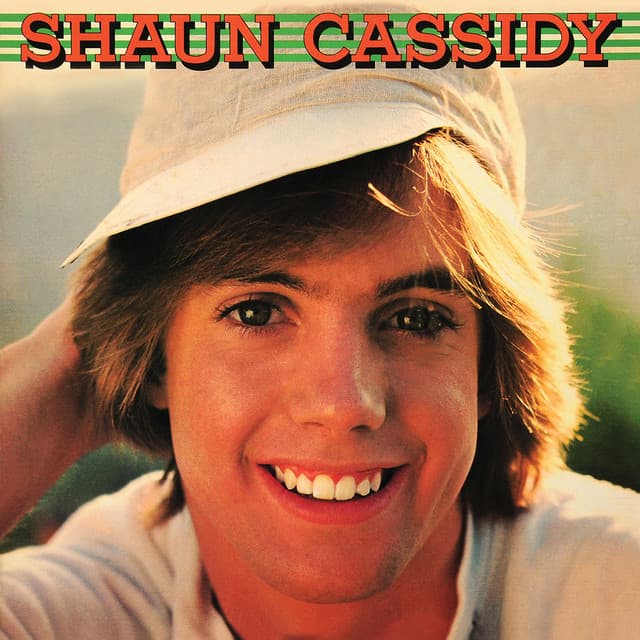
A gentle portrait of youthful freedom and unguarded optimism, captured in motion and memory.
When Shaun Cassidy released Amblin’ in 1977, it arrived not as a thunderous pop statement but as something far rarer in its moment: a song content to stroll rather than sprint. Issued as a single from his second studio album Born Late, Amblin’ reflected a quieter side of Cassidy’s musical personality, one rooted in warmth, reflection, and an easy sense of movement. On the charts, the song performed solidly and respectably, reaching No. 16 on the Billboard Hot 100 and finding even stronger resonance on the Adult Contemporary chart, where its relaxed tone felt especially at home.
By the time Amblin’ appeared, Shaun Cassidy was already a familiar presence in American popular culture. His earlier hits such as That’s Rock ’n’ Roll and Da Doo Ron Ron had established him as a major teen idol, but also as a vocalist with an instinctive feel for melody. Yet Amblin’ suggested a subtle shift. Rather than chasing immediacy or exuberant hooks, the song leaned into atmosphere. It sounded like a deep breath between moments of excitement, a pause where one could look around and take stock of the road already traveled.
The origins of Amblin’ are closely tied to the creative environment surrounding Born Late, an album that showed Cassidy experimenting with tone and pacing. While still firmly within the pop rock framework of the late 1970s, the album carried a more reflective undercurrent. Amblin’ became its emotional centerpiece, built on a gentle groove, understated instrumentation, and a vocal delivery that avoided theatricality. Cassidy sings as if confiding rather than performing, allowing the song’s mood to unfold naturally.
Lyrically, Amblin’ is deceptively simple. It speaks of movement, of drifting forward without urgency, of letting life reveal itself mile by mile. There is no grand destination promised, no dramatic conflict to resolve. Instead, the song finds meaning in motion itself. This sense of unpressured travel resonated strongly in a decade marked by rapid cultural change. Against that backdrop, Amblin’ felt like an invitation to slow down, to trust the rhythm of one’s own steps.
Musically, the arrangement reinforces this philosophy. The tempo never rushes. Guitars are warm and supportive rather than dominant. The rhythm section keeps things grounded without demanding attention. Everything serves the feeling of continuity, of steady forward movement. Cassidy’s voice sits comfortably in the mix, neither pushed forward nor buried, reinforcing the impression of balance.
The success of Amblin’ on the charts was significant precisely because it lacked obvious commercial flash. Its climb into the Top 20 suggested that listeners were receptive to subtlety, to songs that spoke quietly but honestly. In the context of Cassidy’s career, it demonstrated that his appeal was not limited to high energy pop singles. He could carry a song built on mood and suggestion just as convincingly.
The meaning of Amblin’ has continued to evolve with time. What once sounded like a portrait of youthful wandering now often feels like a meditation on life’s passage. The song does not look backward with regret, nor forward with anxiety. It exists in the present tense, honoring the act of moving through the world with curiosity and calm acceptance. That timeless quality has allowed it to age gracefully, retaining emotional relevance long after its chart run ended.
Within Shaun Cassidy’s broader body of work, Amblin’ stands as a reminder that popularity and introspection need not be opposites. It captures a moment when a young artist allowed himself to slow his pace, to step outside expectation, and to offer something quieter but no less sincere.
Today, Shaun Cassidy – Amblin’ feels like a snapshot taken mid journey. Not a beginning, not an ending, but a stretch of open road where the only requirement is to keep moving, gently and honestly, toward whatever comes next.