
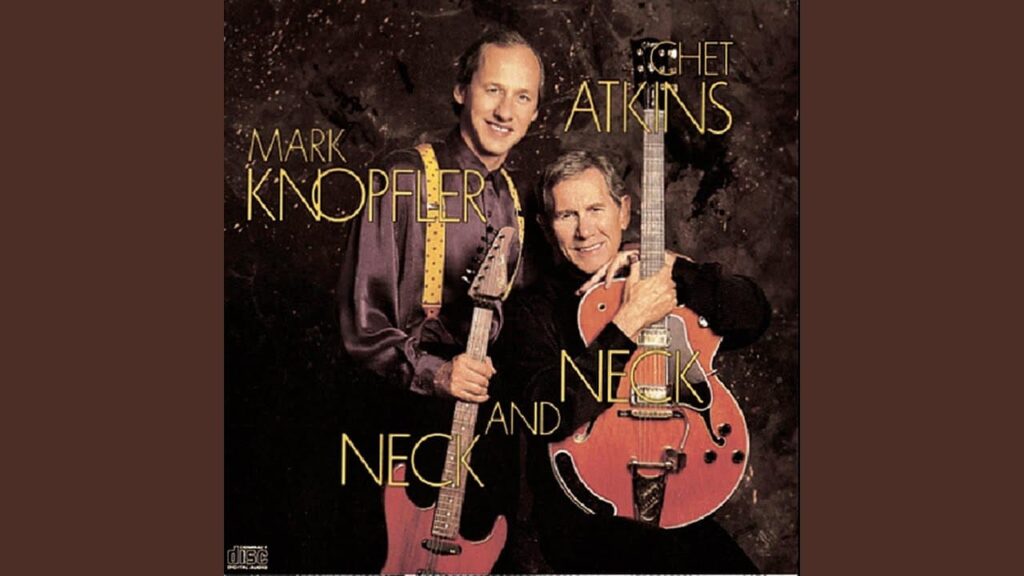
A quiet declaration of dignity and resilience, spoken not in words but in the eloquent language of strings.
When Chet Atkins released Poor Boy Blues in 1956, it stood as a defining moment not only in his career but in the evolution of instrumental music within American popular culture. At a time when vocal driven rock and roll was beginning to dominate the airwaves, Atkins offered something entirely different: a wordless story of restraint, grace, and inner strength. The recording achieved remarkable success, reaching the Top 10 on the Billboard pop chart and climbing to No. 1 on the country instrumental listings, an extraordinary accomplishment for a guitar driven piece in a vocal centered era.
From the very beginning, Poor Boy Blues announced itself as more than a technical showcase. Atkins had long been admired for his precision and elegance, but this recording revealed a deeper emotional intelligence. The title suggests hardship, yet the music never collapses into despair. Instead, it carries a quiet confidence, as if acknowledging struggle while refusing to be defined by it. This balance between humility and resolve became one of Atkins’ most enduring artistic signatures.
The story behind Poor Boy Blues is inseparable from Atkins’ role as a bridge between musical worlds. Working at RCA Victor in Nashville, he was instrumental in shaping what would later be known as the Nashville Sound. While many producers smoothed away rough edges to reach broader audiences, Atkins believed sophistication and sincerity could coexist. Poor Boy Blues embodies that belief. Its clean lines, gentle swing, and subtle blues inflections made it accessible without sacrificing depth.
Musically, the piece is built on Atkins’ revolutionary fingerstyle technique, where melody, harmony, and rhythm unfold simultaneously. There is no excess, no wasted motion. Every note feels chosen, deliberate, and necessary. The guitar speaks with a calm authority, suggesting a voice that has learned when to speak softly and when silence is more powerful. This economy of expression gave Poor Boy Blues a timeless quality that transcended genre boundaries.
The emotional meaning of Poor Boy Blues lies in its restraint. Rather than dramatizing hardship, Atkins presents it as a lived condition, familiar and accepted. The blues here are not shouted; they are carried with composure. In this way, the song reflects a worldview shaped by endurance and quiet perseverance. It resonates with anyone who understands that strength is often found not in grand gestures but in the ability to keep moving forward with dignity.
Its chart success was significant not merely for numbers, but for what it represented. An instrumental country blues piece crossing into the pop mainstream suggested that audiences were willing to listen more closely, to engage with music that trusted them to feel rather than be told what to feel. Poor Boy Blues became proof that subtlety could still command attention.
Within Chet Atkins’ vast catalog, the track occupies a special place. While he would go on to record countless influential albums and collaborate with artists across genres, Poor Boy Blues remains a touchstone, a reminder of the moment when his artistry crystallized into a universally understood voice. It also influenced generations of guitarists, many of whom cited the recording as an early lesson in musical discipline and emotional control.
Decades later, Chet Atkins – Poor Boy Blues continues to speak with undiminished clarity. It feels less like a performance and more like a conversation carried across time. The song does not ask for sympathy, nor does it offer easy comfort. Instead, it stands quietly, confident in the power of honesty and restraint.
In listening to Poor Boy Blues, one hears not only the sound of a master guitarist, but the philosophy of an artist who understood that the most lasting statements are often made without words, leaving space for memory, reflection, and the listener’s own story to fill the silence.