
A Song of Welcome and Moral Courage, Offering Rest to the Weary Traveler of Justice
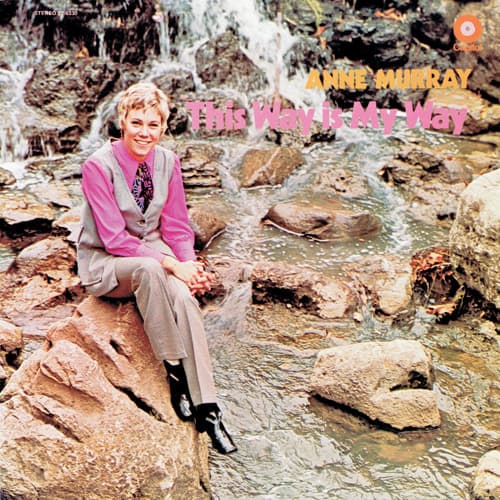
When Anne Murray included “Thirsty Boots” on her 1969 album This Way Is My Way, she was not merely recording another folk ballad. She was placing her young, luminous voice inside one of the most morally charged currents of the 1960s. The song, written in 1966 by American singer songwriter Eric Andersen, emerged from the heart of the American civil rights movement. Andersen composed it as a tribute to a friend returning from civil rights activism in the American South, exhausted but unbroken. By the time Murray recorded it, the song already carried the quiet dignity of lived experience.
This Way Is My Way, Murray’s second studio album, was released by Capitol Records in 1969. It became her breakthrough, largely because of the single “Snowbird,” which would climb to No. 8 on the Billboard Hot 100 in 1970 and establish her as an international star. While “Thirsty Boots” was not released as a major charting single and did not register independently on the Billboard Hot 100, its presence on an album that helped define Murray’s early career gives it historical and artistic significance. It revealed that behind the polished pop success was an artist deeply attuned to folk traditions and social conscience.
Musically, “Thirsty Boots” is spare and unadorned. The melody is gentle, almost hymnlike. The lyrics open with an image of welcome: “You’ve been out walking and your boots are worn and thin.” The refrain offers sanctuary: “Take off your thirsty boots and stay for a while.” The metaphor is simple yet profound. The “thirsty boots” belong to someone who has walked long roads in the name of justice. They are dry from dust and fatigue. The invitation is not political rhetoric but human compassion. Rest here. You have done enough for now.
In the hands of Eric Andersen, the song had the texture of Greenwich Village folk, intimate and earnest. In the voice of Anne Murray, it acquired something different: a luminous stillness. Murray did not sing it as a protest anthem. She sang it as a benediction. Her phrasing is careful, almost maternal, but never sentimental. There is strength in her restraint. She allows the melody to breathe, letting each line settle like a hand on a shoulder.
The late 1960s were a time when popular music and social consciousness often intersected. Songs by artists such as Bob Dylan, Joan Baez, and Phil Ochs openly confronted injustice. “Thirsty Boots” belongs to that lineage, yet it avoids slogans. Instead, it focuses on the emotional cost of struggle. The civil rights movement demanded courage, but it also demanded endurance. Andersen’s lyric honors that endurance, not by dramatizing conflict, but by acknowledging weariness. The hero in this song is tired. That detail makes the tribute more truthful.
For Murray, a Canadian artist recording at a time when she was still shaping her identity, choosing this song was meaningful. She was not yet the fully formed country pop icon who would later record hits like “You Needed Me.” On This Way Is My Way, she was navigating folk, pop, and soft country textures. By including “Thirsty Boots,” she aligned herself, quietly, with the moral seriousness of the era. It demonstrated that her repertoire would not be limited to romantic ballads or light pop. There was depth beneath the clarity of her tone.
Listening to Murray’s version today, one hears more than a document of the civil rights period. One hears a timeless message about refuge. The world changes, but the need for rest after struggle does not. The image of removing dusty boots at the door speaks to anyone who has carried a burden too long. The song does not promise victory or applause. It promises understanding.
There is also something profoundly nostalgic in the production. The arrangement is modest, built around acoustic instrumentation that allows the lyric to remain central. It recalls a period when albums were sequenced carefully, when a track like “Thirsty Boots” might sit beside a radio friendly hit such as “Snowbird” and create a fuller portrait of an artist’s soul. It was an era when listeners placed the needle gently on vinyl and allowed the record to unfold, song by song, without hurry.
In retrospect, “Thirsty Boots” stands as a reminder that music can offer more than entertainment. It can extend hospitality. Through Anne Murray’s interpretation, a song born from the American civil rights struggle found new life in a broader popular audience. It invited listeners to recognize quiet heroism, to honor perseverance, and perhaps to become a little more compassionate.
And in that simple line, “take off your thirsty boots and stay for a while,” there remains a warmth that has not faded with time. It is the warmth of a door opened, of a light left on, of a voice that understands how far someone has walked.
 Music Legend