
A Hymn That Whispers an Invitation Home, Where Faith, Memory, and Mercy Quietly Meet
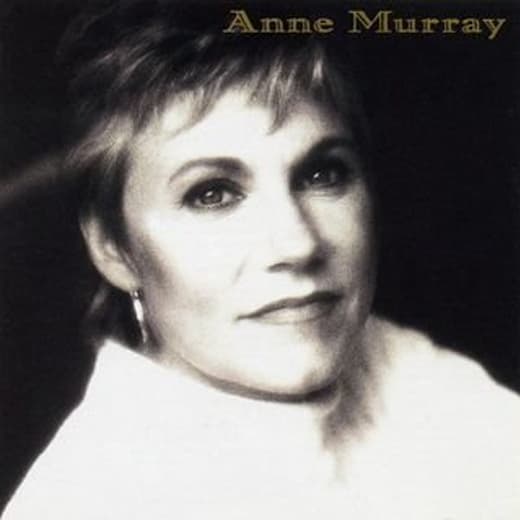
When Anne Murray recorded “Softly and Tenderly” for her 1999 album What a Wonderful World: 26 Inspirational Classics, she was not chasing radio play or chart momentum. This was not a song designed for rankings or contemporary competition. In fact, “Softly and Tenderly”, in her rendition, did not enter the mainstream singles charts at the time of its release. And that absence is itself meaningful. This hymn has never belonged to the machinery of pop success. It belongs to living rooms, church pews, hospital rooms, and the quiet spaces where reflection takes over and words are spoken softly because the heart is already full.
Released in 1999, What a Wonderful World: 26 Inspirational Classics became one of the most warmly received albums of Anne Murray’s later career, particularly among adult listeners who had grown with her voice across decades. While the album charted strongly on inspirational and adult contemporary listings in North America and enjoyed sustained catalog sales rather than a brief commercial peak, its true impact lay in longevity. It became a companion album, returned to repeatedly, especially in moments of remembrance and spiritual grounding.
The song itself predates Anne Murray by more than a century. “Softly and Tenderly” was written in 1880 by Will L. Thompson, an American composer deeply rooted in the gospel tradition. Thompson reportedly wrote the hymn after being criticized for composing songs that were “too sentimental.” His response was not defensive but resolute. He believed that tenderness was not weakness, and that faith, when offered gently, could reach places argument never could. The result was a hymn built not on thunderous declaration but on invitation.
Anne Murray understood this instinctively.
Her performance of “Softly and Tenderly” is marked by restraint. There is no vocal flourish, no attempt to modernize or embellish the melody. Her mezzo-soprano voice, warm and unforced, rests lightly on the notes, supported by piano and organ arrangements that feel less like accompaniment and more like a steady hand on the shoulder. The tempo is unhurried, allowing every phrase to breathe. It is a reading that respects silence as much as sound.
The song’s central message is simple and enduring. It speaks of return. Not return as failure, but return as welcome. The repeated line “Come home” is not framed as judgment or urgency. In Anne Murray’s voice, it sounds patient, almost maternal. The door is open. Time has not run out. Nothing needs to be proven.
For listeners who have lived long enough to understand regret, forgiveness, and the quiet passage of years, this message resonates deeply. “Softly and Tenderly” does not ask the listener to change who they are. It asks them to remember who they have always been.
Anne Murray’s connection to this material is rooted in her broader artistic identity. Throughout her career, she was known for emotional clarity rather than dramatic intensity. Whether singing pop, country, or sacred music, she favored sincerity over spectacle. Her Canadian upbringing, her lifelong association with calm, introspective storytelling, and her avoidance of celebrity excess all find expression in this recording.
By the late 1990s, when this album was released, Anne Murray had already stepped back from the pressure of constant reinvention. This allowed her to approach gospel material not as a stylistic experiment, but as a personal statement. “Softly and Tenderly” feels less like a performance and more like a reflection. It sounds like a song she had lived with for years before recording it.
Today, this version continues to be used in memorial services, quiet Sunday mornings, and moments of private listening. It has endured not because it reinvented a classic hymn, but because it trusted the hymn completely.
In the end, Anne Murray’s “Softly and Tenderly” reminds us that some songs are not meant to announce themselves. They arrive gently, sit beside us, and stay long after the final note fades.
 Music Legend