
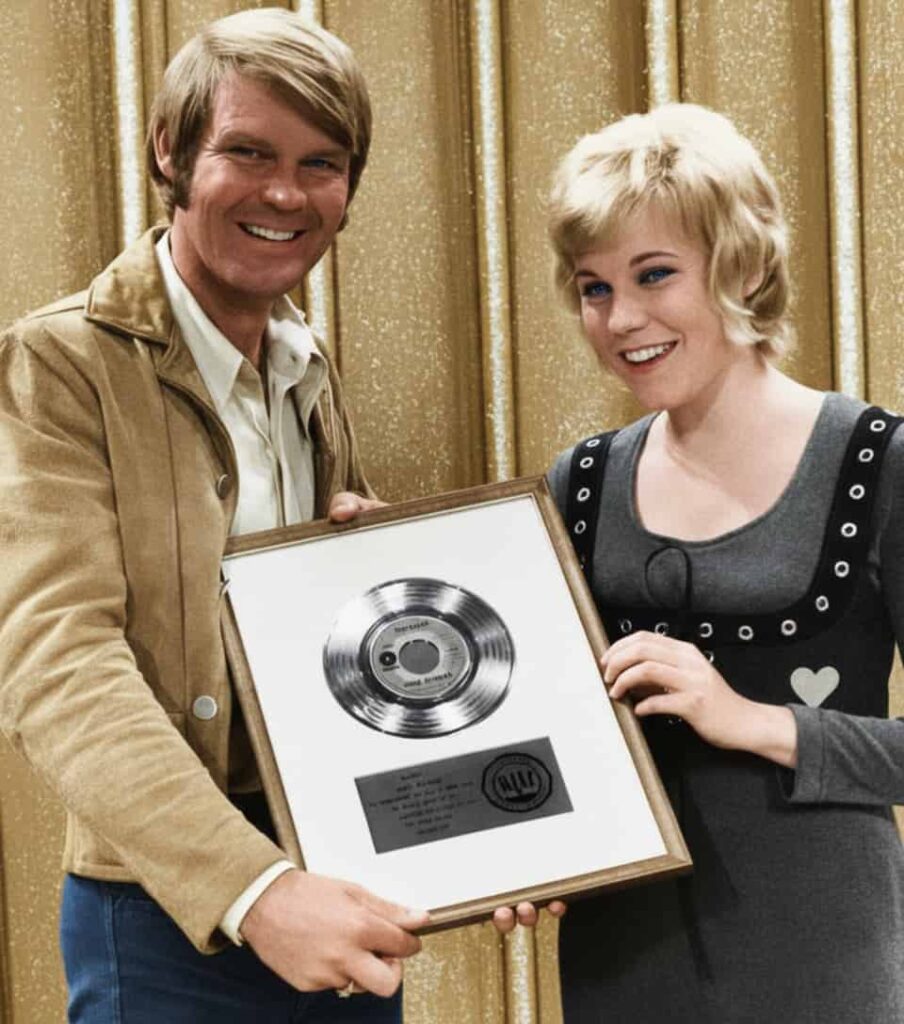
A gentle affirmation of devotion, trust, and emotional ease, sung with the calm assurance of two voices who understood love not as drama, but as commitment.
Released in 1971, “You’re Easy to Love” stands as one of the most quietly affecting duets recorded by Anne Murray and Glen Campbell, appearing on their collaborative album Anne Murray / Glen Campbell. At a time when popular music was increasingly split between youthful rebellion and ornate production, this song chose a different path. It spoke plainly, sincerely, and without irony about loyalty, faithfulness, and the deep comfort of loving someone who asks for no pretense. Upon its release as a single, “You’re Easy to Love” became a Top 10 hit on the Billboard Hot Country Singles chart, and also found a receptive audience on the Adult Contemporary listings, confirming that its appeal crossed generational and stylistic lines.
What made this recording resonate so deeply was not novelty, but recognition. By 1971, Anne Murray had already established herself as a voice of reassurance in popular music. Her tone was unforced, maternal without being sentimental, and grounded in emotional clarity. Glen Campbell, meanwhile, was at the height of his crossover power, equally comfortable with country storytelling and pop craftsmanship. When these two voices came together, there was no competition for space. Instead, the duet unfolded like a conversation long continued, familiar and deeply trusted.
The song itself is built on a lyrical promise rather than a dramatic arc. Lines such as “I’ll never have a rovin’ eye” and “my love for you will never die” do not attempt to impress. They reassure. In an era when love songs often leaned toward heartbreak or longing, “You’re Easy to Love” offered something rarer: contentment. The narrator does not chase love or fear losing it. Love, here, is already present, stable, and mutually understood.
This sense of emotional security is mirrored in the arrangement. The production is modest, gently paced, and free of ornament. Acoustic textures and restrained instrumentation allow the vocals to carry the weight. When Anne Murray and Glen Campbell sing together, their harmonies never overwhelm the melody. Instead, they reinforce it, much like two people quietly agreeing on what matters most. There is pride in togetherness, but also humility. Love is not portrayed as conquest, but as gratitude.
Behind the song lies a broader cultural moment. The early 1970s marked a period when country music increasingly embraced themes of domestic stability and emotional maturity, reflecting listeners who had lived through change and now valued constancy. “You’re Easy to Love” fits squarely within this tradition. It does not deny hardship or imperfection, but it chooses to emphasize effort, patience, and growth. “My love for you is gonna grow” is not a poetic flourish. It is a statement of intention.
For listeners who encountered the song upon its release, it often felt less like entertainment and more like recognition of lived experience. Love, after all, does not always arrive with fireworks. Sometimes it arrives quietly, proves itself over time, and stays. That understanding is at the heart of this recording. The song’s lasting appeal comes from its refusal to exaggerate emotion. Instead, it honors the beauty of emotional ease, the rare comfort of being with someone who makes fidelity feel natural rather than forced.
More than five decades later, “You’re Easy to Love” remains a testament to a musical era that trusted sincerity. In the voices of Anne Murray and Glen Campbell, love is not idealized beyond reach. It is spoken plainly, lived daily, and valued precisely because it endures.
 Music Legend