
A Daughter of Country Royalty Reclaims Love and Legacy in a Top 3 Triumph
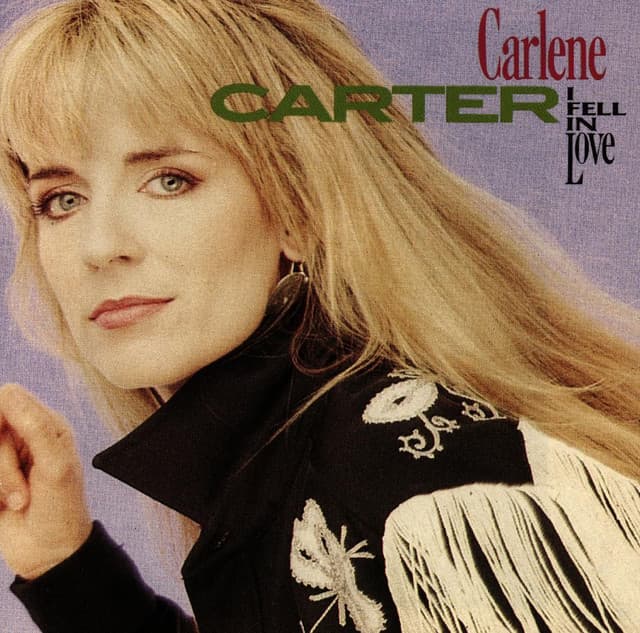
Released in September 1990 as the second single from her breakthrough album I Fell in Love, “Come On Back” marked a defining chapter in Carlene Carter’s career. The song climbed to No. 3 on the Billboard Hot Country Singles & Tracks chart in January 1991, becoming one of the highest-charting singles of her life. Written and recorded by Carlene Carter herself, the track confirmed that this was not merely a return to commercial country music, but a deeply personal reclamation of identity, family legacy, and artistic confidence.
By 1990, Carlene Carter was no stranger to reinvention. The daughter of June Carter Cash and stepdaughter of Johnny Cash, she had grown up surrounded by American music royalty. Yet her own artistic path had been anything but predictable. In the late 1970s and early 1980s, she leaned toward rockabilly and new wave influences, even recording in the United Kingdom. Commercial success in country music remained elusive. When she signed with Giant Records and released I Fell in Love, it felt less like a debut and more like a homecoming.
“Come On Back” carries that sense of return in both lyric and spirit. The song is structured as a plea for reconciliation, a classic country theme, yet it avoids melodrama. Instead, Carter delivers her message with warmth and conviction. There is no bitterness in her voice, only a confident invitation. The arrangement is polished Nashville country of the early 1990s, built on steady drums, clean electric guitar lines, and a melodic hook that lingers long after the final chorus fades. It balances contemporary production with a traditional emotional core.
What makes “Come On Back” resonate so deeply is its authenticity. Carter was not simply chasing radio trends. She was reconnecting with her roots, with the Carter Family heritage that had shaped American country music since the 1920s. On I Fell in Love, she collaborated with figures closely tied to her family’s legacy, including members of the extended Carter musical circle. The album itself produced multiple hits, but “Come On Back” stands out for its clarity of purpose. It speaks not only of romantic reconciliation but of personal restoration.
The timing of the song’s success is significant. The early 1990s were ushering in a new wave of country artists who blended tradition with modern sensibilities. Carter’s ascent to No. 3 on the Billboard chart placed her alongside emerging stars, yet her lineage gave the moment added weight. It felt as though history had quietly come full circle. The daughter of the Carter and Cash dynasties was no longer living in the shadow of family legend. She was writing her own chapter.
Lyrically, “Come On Back” is direct. There are no elaborate metaphors. Instead, the power lies in its sincerity. The narrator does not beg. She invites. That distinction matters. Carter’s delivery suggests strength rather than desperation. Love here is not weakness. It is resilience. The song acknowledges separation but refuses to surrender hope. For listeners who have lived through reconciliations, departures, and second chances, the message feels earned rather than sentimental.
There is also an undercurrent of maturity in Carter’s performance. Her voice carries a lived-in texture, shaped by years of artistic searching. Unlike many breakthrough hits that introduce a young artist, “Come On Back” represents an arrival after experience. It is the sound of someone who has wandered musically and emotionally, then chosen to stand firmly in her heritage.
Looking back, the success of “Come On Back” helped solidify Carlene Carter’s standing within mainstream country music. It affirmed the commercial viability of I Fell in Love, an album that reestablished her as a formidable presence in Nashville. More importantly, it demonstrated that legacy can be both burden and blessing, depending on how one carries it.
In the end, “Come On Back” is more than a Top 3 country hit from January 1991. It is a testament to return, to reconciliation with both love and lineage. When Carter sings the title line, it echoes beyond the confines of a romantic plea. It feels like an artist calling herself home, and inviting us to witness the moment she finally arrived.