
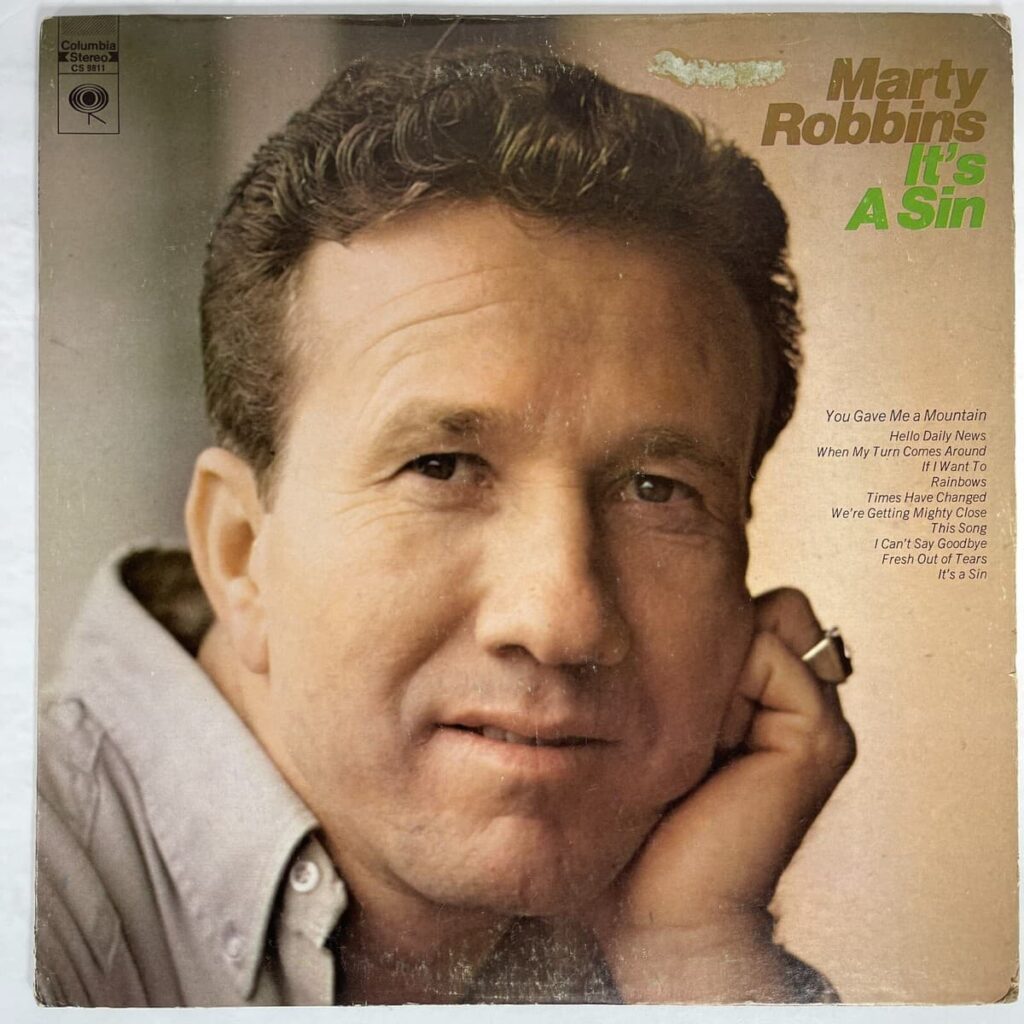
Marty Robbins – Like All The Other Times: A Masterclass in the Gentle Art of Heartbreak and Habit
In the golden autumn of 1968, as the world outside was caught in a whirlwind of radical change, Marty Robbins retreated into the studio to record a song that felt as timeless as a desert sunset. “Like All The Other Times” was a standout gem from his sophisticated album I’ve Got a Woman’s Love, a record that showcased the “Gentle Giant” at his most polished and reflective. While the album itself climbed to #11 on the Billboard Top Country Albums chart, this particular track became a cherished “deep cut” for those who understood that the deepest pains are often the ones that happen most frequently. It arrived during Marty’s peak “Country-Politan” era at Columbia Records, serving as a bridge between the dusty trails of his past and the lush, orchestral landscapes of his future.
The Familiar Ache of a Sunday Evening
To hear the first few chords of “Like All The Other Times” today is to be wrapped in the warm, slightly melancholic glow of a mid-century living room. For those of us who have seen the decades pass like telephone poles through a car window, this song is the ultimate companion for a quiet hour of reflection. It doesn’t shout for attention; instead, it leans in and whispers about a truth we all know: the exhaustion of a love that keeps breaking in the exact same place. Marty Robbins, with that signature “velvet” tenor that seemed to get richer with every passing year, delivers a performance that feels less like a song and more like a shared secret between old friends.
The Weary Waltz of a Repeating Heart
The narrative of “Like All The Other Times” is a poetic study in the routine of regret. It tells the story of a man who finds himself back at the beginning of a cycle he knows all too well—the goodbye, the silence, and the inevitable realization that he is alone once again. It isn’t a song of shock or sudden tragedy; it is a song of profound, weary familiarity.
“Like all the other times, I’ll find a way to make it… though my heart is breaking just like all the times before.”
For the mature reader, these lyrics carry a weight that only time can provide. We have all reached a point in our lives where we realize that some patterns are simply part of our geography. We look back and see the “other times” not as failures, but as the milestones of our emotional endurance. Marty’s vocal delivery is impeccably smooth, yet beneath the surface, there is a subtle, heartbreaking tremor. He sings with the wisdom of a man who has stopped fighting the tide and has instead learned how to float within it. There is an intense nostalgia in his phrasing, a reminder of a time when we measured our lives not by what we gained, but by what we managed to survive.
The Luminous Glow of Nashville’s Craftsmanship
The production of this track is a hallmark of the Nashville Sound at its most elegant. Under the direction of the legendary Bob Johnston, the arrangement features a beautiful, rolling piano melody and a soft, choral cushion that makes Marty’s voice feel as though it is floating on air. The strings are used with a painterly touch, swelling in the choruses to mirror the rising tide of emotion before receding into a quiet, rhythmic pulse. It is a recording that values clarity and warmth, capturing the “hi-fi” richness of the late sixties where every instrument felt like it was in the room with you.
As we revisit “Like All The Other Times”, we are reminded of the unique genius of Marty Robbins. He possessed the rare ability to take a common sorrow and clothe it in such beauty that it became a source of comfort. This song is a nostalgic masterpiece because it honors the quiet resilience of the human heart. It serves as a gentle reminder that even when we are broken “like all the other times,” there is a profound, shared dignity in our ability to pick up the pieces and keep moving toward the next horizon.
 Music Legend