
A restless anthem of youthful defiance, “Rebel, Rebel” captures the thrill of self-discovery and the courage to stand apart when the world demands conformity.
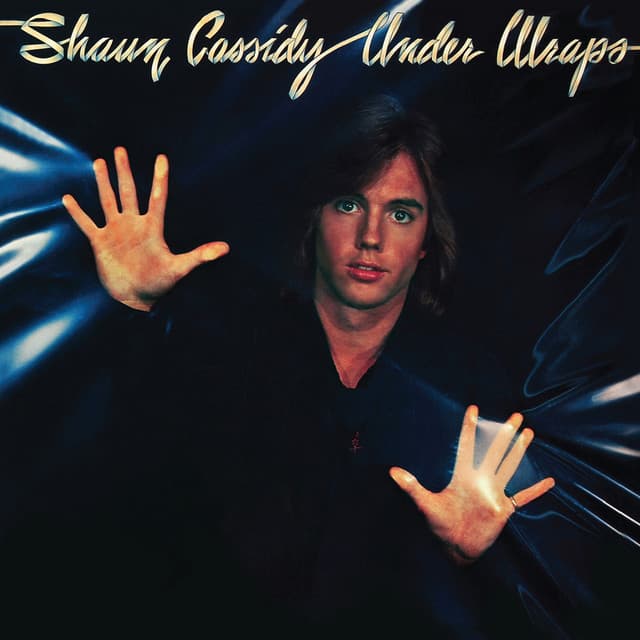
When Shaun Cassidy released his rendition of “Rebel, Rebel” in 1978, he was stepping into formidable territory. The song had already carved its place in rock history through David Bowie’s 1974 original, which reached No. 5 on the UK Singles Chart and became one of Bowie’s signature anthems. Cassidy’s version, included on his album Under Wraps (1978), was a bold artistic choice—an attempt to move beyond the carefully polished teen idol image that had defined his meteoric rise just a year earlier with the chart-topping success of “Da Doo Ron Ron” and the multi-platinum album Shaun Cassidy.
Unlike Bowie’s glam-rock swagger, Cassidy’s interpretation of “Rebel, Rebel” leaned into a slicker late-1970s pop-rock production. Released as a single, it did not replicate the massive chart impact of his earlier hits, reflecting both shifting musical tastes and the difficulty of reimagining a song so closely associated with Bowie’s persona. By 1978, disco was dominant, punk was reshaping rock’s edges, and the era of bubblegum pop idols was waning. In that context, Cassidy’s decision to tackle “Rebel, Rebel” was less about commercial calculation and more about artistic declaration.
The story behind Cassidy’s recording reveals a young artist eager to redefine himself. By the late 1970s, he was no longer content to be simply the wholesome face on magazine covers or the star of the television series The Hardy Boys Mysteries. There was a palpable desire to grow—musically and personally. Choosing a song that celebrated gender ambiguity, youthful rebellion, and nonconformity was a striking move. Bowie had written “Rebel, Rebel” as a glam-rock statement about identity, famously opening with the biting guitar riff and the line about a mother unsure if her child is “a boy or a girl.” It was daring, provocative, and ahead of its time.
Cassidy’s version inevitably softened some of that edge, but the spirit of yearning remained. In his voice, one hears not so much defiance as longing—the ache of someone trying to break free from expectations. That nuance gives his recording its own quiet poignancy. Where Bowie sneered, Cassidy seemed to search. The rebellion here is less theatrical and more internal, as though the singer is wrestling with the image projected onto him and the person he is becoming.
Musically, the arrangement carries the sheen of late-’70s production—tight rhythm sections, polished backing vocals, and a radio-friendly mix. Yet the iconic riff, that indelible hook, still drives the song forward. It is a reminder that some melodies transcend interpretation. Even when filtered through a different voice and era, the core message remains intact: the right to define oneself.
For listeners who remember the cultural shifts of the 1970s, “Rebel, Rebel” evokes more than a catchy chorus. It recalls a decade of transformation—social norms questioned, identities explored, and music serving as both mirror and catalyst. Cassidy’s attempt to inhabit that space may not have rewritten the charts, but it marked a pivotal chapter in his career. Shortly after, he would pivot away from performing and build a highly respected career as a television writer and producer, shaping series such as American Gothic and Invasion. In hindsight, his cover of “Rebel, Rebel” feels almost prophetic—a young man stepping toward reinvention.
Time has a way of softening judgments. What once may have seemed an audacious gamble now feels like an honest expression of artistic restlessness. In revisiting Shaun Cassidy’s “Rebel, Rebel,” we hear not just a cover, but a moment suspended between adolescence and adulthood, fame and self-definition. It stands as a testament to the universal struggle to claim one’s voice, even when the world thinks it already knows who you are.
And perhaps that is why the song endures—because at its heart, rebellion is not merely about defying others. It is about discovering oneself.