
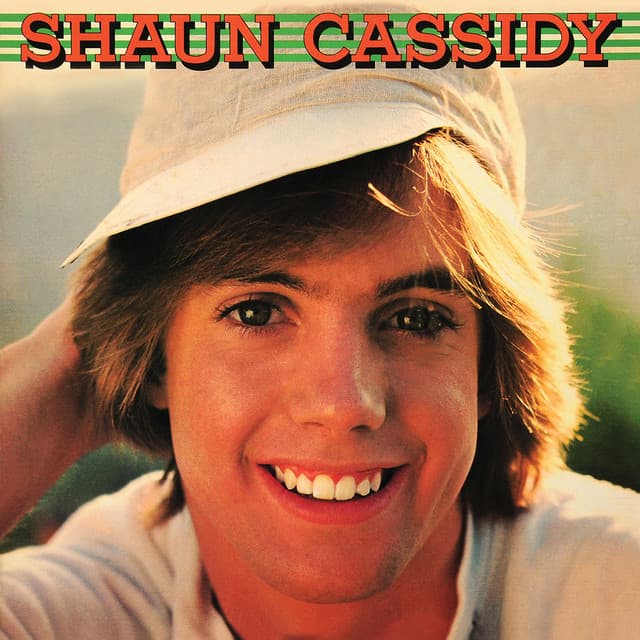
A Tender Farewell Disguised as Pop: When Heartbreak Danced in the Summer Light
When Shaun Cassidy released “Shake Me, Wake Me (When It’s Over)” in 1978 as the second single from his album Born Late, it marked a subtle but meaningful shift in his musical journey. Issued at the height of his teen idol fame, the song reached No. 31 on the Billboard Hot 100 in the United States—a respectable showing, though more modest than his earlier chart-toppers like “Da Doo Ron Ron” and “That’s Rock ’n’ Roll.” Yet commercial position alone does not fully explain the place this song holds in the tapestry of late-1970s pop. Its importance lies in its tone, its history, and its quiet emotional undercurrent.
Originally recorded by the Four Seasons in 1966, “Shake Me, Wake Me (When It’s Over)” was written by the legendary Bob Crewe and Sandy Linzer, the same songwriting forces behind many Four Seasons classics. Cassidy’s decision to revive it over a decade later was not accidental. As the son of actor Jack Cassidy and the half-brother of David Cassidy, Shaun was no stranger to the pressures of fame or to the weight of musical legacy. By 1978, the glitter of adolescent stardom was beginning to fade, and disco rhythms were reshaping the pop landscape. His version of the song carried both a nod to the past and an attempt to stay current.
Produced by Michael Lloyd, who had guided much of Cassidy’s earlier success, the track features a brighter, more polished late-’70s production than the Four Seasons’ original. The arrangement leans into buoyant rhythm guitar, crisp percussion, and layered backing vocals that give the song an almost sunlit sheen. On the surface, it feels upbeat—almost carefree. But listen closely, and the lyric tells a different story.
“Shake me, wake me when it’s over,” he sings, pleading for relief from heartbreak so intense it feels like a dream he wishes to escape. The narrator is not asking for reconciliation; he is asking for release. There is something timeless in that sentiment—the desire to sleep through pain, to bypass the rawness of goodbye. Cassidy’s youthful voice carries an earnest vulnerability, less gritty than Frankie Valli’s original delivery, but no less sincere. If anything, his interpretation softens the edges of despair, wrapping sorrow in a melodic warmth that makes it easier to bear.
By the time Born Late was released, Shaun Cassidy was navigating the delicate transition from teen sensation to mature performer. The album itself reached No. 6 on the Billboard 200, a testament to his still considerable popularity. Yet the cultural tide was shifting. Punk and disco were commanding headlines; the pop idols of the early ’70s were facing new expectations. In that context, “Shake Me, Wake Me (When It’s Over)” feels almost reflective—an unconscious metaphor for an era drawing to a close.
What gives the song its enduring resonance is the contrast between its lively tempo and its aching lyric. That tension mirrors life’s peculiar way of masking sadness behind routine, even behind celebration. The music moves forward briskly, almost optimistically, while the words linger in loss. It is a reminder that not all goodbyes arrive in silence; some come wrapped in rhythm, disguised as something you can hum along to.
Looking back now, the song carries with it the faint perfume of 1978—the AM radio afternoons, the glossy magazine covers, the promise and uncertainty of youth standing on the brink of adulthood. It belongs to a moment when pop music still valued melody above spectacle, when a three-minute single could carry both commercial polish and emotional honesty.
In revisiting Shaun Cassidy’s rendition today, one hears more than a cover version. One hears an artist trying to stretch beyond an image, to hold onto relevance while honoring the past. And perhaps that is why “Shake Me, Wake Me (When It’s Over)” lingers in memory. It is not simply about romantic heartbreak; it is about transition, about waking up to change whether one is ready or not.
The final notes fade with no dramatic flourish, just a steady resolve. The dream ends. The music continues. And somewhere in that gentle space between nostalgia and acceptance, the song still breathes.