
A Restless Cry for Identity Beneath the Glitter of Fame
When “Strange Sensation” was released in 1978, it marked a subtle but significant turning point in the career of Shaun Cassidy. Issued as a single from his third studio album, Under Wraps (1978), the song reached No. 45 on the Billboard Hot 100 in the United States. Though it did not match the towering success of his earlier hits—“Da Doo Ron Ron” (No. 1, 1977) or “That’s Rock ’n’ Roll” (No. 3, 1977)—“Strange Sensation” carried a different weight. It was less about teenage exuberance and more about the uneasy tremors of self-awareness. In many ways, it revealed an artist beginning to look inward, even as the machinery of pop stardom still whirred loudly around him.
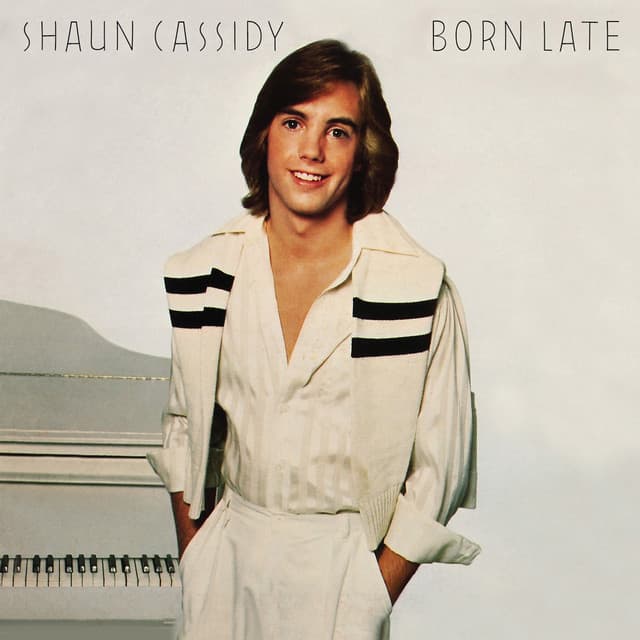
By 1978, Shaun Cassidy had already experienced the kind of fame that arrives like a summer storm—sudden, electric, and impossible to ignore. His debut album, Shaun Cassidy (1977), had soared to No. 3 on the Billboard 200 and achieved multi-platinum status. The follow-up, Born Late (1977), continued to capitalize on his heartthrob image, delivering chart success and cementing his place in the late-1970s pop firmament. Yet fame, especially of the teen idol variety, can be both a gift and a burden. “Strange Sensation” feels like a response to that duality.
Musically, the track leans into the polished pop-rock production that defined Cassidy’s work with producer Michael Lloyd. There is a briskness to the arrangement—bright guitars, steady percussion, layered backing vocals—that keeps it radio-friendly. But beneath that accessible surface lies a lyric that hints at confusion and transformation. The “strange sensation” of the title suggests emotional upheaval, the unsettling awareness that something fundamental is shifting. It is not merely about romance; it feels like a metaphor for growing up under the glare of expectation.
Unlike the carefree stomp of “Da Doo Ron Ron,” which celebrated youthful infatuation with irresistible simplicity, “Strange Sensation” carries an undercurrent of tension. The melody rises and falls with a certain urgency, as though trying to outrun its own doubts. Cassidy’s vocal delivery—still youthful, still earnest—contains flashes of something more searching. One hears not just a performer singing a hook, but a young man grappling with the unfamiliar terrain between adolescence and adulthood.
The album Under Wraps itself hinted at a desire to evolve. While it did not achieve the commercial heights of his first two releases, it showcased a willingness to stretch beyond formula. By 1978, the musical landscape was shifting dramatically. Disco dominated dance floors, punk was challenging conventions, and arena rock acts were commanding massive audiences. In such a crowded and rapidly changing environment, maintaining relevance required either reinvention or retreat. “Strange Sensation” feels like a tentative step toward reinvention.
There is also a poignant irony in the song’s modest chart performance. Peaking at No. 45 on the Billboard Hot 100, it suggested that the fevered intensity of Cassidy’s early stardom was beginning to cool. Yet sometimes a song’s true value is not measured by its peak position but by its emotional resonance. “Strange Sensation” captures the fleeting, almost fragile moment when certainty dissolves and something unfamiliar takes its place. It speaks to that universal experience of sensing change before fully understanding it.
Listening today, decades removed from its original release, the song carries a reflective glow. It belongs unmistakably to the late 1970s, yet its theme remains timeless. There comes a point in every life when applause grows quieter and introspection grows louder. When the bright lights reveal not only admiration but also expectation. In that space, a “strange sensation” indeed arises—the awareness that identity must be claimed, not merely projected.
For Shaun Cassidy, this period would eventually lead to a transition away from teen idol status toward songwriting, production, and theater. In hindsight, “Strange Sensation” sounds almost like an early whisper of that future—a recognition that the surface narrative was no longer enough.
And so the song endures, not as a chart-topping anthem, but as a reflective fragment of a particular era. It reminds us that behind every glossy magazine cover and screaming crowd lies a quieter story: the private reckoning of a young artist discovering who he is, long after the echoes of applause begin to fade.