
A Song of Quiet Heartbreak — “Three Cigarettes in an Ashtray” Introduced the World to the Emotional Depth of Patsy Cline
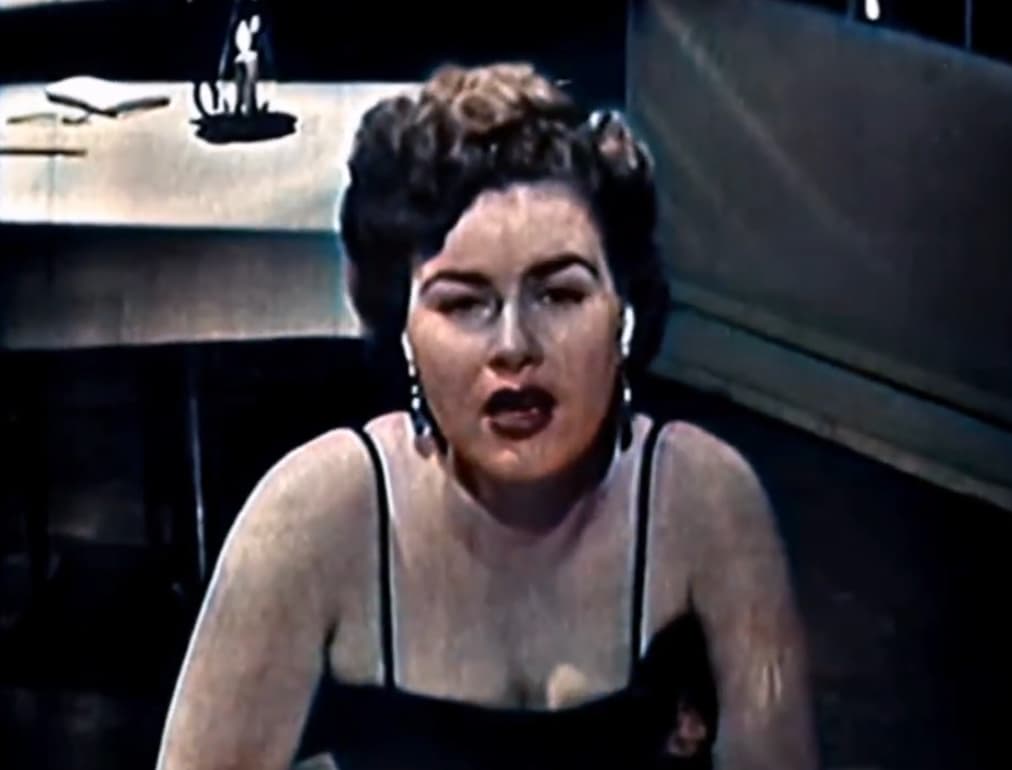
Long before she became one of the most revered voices in country music, Patsy Cline stood before television cameras in 1957 and performed a song that carried a surprising emotional weight for such a young artist. The song was “Three Cigarettes in an Ashtray,” a haunting ballad that would become one of the earliest defining moments of her recording career. Though it arrived before her later chart-topping successes, the song revealed the extraordinary emotional honesty that would eventually make Patsy Cline a legend.
Originally released in 1957 as a single on Decca Records, “Three Cigarettes in an Ashtray” was included on Cline’s debut album, Patsy Cline (1957). While the record did not reach the major national charts at the time, it became an important early showcase for her ability to deliver a story with quiet conviction. The song itself was written by Eddie Miller and W. S. Stevenson, both respected Nashville songwriters who understood how to craft narratives rooted in everyday human emotions.
The premise of the song is deceptively simple, yet remarkably powerful. “Three Cigarettes in an Ashtray” tells the story of a woman who sits with a friend while they wait for a man to arrive. Two cigarettes burn slowly as they talk and share the moment. When the man appears, another cigarette is lit—and suddenly the atmosphere changes. By the end of the song, the man has chosen the friend instead, leaving the narrator alone with a single cigarette still burning in the ashtray.
It is a small scene, almost cinematic in its minimalism. Yet within those few details lies a complete emotional story: friendship, betrayal, and the quiet devastation of watching love slip away in a single evening.
What made the song unforgettable was the way Patsy Cline delivered it.
In 1957, country music was still largely dominated by traditional honky tonk voices, often raw and rugged in style. Cline, however, possessed something different. Her voice carried both strength and vulnerability, a rare combination that allowed her to express heartbreak without sounding fragile. When she performed “Three Cigarettes in an Ashtray” on television that year, audiences immediately sensed the emotional sincerity in her delivery.
Her phrasing is remarkably restrained. Instead of dramatic vocal flourishes, she allows the story to unfold naturally, almost like a quiet confession. Each line feels thoughtful and deliberate, as though the narrator is remembering the painful moment rather than reliving it.
This ability to convey deep emotion with subtlety would later become the hallmark of Patsy Cline’s greatest recordings.
At the time of the performance, Cline had only recently experienced her first national success with “Walkin’ After Midnight,” which had reached No. 2 on the Billboard Country chart and No. 12 on the Billboard Hot 100 earlier in 1957 after her famous appearance on Arthur Godfrey’s Talent Scouts. That breakthrough introduced her to a national audience, but songs like “Three Cigarettes in an Ashtray” revealed that she was far more than a novelty success.
The arrangement of the song is understated, built around traditional country instrumentation. Steel guitar, gentle rhythm, and sparse accompaniment allow the lyric to remain the focus. The simplicity works perfectly, creating the feeling of a late-night conversation where every word carries emotional weight.
Listening today, the performance has an almost timeless quality. The story unfolds slowly, inviting the listener to sit with the emotions rather than rush past them. There is something deeply human in that moment when the narrator realizes that love has quietly shifted in another direction.
In later years, Patsy Cline would achieve monumental success with songs like “I Fall to Pieces” and “Crazy,” both of which topped the Billboard Country charts and secured her place among the greatest voices in American music. Yet recordings such as “Three Cigarettes in an Ashtray” remain essential for understanding the early stages of her artistry.
They show a young singer already capable of something extraordinary: telling a story so honestly that listeners feel as though they have lived it themselves.
And perhaps that is why the song continues to resonate decades later. The scene may be simple—a quiet room, a few cigarettes, a love that fades before morning—but through the voice of Patsy Cline, it becomes something unforgettable. A fleeting moment of heartbreak, captured forever in music.
 Oldies Songs