
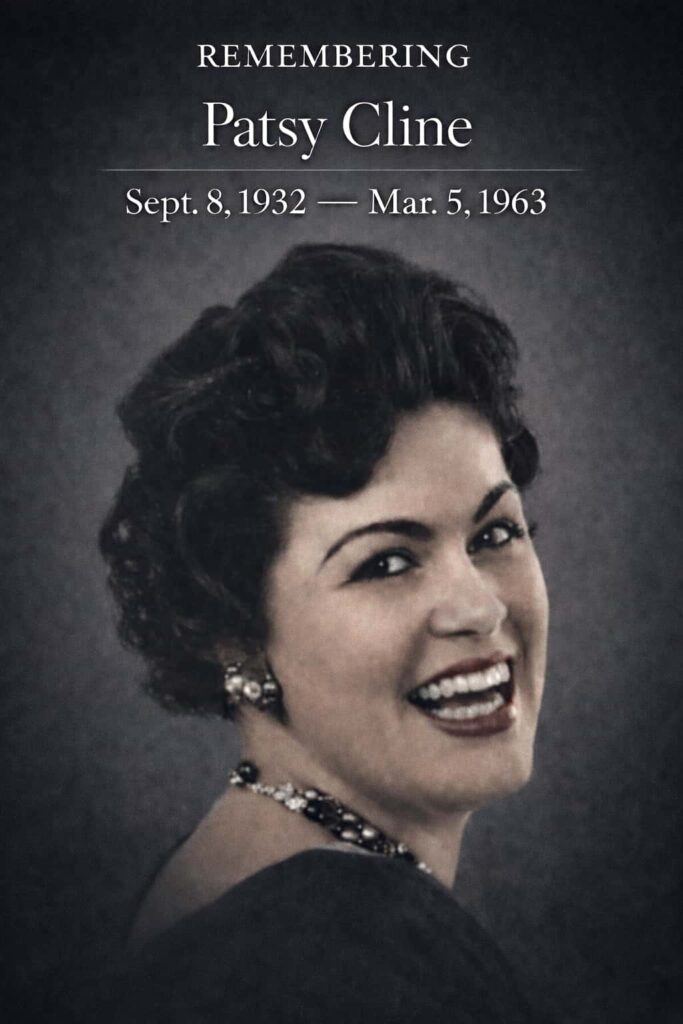
The Day Country Music Lost Its Most Heart-Breaking Voice
On March 5, 1963, the world of American country music fell suddenly silent when Patsy Cline died in a tragic plane crash near Camden, Tennessee. She was only 30 years old. In the early 1960s, few voices carried the emotional authority that Cline possessed. With her rich contralto tone, impeccable phrasing, and ability to inhabit every lyric she sang, she had already begun reshaping the sound and reach of country music. By the time of her passing, she had crossed the invisible boundary between country and pop audiences, becoming one of the first Nashville stars whose voice resonated far beyond the honky-tonks.
Cline’s final years were filled with recordings that would later become timeless standards. Songs like Crazy, written by Willie Nelson, and I Fall to Pieces turned heartbreak into something almost elegant. Her earlier breakthrough, Walkin’ After Midnight, had already introduced the world to a singer who could blend vulnerability with quiet strength. Those recordings, many featured on her celebrated album Showcase, revealed a performer who understood that a great country song was not merely sung. It was lived.
The tragedy that took her life occurred as she was returning from a benefit concert in Kansas City. The small private plane carrying Cline, along with fellow performers Cowboy Copas and Hawkshaw Hawkins, crashed during severe weather. News of the accident spread quickly across radio stations and newspapers, sending a shock through Nashville and through millions of listeners who had come to know her voice so intimately.
Yet the remarkable thing about Patsy Cline is how little time she actually had to build her legacy. Her major career lasted only a handful of years. And still, her recordings have endured for generations. In the decades since March 5, 1963, countless singers have tried to capture the emotional depth she delivered so effortlessly. Few have come close.
For many longtime listeners, revisiting “Crazy” or “I Fall to Pieces” today feels like opening an old photo album. The voice is warm, familiar, and achingly human. It reminds us of a moment in American music when sincerity mattered more than spectacle.
More than sixty years later, the date March 5 still carries a quiet weight in country music history. It is not simply the anniversary of a tragic loss. It is a reminder that one extraordinary voice, heard for only a short time, can echo through generations.
 Oldies Songs