
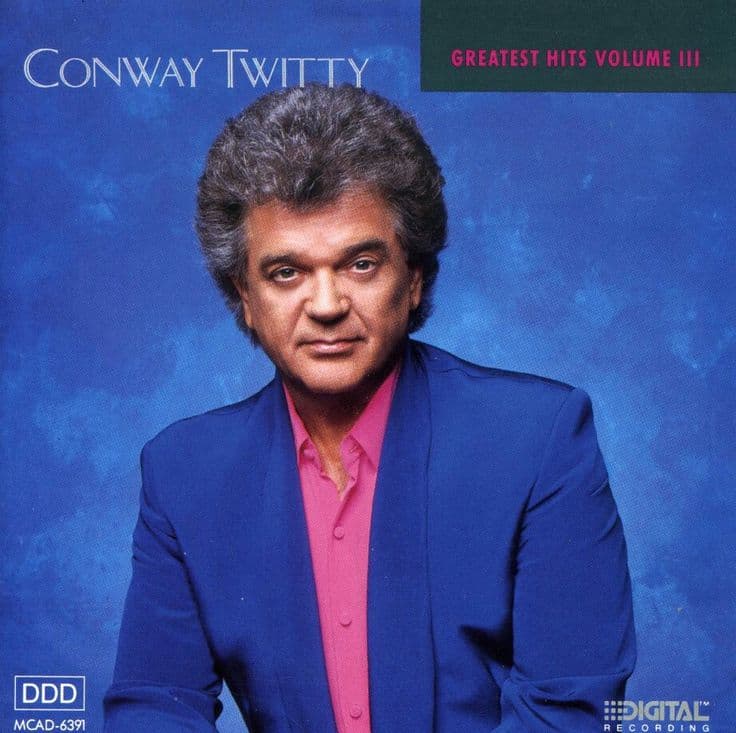
Conway Twitty and “Linda on My Mind”: A Masterclass in the Tortured Conscience of a Honky-Tonk Heart
In the velvet-draped chronicles of 1970s country music, there was no artist who could navigate the complex, often scandalous labyrinth of the human heart quite like Conway Twitty. In 1975, he released what would become one of the most provocative and enduring masterpieces of his career: “Linda on My Mind.” Serving as the title track to his chart-topping album Linda on My Mind, the song was an absolute juggernaut, swiftly ascending to Number 1 on the Billboard Hot Country Songs chart. It marked his 12th solo chart-topper and solidified his reputation as the “High Priest of Country Music.” For those of us who remember the crackle of the radio during those long, humid summer nights of the mid-seventies, this song wasn’t just a hit; it was a cinematic exploration of guilt, desire, and the devastating honesty that defines a real country ballad.
The story behind “Linda on My Mind” is a testament to Conway Twitty’s own prowess as a songwriter. While he was a legendary interpreter of others’ work, he penned this particular track himself, tapping into a narrative that felt dangerously real. The song captures a man lying in bed next to his wife, staring at the ceiling, while his heart and mind are miles away with another woman named Linda. It was a bold, almost voyeuristic look at emotional infidelity. Conway’s delivery—that unmistakable, gravelly-yet-smooth baritone—brought a layer of profound sadness to the betrayal. He didn’t sing it like a predator; he sang it like a victim of his own wandering heart, making the listener feel an uncomfortable empathy for a man trapped between a “good woman” and an “irresistible memory.”
For a sophisticated audience that has weathered the storms of long-term relationships, “Linda on My Mind” evokes a powerful, lingering nostalgia. It brings back the atmosphere of wood-paneled dens, the amber glow of a jukebox in a dim lounge, and the heavy silences that can sometimes grow between two people who have shared a lifetime. The lyrics are startlingly direct: “Now I’m lying here beside her, but I’m thinking of you.” It captures the “quiet desperation” that Thoreau once spoke of, set to a weeping steel guitar and a steady, rhythmic pulse. For the listener who has lived through the complexities of mid-life, the song is a mirror of the choices we make and the ghosts we carry. It understands that the mind is a territory that no vow can entirely govern.
The meaning of this Conway Twitty classic lies in its refusal to offer an easy resolution. There is no happy ending here, only the raw, agonizing truth of a divided soul. As we reflect on this masterpiece today, through the lens of our own silver years, we recognize the sheer artistry required to make such a painful subject feel so beautiful. Conway possessed the unique gift of “The Growl”—that vocal catch that suggested a man on the verge of breaking. In “Linda on My Mind,” he uses every ounce of that charisma to remind us that love is rarely a straight line. To hear it now is to sit once more with a legend and acknowledge the bittersweet reality that sometimes, the hardest person to be honest with is the one lying right next to you.
 Music Legend