
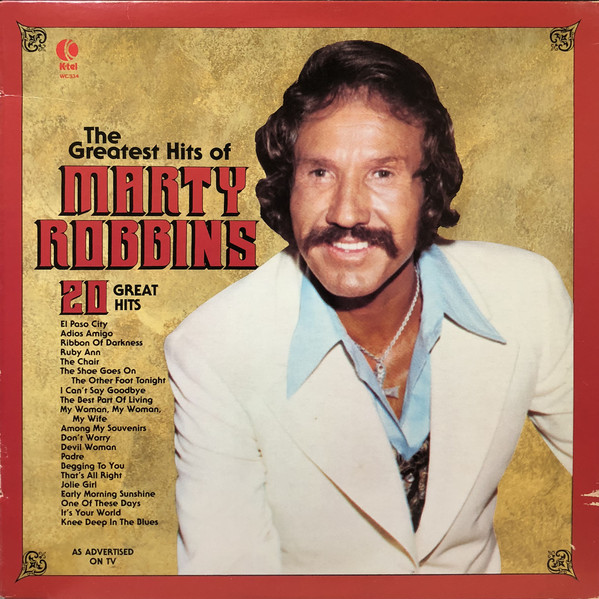
Marty Robbins and “An Evening Prayer”: A Sacred Sanctuary of Faith and the Velvet Soul of the Gospel Tradition
In the quiet, reflective twilight of a life lived in the spotlight, there are songs that transcend the charts and the bright lights of the stage to touch something eternal. For many of us who grew up in the mid-20th century, the boundary between “Country” and “Gospel” was as thin as a Sunday morning mist. It was a time when the greatest icons of the genre—men like Hank Williams, Johnny Cash, and indeed, Marty Robbins—viewed their faith not as a separate career path, but as the very foundation of their musical identity. When Marty recorded “An Evening Prayer” for his 1964 inspirational album What God Has Done, he wasn’t just adding a track to a session; he was offering a profound, private testimony. For those of us who remember the hushed reverence of a family gathering around a record player, this performance remains a cornerstone of spiritual intimacy, proving that The Master Storyteller was just as comfortable in the pulpit as he was on the dusty trails of the West.
The “story” behind “An Evening Prayer” is one of deep-seated sincerity and vocal humility. Originally written in the early 1900s by Charles H. Gabriel and C. Maude Battersby, the hymn had been a staple of church hymnals for decades. By the time Marty Robbins stepped into the Columbia Records studio to record it, he had already reached the pinnacle of secular success with hits like “El Paso” and “Don’t Worry.” Yet, in this recording, all the bravado of the “Gunfighter” is stripped away. Marty delivers the lyrics with a “velvet” sensitivity that feels entirely unforced. His phrasing is deliberate and prayerful, emphasizing the plea for forgiveness and the desire to be “more like Thee.” It is widely known among his peers that Marty felt a deep connection to these spiritual roots; he didn’t just sing the words, he inhabited the conviction behind them. The album What God Has Done became a cherished possession for fans, offering a glimpse into the “Gentle Giant” of the narrative song at his most vulnerable and devout.
For the sophisticated listener who has spent a lifetime navigating the peaks and valleys of faith and experience, hearing Marty sing this hymn is a deeply nostalgic journey. It evokes memories of small-town steeples, the scent of old hymnals, and the quiet dignity of a generation that found strength in its “Evening Prayers.” The lyrics, “If I have wounded any soul today / If I have caused one foot to go astray,” resonate with a profound weight for those of us in our later years. It is a song of accountability and grace—a mirror for a life spent trying to do right in a complicated world. For a “qualified” reader who understands that true strength often lies in the admission of weakness, Marty’s performance is a source of immense comfort. He captures that universal human yearning for a peaceful heart at the end of a long day.
The meaning of “An Evening Prayer” lies in its timelessness. In an era where music is often loud and transient, this recording stands as a monument to the enduring power of a simple, honest faith. Marty Robbins possessed the unique gift of making the divine feel personal. As we reflect on this masterpiece today, through the lens of our own silver years, we see it as more than just a gospel track; it is a companion for our own quiet reflections. It reminds us that while the “Storyteller” may have left the earthly stage, the prayers he sang into existence continue to offer a sanctuary for the weary and a light for the soul. To listen to it now is to sit once more with Marty, acknowledging that in the end, it is the songs of the spirit that carry us home.
 Music Legend