
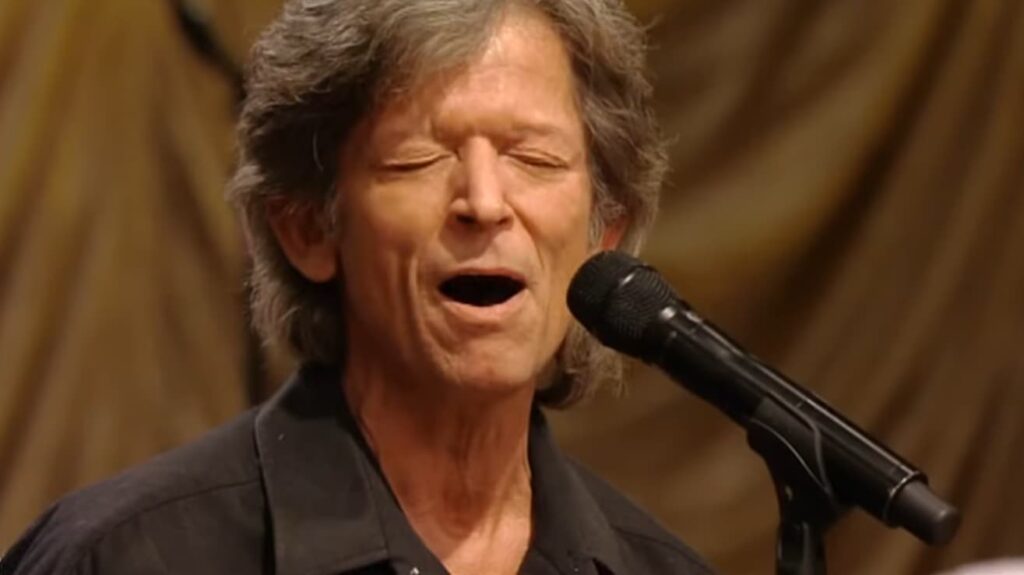
A Gentle Return to Simplicity, Where Time Slows Down and Memory Finds Its Voice Again
When Johnny Rodriguez revisited “Pass Me By” in 2013, he was not introducing a new song to the world—he was returning to a moment that had already defined a part of his legacy. The song itself dates back to 1973, when it was first released as “Pass Me By (If You’re Only Passing Through)”, becoming one of the earliest major hits of his career. It climbed to No. 9 on the Billboard Hot Country Singles chart, marking a significant step in establishing Johnny Rodriguez as one of the most distinctive voices in country music during the 1970s.
Written by H. B. Hall and made memorable through Rodriguez’s warm, bilingual phrasing and relaxed delivery, the original recording carried a sense of ease that felt almost conversational. It was never a song that demanded attention; it simply invited it. And perhaps that is why, decades later, it remained worth revisiting.
By 2013, Johnny Rodriguez was no longer the young artist navigating his early rise. The industry had changed, the sound of country music had shifted, and the years had quietly reshaped both voice and perspective. Yet in this later performance of “Pass Me By,” there is no attempt to compete with the past. Instead, there is an acceptance of it.
The arrangement in 2013 leans toward simplicity, echoing the spirit of the original while allowing more space for reflection. The instrumentation is gentle, often understated, as though aware that the true focus lies not in recreating the past note for note, but in allowing the song to breathe differently. And at the center remains that unmistakable voice—slightly weathered now, carrying a softness that only time can provide.
What changes most, however, is the meaning.
In 1973, “Pass Me By (If You’re Only Passing Through)” felt like a statement of independence. It spoke of a man who understood the value of genuine connection and refused to settle for something temporary. There was a quiet confidence in that stance, a sense that life was still unfolding and that choices carried the promise of something better ahead.
But in 2013, those same words take on a more reflective tone. They no longer feel like a declaration made at the beginning of a journey. Instead, they sound like a thought revisited after many years—one that has been tested, perhaps even softened, by experience. The line between independence and solitude becomes less defined, and the listener is left to consider what it truly means to let something—or someone—pass by.
Johnny Rodriguez does not overstate this shift. His performance remains measured, respectful of the song’s original character. Yet there are subtle differences in phrasing, in the way certain lines are held just a moment longer, as though carrying additional weight. These are not dramatic changes, but they are meaningful ones.
There is also a sense of continuity in the way the song bridges time. For those who remember its original release, the 2013 version offers a kind of quiet reunion—not with the past as it was, but with the feeling it once carried. And for those encountering it later, it presents a version shaped by lived experience rather than youthful certainty.
In the broader context of Johnny Rodriguez’s career, this performance stands as a reminder of what has always defined his artistry: authenticity. He never relied on excess or spectacle. His strength lay in clarity, in the ability to deliver a song in a way that felt natural, unforced, and sincere.
Listening to “Pass Me By” in 2013, there is a sense that nothing is being reclaimed or proven. The song does not need to reassert its place. It simply exists, carrying with it both its original spirit and the quiet imprint of time.
And perhaps that is what makes this version resonate so deeply. It acknowledges that while melodies may remain the same, the lives that carry them forward do not. They change, they soften, they gather meaning in ways that cannot be predicted.
In the end, Johnny Rodriguez does not try to return to who he once was. Instead, he brings that past forward, gently, allowing it to settle into the present. And in that quiet gesture, “Pass Me By” becomes more than a song—it becomes a reflection on time itself, on the choices made, and on the understanding that some things, once passed, are not lost, but simply remembered differently.