
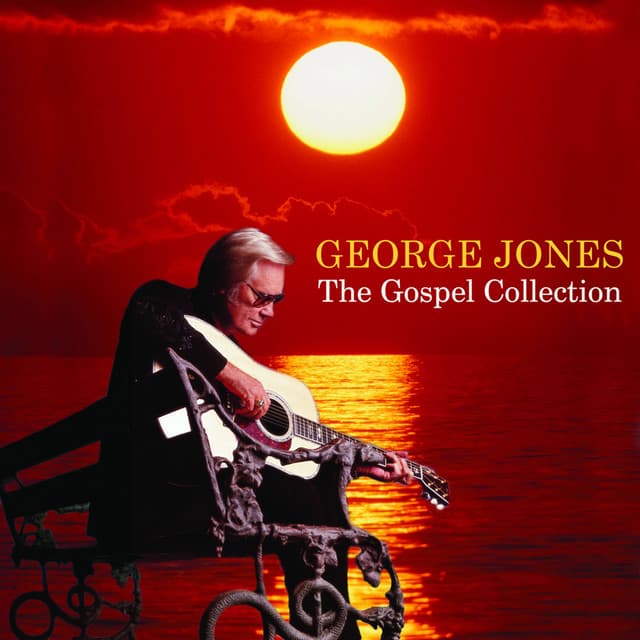
A hymn of memory and longing—“If I Could Hear My Mother Pray Again” holds the quiet ache of faith, distance, and the desire to return to something already gone
When George Jones recorded “If I Could Hear My Mother Pray Again,” he was not simply interpreting a gospel standard—he was stepping into a deeply personal space where music, memory, and belief meet without separation. Originally written in 1922 by John Whitfield Vaughan, the hymn had long existed in the American religious tradition before Jones brought it into his own repertoire. His version appeared on the album “Will You Visit Me on Sunday?” in 1972, a record that leaned heavily into gospel influences during a time when his life was marked by both success and personal turmoil.
Unlike many of his chart-dominating country hits, this song was not released as a major commercial single and did not achieve a notable position on the Billboard Hot Country Singles chart. Yet its importance cannot be measured through rankings. It belongs to a different category of music—one that exists not for public acclaim, but for private reflection.
By the early 1970s, George Jones had already built a formidable career, with numerous Top 10 hits and a reputation as one of the most emotionally expressive voices in country music. However, this period also coincided with some of his most difficult personal struggles. It is within that context that “If I Could Hear My Mother Pray Again” takes on its full meaning.
The song itself is structured as a remembrance—a longing for the sound of a mother’s voice in prayer, a symbol of guidance, comfort, and moral grounding. The lyrics are simple, almost conversational, yet they carry a weight that extends far beyond their words. They speak of distance—not only physical, but emotional and spiritual. A separation from the past that cannot be undone, only remembered.
In Jones’ performance, there is a noticeable shift in tone compared to his secular recordings. The voice remains unmistakably his, but it is softer, more restrained. He does not push the emotion outward. Instead, he allows it to settle inward, creating a sense that the song is being sung as much for himself as for anyone listening.
There is also a sincerity in his delivery that cannot be easily replicated. It does not come from technical precision alone, but from lived experience. The idea of looking back, of wishing to hear a familiar voice once more, is not presented as a dramatic gesture. It is quiet, almost understated, which makes it all the more affecting.
The arrangement reflects this restraint. There is no excess, no attempt to elevate the song beyond its natural form. The instrumentation supports the vocal without drawing attention away from it, allowing the message to remain clear and uninterrupted.
What makes this recording particularly significant is the way it reveals another dimension of George Jones as an artist. While he is often associated with songs of heartbreak, loss, and regret, this performance introduces a different kind of vulnerability—one rooted in memory and faith rather than romantic experience.
Over time, the song has come to represent something larger than its original context. It speaks to the universal experience of looking back and recognizing what has been lost, not in a tragic sense, but in a reflective one. The past is not portrayed as something to be reclaimed, but as something to be honored.
Listening now, the song carries an added layer of meaning. It becomes difficult to separate the voice from the life behind it—the years of success, the struggles, the moments of clarity that came and went. All of it seems to exist within the performance, even if it is never explicitly stated.
There is no resolution offered here, no sense that the longing will be fulfilled. The mother’s prayer remains in memory, unreachable yet present. And perhaps that is the point. Some things are not meant to return—they are meant to remain as they are, preserved in the mind and carried forward in quiet ways.
In the end, “If I Could Hear My Mother Pray Again” is not about loss alone. It is about connection—the kind that endures even when it can no longer be heard.
And in George Jones’ voice, that connection feels real. Not distant, not imagined, but something that continues, softly, beyond the song itself.