
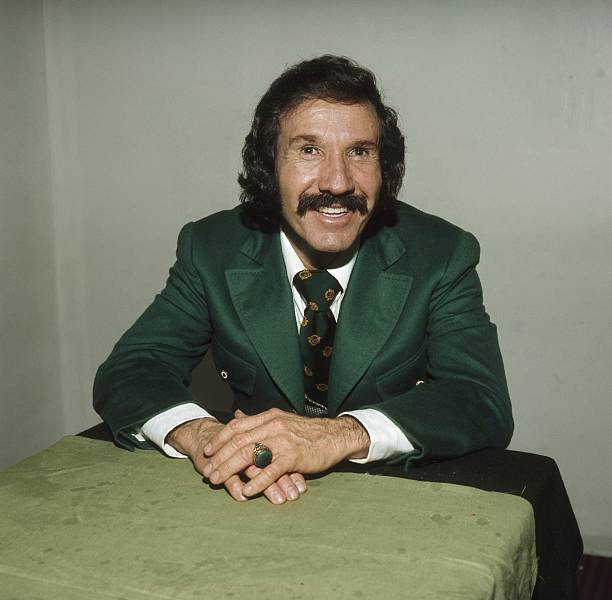
A soft echo of a gentler era, where hope lingers quietly beneath the passing storms of time
Released in 1969, “Rainbows” by Marty Robbins arrived during a year when music itself seemed to be changing direction almost overnight. The world was leaning toward louder statements toward protest songs, psychedelic experimentation, and a restless search for something new. Yet in the midst of that shifting landscape, Marty Robbins chose to offer something entirely different. Not resistance, not reinvention, but reassurance.
The song was included in the album More Great Country Hits, a record that continued Robbins’ steady presence on the country charts throughout the late 1960s. While “Rainbows” was not one of his major chart-topping singles like El Paso (which famously reached No. 1 on both the Billboard Hot 100 and the Country chart in 1960), it still found its way into the hearts of listeners who valued the quieter side of country music. At the time, Robbins remained a consistent figure on the Billboard Hot Country Singles chart, with his releases regularly entering the Top 20 a testament to his enduring connection with his audience, even as trends shifted around him.
But numbers alone never quite explain a song like “Rainbows.” Its significance lies elsewhere in tone, in feeling, in the way it carries itself without ever asking for attention.
There is something almost disarmingly simple about the song’s premise. A rainbow, after all, is not a complicated image. It is one of the oldest symbols of hope, of something beautiful appearing after difficulty. Yet in Robbins’ hands, it does not feel like a cliché. It feels personal. The way he delivers the melody, steady and unhurried, suggests not someone discovering hope for the first time, but someone who has learned to recognize it when it quietly returns.
The story behind “Rainbows” is less about a specific moment and more about a period in Robbins’ career when he had already proven everything he needed to prove. By 1969, he was not chasing success he had already achieved it in abundance. His earlier recordings had crossed genres, blending country with western ballads, pop sensibilities, and narrative storytelling in ways few artists could match. What remained was refinement. A willingness to step back from grand gestures and focus instead on clarity.
And that is precisely what this song offers.
Listening to “Rainbows” today, there is a sense that it belongs to a different pace of life. The arrangement does not rush. The instrumentation stays close to the melody, never overpowering it. And Robbins’ voice carries a kind of calm assurance that feels increasingly rare. He does not dramatize the message. He simply states it, as though it is something already understood.
In a way, the song feels like a quiet counterpoint to the turbulence of its time. While the late 1960s are often remembered for their intensity, “Rainbows” stands as a reminder that not all music from that era sought to confront or disrupt. Some of it sought to comfort. To remind listeners that even as the world changes, certain truths remain steady.
There is also a deeper layer to the song’s meaning when heard now. What might once have sounded like a gentle, almost passing reflection begins to feel more like a lasting perspective. The idea that storms pass, that something softer follows, carries a different weight when considered over the span of years.
In the broader arc of Marty Robbins’ career, “Rainbows” may not be the song most often cited, but it reveals something essential about him as an artist. He understood that music did not always need to reach for grandeur to be meaningful. Sometimes, it only needed to speak plainly, to trust that the listener would meet it halfway.
And perhaps that is why the song endures, quietly, without the need for rediscovery. It does not demand to be remembered. It simply remains, like the image it describes appearing when it is least expected, and fading just as gently, leaving behind a sense that something, however small, has been restored.
 Music Legend