
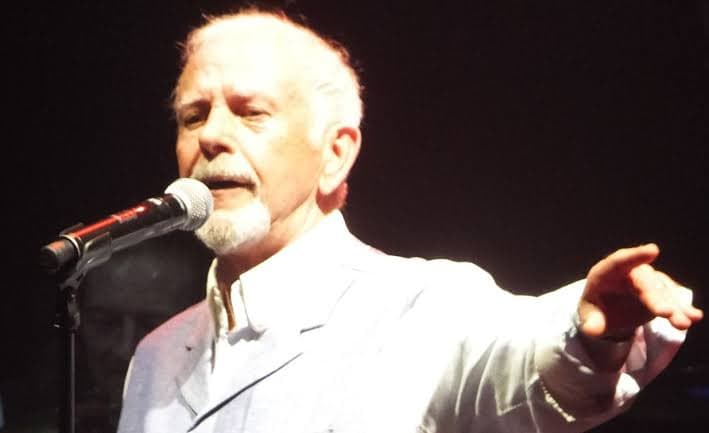
A triumphant echo of youthful ambition, “Silver Dream Machine” returns as a living memory—where dreams, once sung in urgency, now resonate with reflection and enduring spirit.
When David Essex performs “Silver Dream Machine”—as he did at the First Direct Arena, Leeds in April 2019—it is more than a revival of a hit; it is the rekindling of a defining moment from 1980. Originally released as part of the soundtrack to the film “Silver Dream Racer”, the song climbed to No. 4 on the UK Singles Chart, becoming one of Essex’s most recognizable and enduring works. Nearly four decades later, its reappearance on stage carries with it not only the energy of its chart success, but also the weight of time, memory, and artistic continuity.
In its original form, “Silver Dream Machine” was a song of momentum—driven by pulsing rhythms and a sense of forward motion that mirrored the film’s themes of speed, ambition, and risk. It captured the restless spirit of a young man chasing something just beyond reach, propelled by desire and defiance. The late 1970s and early 1980s were fertile ground for such narratives, and David Essex, already a celebrated figure with hits like “Rock On,” embodied that spirit with effortless charisma.
Yet what makes the 2019 performance so compelling is not merely nostalgia—it is transformation. Standing before an audience in Leeds, David Essex does not attempt to recreate the past exactly as it was. Instead, he inhabits the song differently. The urgency remains, but it is tempered by experience. The voice, though matured, carries a deeper resonance, each note shaped not only by technique, but by the passage of years. There is a quiet authority in his delivery, a sense that the dream he once sang about has been lived, tested, and understood.
The audience, too, becomes part of this moment. For many, “Silver Dream Machine” is not just a song, but a fragment of personal history—something tied to a particular time, a particular feeling. As the opening chords fill the arena, there is a collective recognition, a shared memory that transcends the individual. It is in these moments that music reveals its unique power: to connect past and present in a single breath.
The song’s lyrical core remains strikingly relevant. At its heart, “Silver Dream Machine” speaks of aspiration—the desire to break free, to achieve something meaningful, to leave a mark. But it also hints at the cost of such pursuits, the tension between ambition and reality. In the hands of a younger performer, this tension might feel like a challenge. In 2019, it feels more like a reflection—an acknowledgment of both the victories and the compromises that shape a life.
Musically, the live arrangement retains the driving force of the original, but with subtle adjustments that suit the setting. The instrumentation is fuller, more expansive, allowing the song to fill the vast space of the arena. Yet it never loses its core identity. The rhythm still propels forward, the melody still soars, and the chorus still carries that unmistakable sense of lift—like a machine in motion, gleaming and unstoppable.
There is also something deeply human in the way David Essex engages with the song on stage. He does not stand apart from it, as though it belongs to another era. Instead, he embraces it, allowing its history to coexist with the present moment. This balance—between preservation and reinterpretation—is what gives the performance its emotional depth. It is not simply about remembering; it is about understanding what those memories mean now.
Looking back, the journey of “Silver Dream Machine” from a 1980 chart success to a 2019 live highlight mirrors the broader arc of David Essex’s career. It is a testament to longevity, to the enduring appeal of a well-crafted song, and to the artist’s ability to evolve without losing sight of his roots. The song may have been born in a specific time and place, but it refuses to remain there.
As the final notes fade in the Leeds arena, what lingers is not just applause, but a sense of continuity. The dream, once urgent and untested, has become something richer—layered with experience, marked by time, yet still alive. And in that transformation, “Silver Dream Machine” reveals its true strength: not as a relic of the past, but as a living, breathing piece of music that continues to speak, quietly and powerfully, to those willing to listen.