
“Coca-Cola Cowboy” is a wry portrait of a romantic pretender, turning the polished image of the modern cowboy into a bittersweet story about a man who looks the part but cannot live up to it.
“Coca-Cola Cowboy” was one of the signature hits of Mel Tillis’s late-1970s career. Released as a single by MCA Records in June 1979, it entered the country chart at No. 63 in its first week and then climbed steadily until it reached No. 1 on Billboard’s Hot Country Singles chart on August 18, 1979, where it stayed for one week. It ultimately spent 11 weeks on the chart and finished No. 22 on Billboard’s 1979 year-end Hot Country Songs chart. In Canada, it reached No. 3 on the RPM Country Tracks chart.
But the story of “Coca-Cola Cowboy” actually began before that single appeared. The song was written by Steve Dorff, Sandy Pinkard, Sam Atchley, and Bud Dain, and it was first associated with the soundtrack of the 1978 Clint Eastwood film Every Which Way but Loose. Tillis himself appeared in the film, giving the song an unusually strong connection between country music, Hollywood, and the larger cowboy mythology of the period.
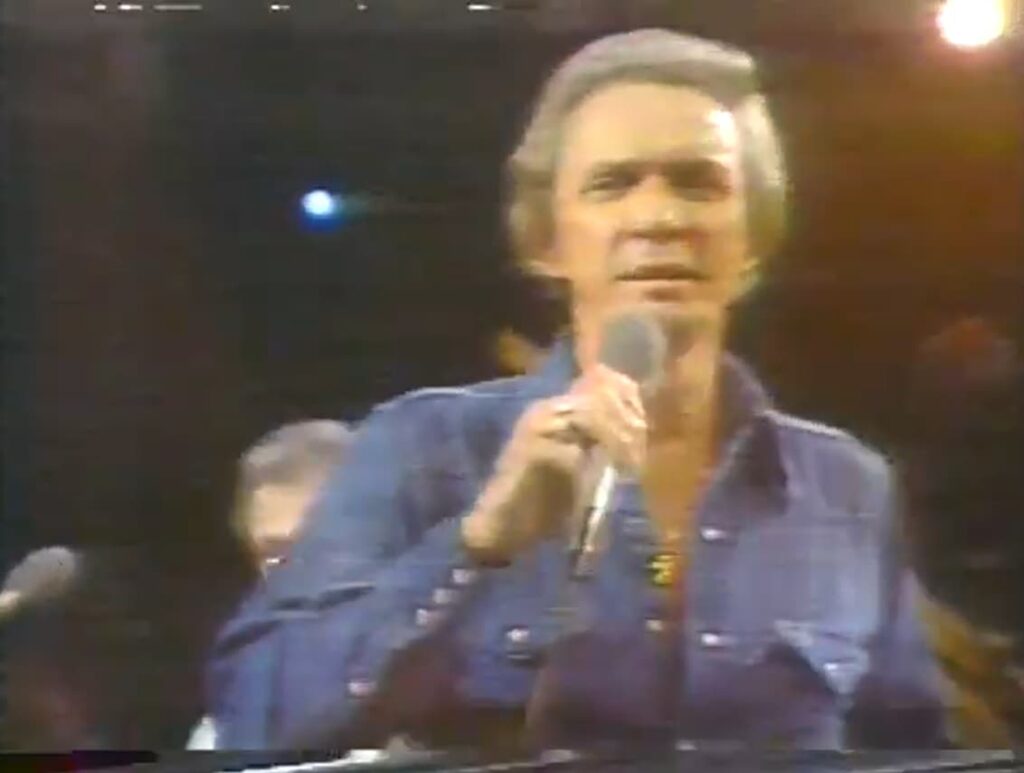
By the time Mel Tillis performed “Coca-Cola Cowboy” on Austin City Limits in 1979, the song was no longer an unknown number. It had become part of a remarkable late-career run for Tillis, who had already reached No. 1 with “Good Woman Blues” in 1976, “Heart Healer” in 1977, and “I Believe in You” in 1978. “Coca-Cola Cowboy” became his fourth No. 1 on Billboard’s country chart and confirmed that his commercial strength had not faded as the decade moved toward its end. The Country Music Hall of Fame recognizes this period as the prime of Tillis’s recording career.
There is something wonderfully ironic about the title. A cowboy traditionally represents independence, toughness, open spaces, and a certain rough honesty. But a “Coca-Cola Cowboy” is something different. He has the appearance, the smile, the clothes, perhaps even the swagger—but there is something artificial about the image. He is a cowboy filtered through modern popular culture, polished for the eyes rather than forged by experience.
Mel Tillis was perfectly suited to it. He possessed the rare ability to make a song sound both humorous and emotionally sincere at the same time. His delivery never turns the character into a complete fool. There is affection in the performance, but also a knowing smile. He understands the kind of man being described because country music has always been fascinated by men who create larger versions of themselves.
And there is a deeper sadness beneath the humor. The narrator is not simply mocking a man with a cowboy image. He is measuring the distance between appearance and reality. The song asks, in its own lighthearted way, what happens when someone looks like the romantic hero but fails to possess the loyalty, courage, or emotional honesty that the image promises.
That idea was particularly fitting for the late 1970s, when the cowboy was undergoing something of a cultural revival. Films, television, country music, and popular fashion were continually reshaping the image of the American West. The cowboy was no longer confined to dusty ranches and frontier stories. He could be found on movie screens, television stages, album covers, and even in the carefully constructed persona of a romantic man trying to impress someone.
“Coca-Cola Cowboy” gently punctures that fantasy. The connection with Every Which Way but Loose makes the story even more interesting. The film, starring Clint Eastwood, mixed comedy, action, country music, and a distinctly working-class atmosphere. Tillis appeared in the movie, while his recording of “Coca-Cola Cowboy” became one of the musical pieces most closely associated with it. Contemporary industry coverage noted that the song had originally appeared on the film soundtrack and was subsequently remixed for its MCA single release.
That crossover helped introduce the song beyond the usual country audience. Yet its success was not merely a Hollywood curiosity. Country radio embraced it. In the Cash Box country chart, the record reached No. 1 in August 1979, demonstrating that its appeal extended well beyond the movie.
The Austin City Limits performance is especially worth remembering because it places the song back where it ultimately belongs: on a country stage, surrounded by musicians and an audience that understands the language of the song without needing it explained. There is no need for excessive drama. Tillis lets the humor breathe. His voice carries the relaxed authority of someone who has spent decades inside country music and knows exactly how much emotion a lyric needs. He does not have to force the joke. The character itself provides it.
Yet beneath the smiles is a familiar human truth: people sometimes fall in love with an image before discovering the person behind it. That is why “Coca-Cola Cowboy” has aged so gracefully. Its references belong unmistakably to the late 1970s, but its observation is timeless. We have always been fascinated by people who look like something they are not. The song simply dresses that idea in boots, denim, Hollywood glamour, and a little country humor. And perhaps there is a final irony in hearing Mel Tillis sing it.
Tillis never needed to pretend to be a cowboy. His authority came from something more durable—the voice, the storytelling, the years spent writing and performing songs, and the ability to make ordinary human weaknesses sound both funny and touching. “Coca-Cola Cowboy” may have arrived dressed as a novelty, but underneath the grin is a sharp little country portrait: sometimes the man wearing the hat is not the hero you imagined. And sometimes, after the laughter has faded, that realization is the saddest part of all.